
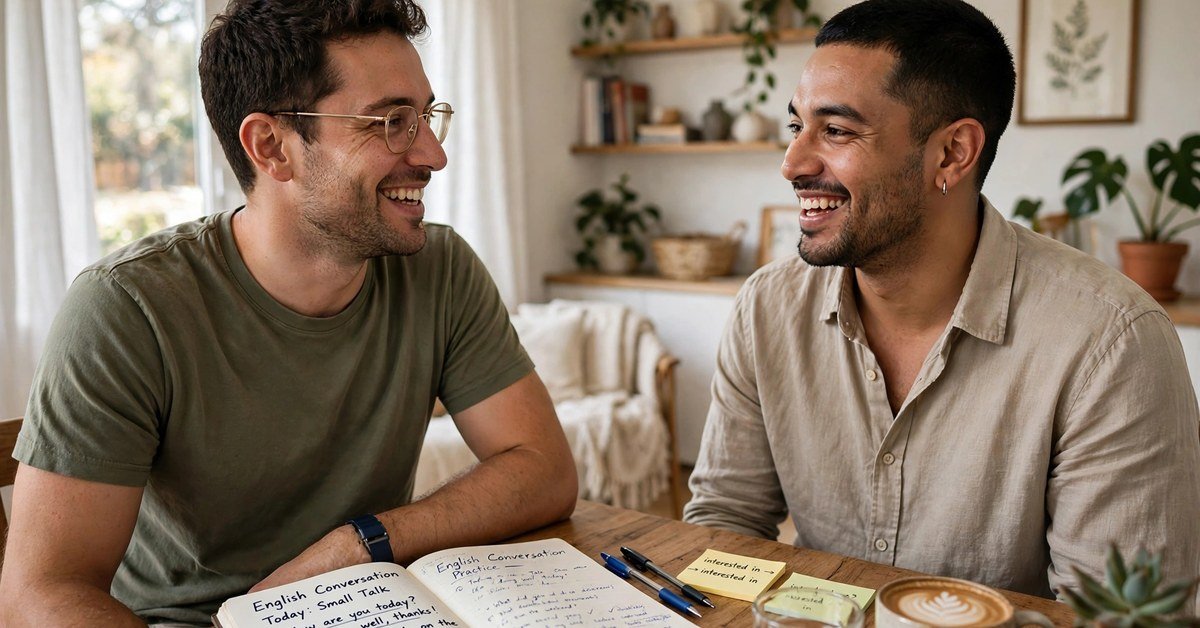
Welcome back to our dialogue series! In Part 1, Part 2 and Part 3, we shared thirty everyday conversations — at the café, at the airport, at the cinema and many more. Today we open ten new doors.
Here are ten more English dialogues for the places real life takes you next: the dentist’s chair, a quiet bookshop, a busy market, the morning bus, the garage and more. The Cambridge Dictionary entry for “dialogue” calls it a conversation between two people — and that is exactly how you will learn here: two voices, one small scene, and phrases you can use the same day.
Please don’t just read them with your eyes. Read both parts out loud, then swap roles and read them again. If you can, record yourself on your phone and listen back — you’ll be surprised how quickly these phrases start to feel like your own.
English Dialogues: At the Dentist’s
Mr. Karim has had a toothache since yesterday, so this morning he is sitting in the dentist’s chair.
Patient: Good morning. I have an appointment at ten — the name is Karim.
Dentist: Good morning, Mr. Karim. Please sit down. What seems to be the problem?
Patient: This tooth on the right hurts a lot, especially when I drink something cold.
Dentist: Let me have a look. Open wide, please. Does it hurt when I touch here?
Patient: Ouch — yes, that’s the one.
Dentist: There’s a small hole in the tooth. You need a filling, but it’s nothing serious.
Patient: Can you do it today?
Dentist: Yes, I can do it now. It’ll take about twenty minutes.
Patient: Will it hurt?
Dentist: No, I’ll give you an injection first, so you’ll feel nothing.
Patient: That’s good news. How much will it cost?
Dentist: Forty pounds. And please avoid very hot food for the rest of today.
Useful phrases: “What seems to be the problem?” — asking about health; “Can you do it today?” — asking about timing; “How much will it cost?” — asking the price.

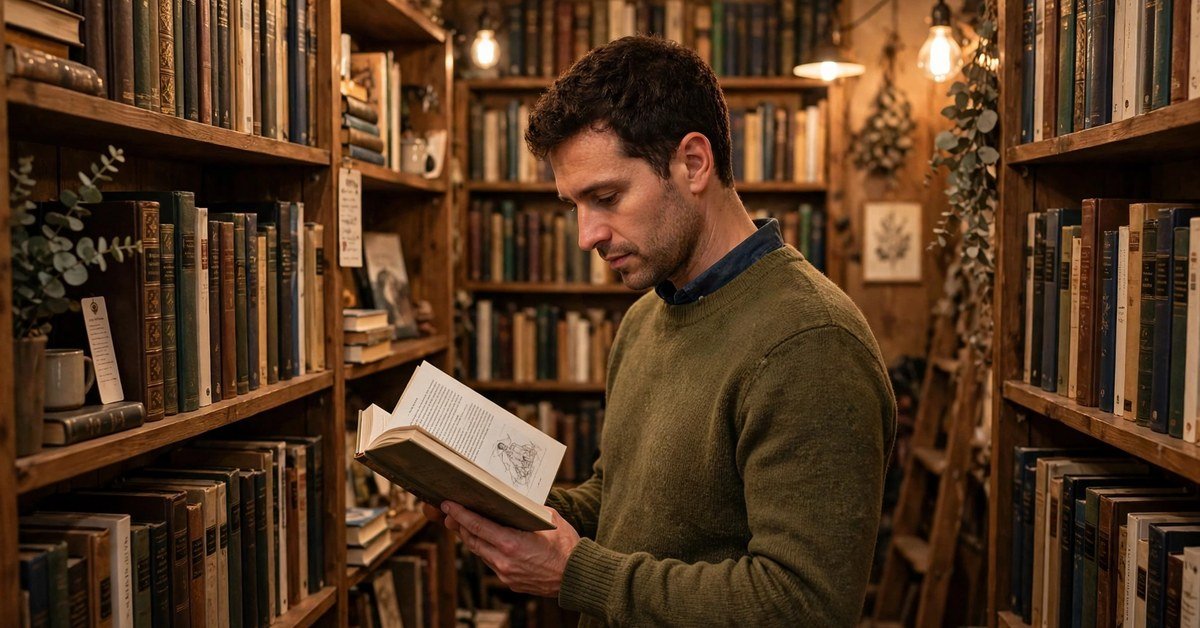
In a Bookshop
Bilal needs a good English dictionary, so he visits the bookshop near his home.
Customer: Excuse me, I’m looking for a good English dictionary for learners.
Bookseller: You’ll find them on the second shelf over there, next to the language books.
Customer: Thank you. Do you also have story books for children? It’s for my son.
Bookseller: Yes, the children’s corner is at the back. How old is your son?
Customer: He’s eight, and he’s just started reading on his own.
Bookseller: Then I’d recommend this one. The stories are short and the pictures are lovely.
Customer: It looks perfect. How much is it?
Bookseller: It’s twelve pounds, and the dictionary is twenty.
Customer: I’ll take both, please. Can I pay by card?
Bookseller: Of course. Would you like a bag?
Customer: No, thank you. I have my own.
Useful phrases: “I’m looking for…” — saying what you want; “I’d recommend this one” — giving friendly advice; “I’ll take both, please” — deciding to buy.
At the Bakery
On his way to work, Omar stops at his favourite bakery for fresh bread.
Customer: Good morning. Do you have any fresh bread today?
Baker: Good morning! Yes, these loaves came out of the oven ten minutes ago.
Customer: They smell wonderful. I’ll take one large loaf and six rolls, please.
Baker: Here you are. Anything else?
Customer: Yes — I’d like to order a cake for Friday. It’s my daughter’s birthday.
Baker: Of course. Chocolate or fruit?
Customer: Chocolate, please, with “Happy Birthday, Amina” on top.
Baker: No problem. You can collect it after four o’clock on Friday.
Customer: Great. How much do I pay now?
Baker: Just five pounds today, and the rest when you collect it.
Customer: Perfect, thank you. See you on Friday!
Useful phrases: “I’ll take one large loaf” — ordering food politely; “I’d like to order a cake” — placing an order; “You can collect it after four” — arranging a pickup.
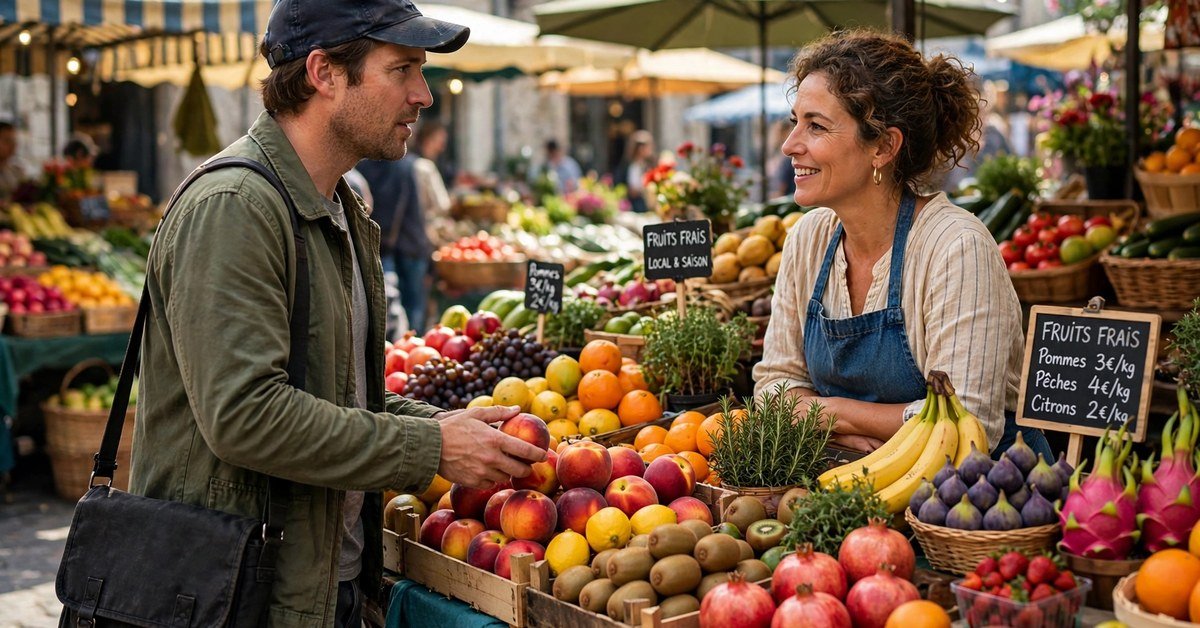
At the Market
It is Saturday morning, and Daniyal is buying fruit and vegetables at the market.
Customer: Good morning. How much are the tomatoes?
Stallholder: Two pounds a kilo. They’re very sweet — try one!
Customer: Mm, you’re right. I’ll take two kilos, please.
Stallholder: And the mangoes are cheap today — three for two pounds.
Customer: They look ripe. I’ll take six, please.
Stallholder: Good choice. Anything else?
Customer: Do you have any fresh spinach?
Stallholder: Sorry, it’s all gone. But the peppers are fresh — they arrived this morning.
Customer: All right, I’ll take three red peppers as well.
Stallholder: That’s eight pounds fifty altogether.
Customer: Here you are. Thank you very much!
Useful phrases: “How much are the tomatoes?” — asking a price; “I’ll take two kilos” — choosing a quantity; “That’s eight pounds fifty altogether” — giving the total.
On the Bus
Yusuf is new in the city, and today he is taking the bus to the hospital for the first time.
Passenger: Excuse me, does this bus go to the city hospital?
Driver: Yes, it does. That’s the last stop.
Passenger: Great. One ticket, please. How much is it?
Driver: Two pounds twenty. Do you have the exact change?
Passenger: Yes, here you are. Could you tell me when we get there?
Driver: Of course. Sit near the front and I’ll call you.
Passenger: Thank you. How long does the journey take?
Driver: About twenty-five minutes at this time of day.
Passenger: Is it OK to take this bag on the bus?
Driver: Yes, just keep it under your seat.
Passenger: Thank you very much for your help.
Useful phrases: “Does this bus go to…?” — checking a route; “Could you tell me when we get there?” — asking for help; “How long does the journey take?” — asking about time.
At the Mobile Phone Shop
Ali has dropped his phone and broken the screen, and he also needs a new SIM card.
Customer: Hi. I dropped my phone and the screen is broken. Can you fix it?
Assistant: Let me see. Yes, we can replace the screen. It’ll be ready tomorrow afternoon.
Customer: That’s fine. How much will it cost?
Assistant: Sixty pounds, including the new screen.
Customer: OK, go ahead, please. I also need a new SIM card with internet.
Assistant: We have a plan with twenty gigabytes for fifteen pounds a month.
Customer: That sounds enough for me. Can I keep my old number?
Assistant: Yes, we can move your number to the new SIM today.
Customer: Great. What time can I collect the phone tomorrow?
Assistant: After two o’clock. We’ll send you a text when it’s ready.
Customer: Perfect, thank you.
Useful phrases: “Can you fix it?” — asking for a repair; “Can I keep my old number?” — asking what’s possible; “We’ll send you a text” — promising an update.
At the Optician’s
Hamza’s eyes get tired when he reads, so today he is having an eye test.
Customer: Good afternoon. I’d like to have my eyes tested, please.
Optician: Of course. Do you have an appointment?
Customer: Yes, at three o’clock. My name is Hamza Raza.
Optician: Please sit here. Cover your left eye and read the letters on the chart.
Customer: D… F… H… the last line is difficult.
Optician: That’s normal. Your eyes are a little weak, so you need glasses for reading.
Customer: I see. Can I choose the frames now?
Optician: Yes, the frames are on that wall. Take your time.
Customer: I like these black ones. When will the glasses be ready?
Optician: In three days. We’ll phone you when you can collect them.
Customer: Thank you for your help.
Useful phrases: “I’d like to have my eyes tested” — booking a service; “Do you have an appointment?” — checking a booking; “When will the glasses be ready?” — asking about waiting.
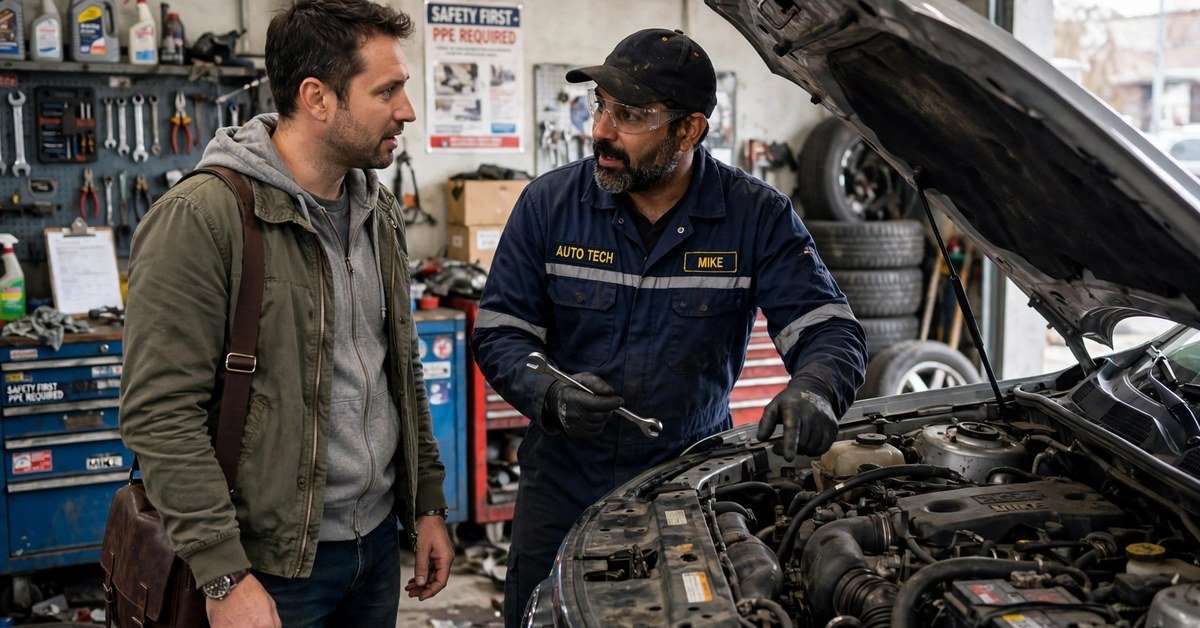
At the Garage
Mr. Tariq’s car is making a strange noise, so he takes it to the garage.
Customer: Good morning. My car is making a strange noise when I start it.
Mechanic: Good morning. Let’s have a look. Can you start the engine for me?
Customer: Of course. There — can you hear it?
Mechanic: Yes, I can. I think the battery is old and weak.
Customer: Can you change it today?
Mechanic: Yes, we have new batteries here. It takes about half an hour.
Customer: And how much will it be?
Mechanic: Ninety pounds for the battery, and the work is free.
Customer: That’s fine, please go ahead.
Mechanic: You can wait inside, or come back at twelve.
Customer: I’ll wait here, thank you.
Useful phrases: “My car is making a strange noise” — describing a problem; “Can you change it today?” — asking for quick help; “Please go ahead” — giving permission.
At the Travel Agency
The Naseer family wants a beach holiday in August, so Mr. Naseer visits a travel agency.
Customer: Good afternoon. We’re looking for a family holiday in August.
Agent: Good afternoon. Where would you like to go?
Customer: Somewhere warm, near the beach — maybe Turkey or Spain.
Agent: For how many people, and for how long?
Customer: Two adults and two children, for seven nights.
Agent: I have a good package for Turkey: flights, a hotel and breakfast included.
Customer: That sounds interesting. Is the hotel near the beach?
Agent: Yes, it’s a five-minute walk, and it has a pool for the children.
Customer: Great. How much is it for the whole family?
Agent: One thousand eight hundred pounds. You pay two hundred now and the rest in July.
Customer: Perfect. Let’s book it, please.
Useful phrases: “We’re looking for a family holiday” — saying what you want; “Is the hotel near the beach?” — asking about location; “Let’s book it” — making a booking.
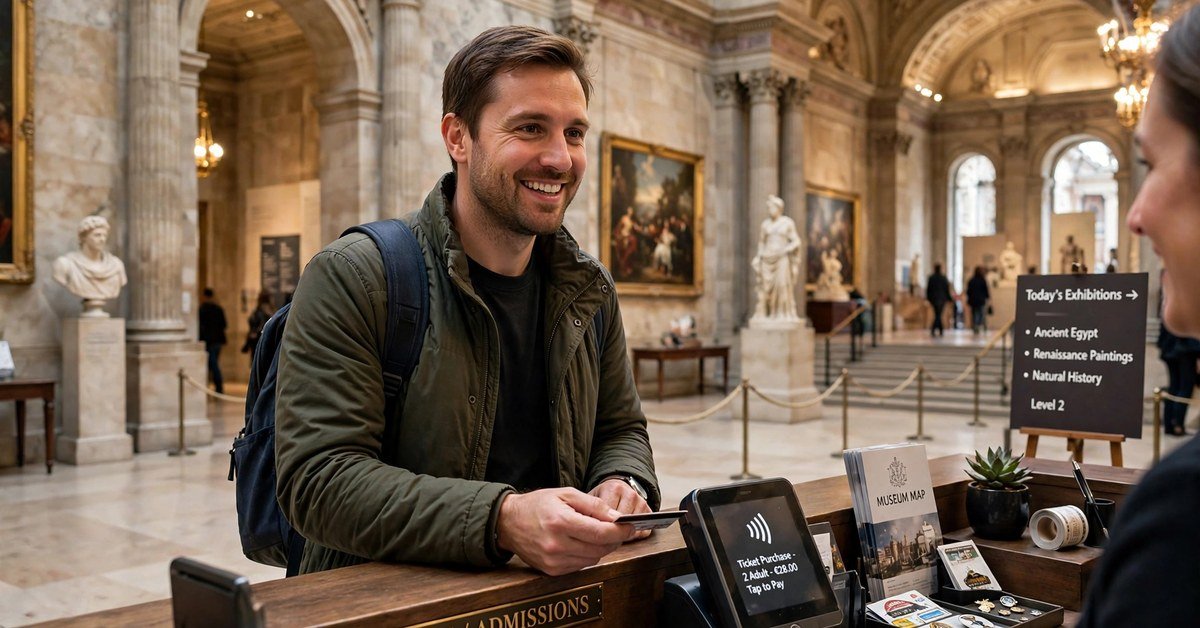
At the Museum
Imran is visiting the city museum with his young nephew on a Sunday morning.
Visitor: Good morning. Two tickets, please — one adult and one child.
Staff: Good morning. That’s nine pounds for you, and children under twelve are free.
Visitor: Oh, wonderful! What time does the museum close today?
Staff: At six o’clock. The last entry is at five thirty.
Visitor: Can we take photos inside?
Staff: Yes, but please don’t use a flash.
Visitor: Of course. Where can I leave this heavy bag?
Staff: There’s a cloakroom next to the entrance. It costs one pound.
Visitor: Thank you. And where are the paintings?
Staff: On the first floor, on your left. Enjoy your visit!
Visitor: Thank you very much.
Useful phrases: “Two tickets, please” — buying entry simply; “Can we take photos inside?” — asking permission politely; “Enjoy your visit!” — a friendly wish.
How to Practise These Dialogues
Shadow one voice. Choose one speaker and repeat their lines just after you read them, copying the rhythm like an echo. Our free text-to-speech tool can read the lines aloud for you, so you can listen first and copy the sounds.
Record and compare. Record yourself on your phone today, then record the same dialogue again next week and listen to both. The difference between the two recordings is the friendliest proof that you’re improving.
Change one detail and run it again. Change the filling to a check-up, the Friday cake to a Saturday cake, or the two kilos of tomatoes to three. One small change forces your brain to use the pattern, not just repeat it. For more guided practice, the British Council’s free speaking lessons are an excellent next step.
Frequently Asked Questions
Should I memorise these dialogues word for word?
No — learn the patterns, not the script. A memorised line breaks the moment the other person says something unexpected, but a pattern bends and survives. Take three or four key phrases from each dialogue, make them yours, and let the rest of your words come naturally.
How can I practise alone, without a partner?
Play both parts yourself: read one line in your normal voice, then answer as the other speaker — you can even stand up and change chairs between the two roles. It feels silly for one minute and works beautifully after that. Ten quiet minutes a day is enough; one dialogue a day is a perfect speed.
Are these dialogues British or American English?
They’re written in neutral, international English that works everywhere. A few small things lean British: prices are in pounds, and the museum has a “cloakroom”, where an American might say “coat check”. The patterns themselves — asking, answering, thanking — are the same on both sides of the ocean.
What level are these dialogues?
They’re for elementary to intermediate learners, about A2 to B1. If a dialogue feels easy, that’s good news, not bad: speaking practice should feel comfortable in your mouth, because real conversations move fast. Beginners can work through one dialogue slowly; stronger learners can change the details and make each scene their own.
Where should I go next?
Build your phrase bank with our English phrases for daily conversation — forty ready-made lines that fit inside almost any conversation. After that, come back and change the details in these dialogues until each scene sounds like your own life. That’s when English stops being a subject and starts being yours.
1 thought on “10 More Everyday English Dialogues (Part 4)”