

We say “thank you” a hundred times a day without thinking — for a door held open, for the right change, for a cup of tea landing in front of us. Those little thanks are reflexes, and they matter. But a written thank-you is a different animal. It’s chosen, not automatic. It gets read twice, saved in a drawer, screenshotted, remembered.
There’s a good reason it carries weight: it’s the physical form of gratitude, and gratitude is too big a feeling to survive on reflexes alone. The Cambridge Dictionary entry for “gratitude” calls it “the feeling or quality of being grateful” — and a written message is how that feeling becomes something a person can hold.
So here are 25 ready-made thank you messages you can copy, adjust and send: seven for friends and family, six for help and support, six formal ones for work, and six for gifts and hospitality. You’ll also find one-line thank yous for cards, three rules for making any thank-you land, and answers to the questions everyone asks. And when someone thanks you back, knowing how to reply to “thank you” completes the circle.
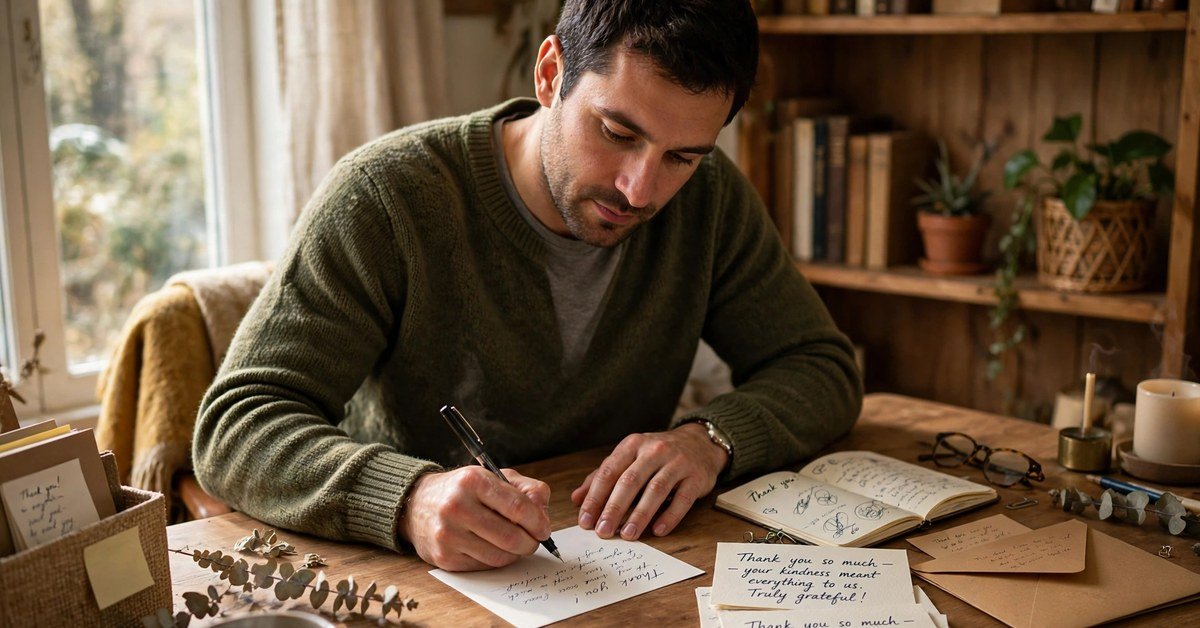
Thank You Messages for Friends & Family
Start with the people closest to you — they’re the easiest to thank badly, because we assume they already know. They do know. Tell them anyway.
- “I don’t say this often enough, so let me say it properly: thank you. For the laughs, the late-night talks, and for showing up every single time it mattered. I’m lucky to have you.” — Warm and honest; for a close friend.
- “Thank you for everything you have done for me — the big sacrifices I only understand now, and the small kindnesses I probably never even noticed. I hope I make you proud.” — Deep and sincere; for parents.
- “Thanks for being the one person who has known me my whole life and still picks up the phone. I don’t know what I’d do without you — and I don’t plan to find out.” — Playful but real; for a sibling.
- “You’re not family by blood, but you’re family by every measure that counts. Thank you for every ride, every meal, and every time you believed in me before I did.” — Heartfelt; for a friend who’s family.
- “Just a small note to say a big thank you. Your kindness never goes unnoticed in this house, even when life gets too busy to say it out loud.” — Simple and safe; suits almost anyone close.
- “Thank you for always making room for me at your table and in your life. Some of my favourite childhood memories happened in your home, and they still make me smile.” — Nostalgic and warm; for an older relative.
- “Thank you for carrying the ordinary days with me — the bills, the dishes, the early mornings — and still making them feel like a good life. I notice, and I’m grateful.” — Quiet and grown-up; for a partner.
Thank You for Help & Support
Some thanks are for heavy lifting — boxes, spare keys, hard weeks. If the people who helped you were also the ones nursing you through illness, our get well soon messages are what they were sending you at the time. Now it’s your turn.

- “I owe you more than pizza for Saturday. Thank you for the boxes, the stairs, and the van runs — moving house with you turned a stressful day into a story we’ll laugh about.” — Grateful and fun; after a house move.
- “Thank you for keeping an eye on the house while we were away — watering the plants, taking in the parcels, and giving us real peace of mind. We’re lucky to live next door to you.” — Warm and specific; for a kind neighbour.
- “This week was one of the hardest I’ve had in a long time, and you carried more of it than you know. Thank you for checking in, for listening, and for never making me feel like a burden.” — Deep and honest; for emotional support.
- “Thank you for the advice you gave me last month. I followed it — all of it — and it changed how the whole situation turned out. Your experience is a gift, and I’m grateful you share it so freely.” — Respectful; for a mentor’s guidance.
- “Thank you for coming to get me when my car gave up on the motorway. You dropped everything, drove forty minutes, and still made jokes the whole way home. That’s real friendship.” — Vivid and warm; after a roadside rescue.
- “You helped me before I even knew how to ask. Thank you for noticing what I needed and quietly making it happen — people like you make hard seasons survivable.” — Gentle and sincere; for unasked kindness.
Formal & Business Thank You Messages
At work, a thank-you should be tidy: full sentences, no jokes, and the specific kindness named. Think of it as the polite twin of our congratulations messages — one celebrates their success, the other honours their help.

- “Thank you for taking the time to meet with me yesterday. I enjoyed learning more about the role and the team, and our conversation confirmed my enthusiasm for the position. I would welcome the opportunity to contribute.” — Professional and confident; after an interview.
- “Thank you for choosing to work with us this year. We value your trust, and we will continue to earn it — with honest timelines, careful work, and results you can measure.” — Steady and businesslike; for a valued client.
- “Thank you for a year of patience, high standards, and belief in your students. Long after the exams are forgotten, the way you taught us to think will stay with us. We are grateful.” — Formal and warm; for a teacher.
- “Thank you for your support during the recent project. Your trust in the team — and your calm when the deadline moved — made a difficult month manageable. We appreciate it more than we said at the time.” — Respectful; for a supportive boss.
- “Thank you for the generous lunch and the thoughtful gift. It was a pleasure to spend time outside the meeting room, and I look forward to everything our teams will build together this year.” — Polished; after business hospitality.
- “Thank you for twenty years of craftsmanship, good humour, and doors always open to questions. This office will be quieter without you, and better forever because you were here. Enjoy every day of what comes next.” — Dignified; for a retiring colleague.
Thank You for Gifts & Hospitality
A gift means someone thought of you before you thought of them — and when the gift was a seat at their table, it all began with one of our invitation messages. Here’s how that story properly ends: with thanks.

- “Thank you for my birthday gift — you clearly thought about what I’d actually love, and you were right. It has already made me smile a dozen times. I’m very lucky.” — Personal and pleased; for a birthday present.
- “Thank you for a wonderful evening — the food, the stories, and the feeling that nobody wanted the night to end. Your home is one of my favourite places to be.” — Warm; after dinner at someone’s home.
- “Thank you for opening your home to us this weekend. We slept well, ate far too well, and left feeling like family. Please come and be our guests next — the spare room has your names on it.” — Gracious; after staying over.
- “The flowers arrived this morning and completely changed the weather in this house. Thank you for thinking of me from so far away — they are beautiful, and so is the thought behind them.” — Bright and touched; for a delivered surprise.
- “Thank you for your generous wedding gift and, even more, for being there to celebrate with us. Starting our marriage surrounded by people like you is the real gift.” — Formal-warm; after a wedding.
- “Thank you for the thoughtful gift — it told me you’ve actually been listening all these months, which is rarer and kinder than the present itself. I’m touched.” — Sincere; for a work friend’s present.
Short & Sweet: One-Line Thank Yous
Sometimes the card is small, the moment is quick, or one line honestly says it all. Keep these in your pocket.

- “You made my day — thank you.” — Bright and instant, for anyone.
- “I won’t forget this. Thank you.” — Short, serious, full of weight.
- “Thanks a million — I mean it.” — Cheerful classic for everyday kindness.
- “Consider me in your debt, happily.” — Playful promise to repay kindness.
- “What would I do without you?” — Warm thanks for close friends.
- “From the bottom of my heart: thank you.” — The heavyweight of one-liners.
Three Rules for a Thank You That Lands
Every message above quietly follows the same three rules. Learn the rules, and you’ll never need this page again.
- Name the specific thing. A thank-you that names the exact act — the ride, the loan, the 2 a.m. phone call — proves you noticed. “Thanks for everything” is kind; “thanks for driving forty minutes in the rain” is unforgettable.
- Say what it meant to you. One honest sentence about the effect — “I slept properly for the first time in weeks” — turns politeness into connection. People remember how their kindness landed long after they forget what they did.
- Send it soon. Gratitude has a shelf life: a message sent within a day or two still feels warm, while one sent next month arrives with an apology attached. Quick and imperfect beats perfect and late, every time.
Frequently Asked Questions
Is a WhatsApp thank you enough, or should it be a card?
For most everyday kindnesses, honestly, a WhatsApp message is enough — it’s fast, it’s warm, and it arrives while the kindness is still fresh. But for the big things — a wedding gift, a week of someone’s care, an elder’s generosity — a handwritten card still wins, because it can be kept. When in doubt, send the message today and the card this week.
How do I thank someone when “thank you” feels too small?
Make it bigger with detail, not volume. Name exactly what the person did, say honestly what it changed for you, and offer a real way to return the kindness one day. The Merriam-Webster entry for “thank-you” calls it “a polite expression of one’s gratitude” — the politeness is easy; the detail is what makes it yours.
Is it ever too late to send a thank you?
Almost never. A late thank-you with one light line of apology — “I’m sorry this is late; I think about your kindness every time I use it” — is still a gift to receive. The only thank-you that truly fails is the one that stays in your head.
How formal should a thank-you email to a boss be?
Warmer than a report, cooler than a text to a friend. Use full sentences, name the specific support, skip the jokes and emojis, and close simply — “With thanks” and your name. Three or four sentences is the perfect length; longer starts to feel like flattery.
What do I write when I didn’t like the gift?
Thank the thought and the person, never the object. You can always honestly praise the kindness, the effort, or the fact that they remembered: “It was so kind of you to think of me.” Gratitude is about the giver — the gift is just the envelope it arrived in.
One last thought: a thank-you takes two minutes to write and pays interest for years. Send yours today — and when it’s your turn to cheer someone on before a job interview, an exam or a fresh start, our good luck messages are ready when you are.