
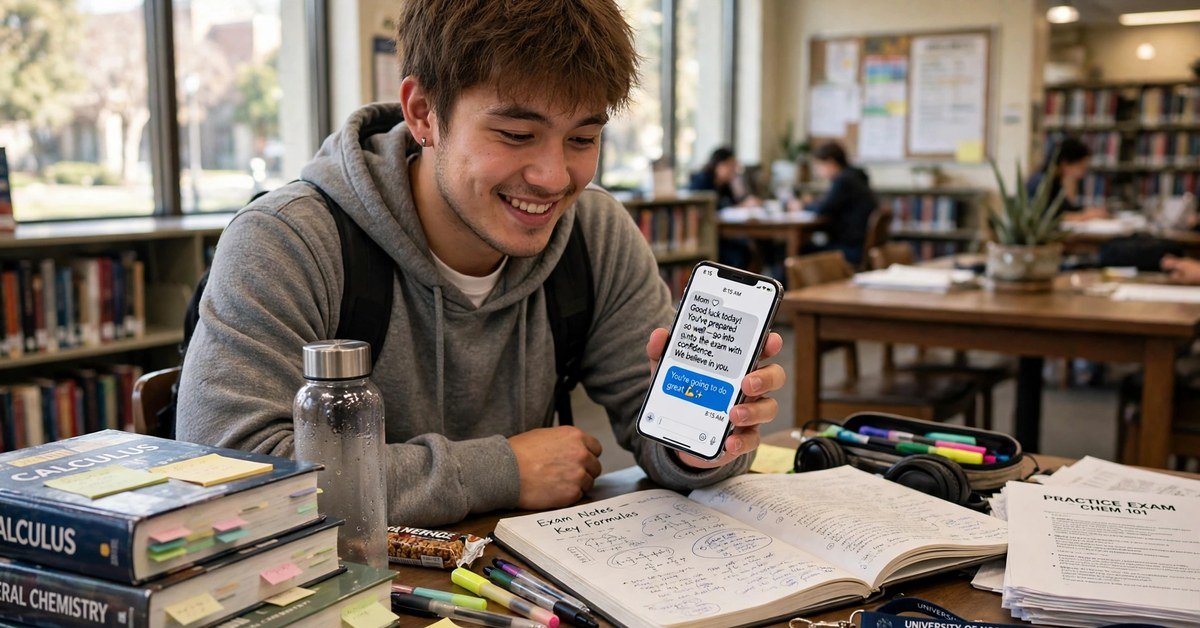
Here’s a small moment almost every English learner knows well. Your best friend has her final exam tomorrow morning. Your brother is ironing his shirt for the biggest job interview of his life. You pick up your phone, open the chat, stare at the screen — and all you can find are two flat little words: “Good luck.”
There’s nothing wrong with those two words. The Cambridge Dictionary entry for “good luck” shows it’s the standard way to wish someone success, and people say it a hundred times a day. But on its own, it can feel thin — almost automatic, like something you say while already thinking about something else. Your friend doesn’t only need luck. She needs to hear that someone believes in her.
Here’s the real difference. A bad wish quietly adds weight: “You have to pass — everyone’s counting on you!” sounds supportive, but it lands like a stone in the stomach. A good wish does the opposite: “Whatever happens tomorrow, I’m proud of how hard you’ve worked.” Same love, completely different feeling. That’s the secret behind all the best good luck messages — they take the pressure off, and they put confidence in.
Below you’ll find 25 good luck messages, grouped by the moment: an exam, a job interview, a big match, and a brand-new beginning. After them, you’ll get six other ways to say good luck, plus a few honest tips on when to send your wish. One tiny grammar note before we start: “luck” is uncountable in English, so we never say “a good luck” or “many lucks” — it’s just good luck, the best of luck, or a bit of luck. And if the person you’re writing to is unwell rather than nervous, our get well soon messages are the page you need instead.
Good Luck Messages for an Exam
Exams are a special case, because your message lands before the result — usually the night before, when your friend is tired, nervous, and quietly imagining the worst. So exam wishes should calm, not hype. If they’re preparing for an English exam, the British Council’s LearnEnglish site has free exam tips and practice that genuinely help. Then send one of these:
1. “You’ve done the hard work already — tomorrow is just where you show it. Sleep well tonight.” — warm
Send it the night before, when studying is finished and rest matters more than one more page.
2. “Take it one question at a time. You know more than you think you do.” — encouraging
For the friend who panics in the first five minutes of every paper.
3. “Whatever happens tomorrow, I’m proud of how hard you’ve worked for this.” — warm
The pressure-free one — it says their value doesn’t depend on a single result.
4. “Breathe, read each question slowly, and trust yourself. You’re ready for this.” — encouraging
A calming message for the morning itself, short enough to read outside the exam hall.
5. “Thinking of you this morning — walk in calm and walk out smiling.” — cheerful
A light, bright wish for someone whose preparation has honestly been solid.

Good Luck Messages for a Job Interview or First Day
An interview wish works best when it reminds the person they’re already good enough — the meeting is just where they prove it. And if it’s you facing the panel soon, our guide to job interview questions and answers can help you prepare the night before. For the person you care about, try these:
6. “They’d be lucky to have you. Just be yourself in there — that’s your strongest answer.” — confident
For a brother, sister or close friend whose ability you genuinely trust.
7. “Good luck with the interview! Remember, you’re checking them out too.” — cheerful
A playful reminder that an interview is a two-way conversation, not a test of worth.
8. “Everyone’s nervous on a first day — that just means it matters to you. You’ll settle in faster than you think.” — warm
Send it the evening before someone starts a new job.
9. “You were made for this role. Walk in like you already belong there — because you do.” — confident
A strong, belief-filled wish for someone who keeps underestimating themselves.
10. “Wishing you a brilliant first day: friendly faces, a good chair, and coffee that doesn’t taste like cardboard.” — cheerful
Light and funny — perfect for a friend who handles nerves best by laughing.

Good Luck Messages for a Competition, Match or Performance
Here you can turn the volume up. Athletes, performers and competitors feed on energy, so these messages are louder, faster and full of belief. Send them before the warm-up, while there’s still time to read them twice:
11. “All those early mornings of training lead to today. Go out there and enjoy every minute of it!” — encouraging
For someone whose hard work you’ve watched up close, week after week.
12. “Play your game, trust your practice, and leave everything out there.” — confident
Short and strong — good for a player just before a big match.
13. “We’ll be shouting from the first minute to the last. Make some noise out there!” — cheerful
For a friend or teammate when you’ll be in the crowd or watching at home.
14. “You’ve survived harder days in training. Today is the fun part — go and take it.” — encouraging
A reminder that the scary day is actually easier than the preparation was.
15. “Whatever the scoreboard says at the end, we’re proud that you’re out there.” — warm
The one that matters most to a nervous competitor — love first, result second.

Good Luck Messages for a New Beginning
A new beginning — a new city, a new school, a first business, a long journey — carries hope and nerves in the same bag. These wishes honour both feelings instead of pretending the scary part isn’t there:
16. “A new city and a whole new chapter. Wishing you friendly neighbours and a place that feels like home fast.” — warm
For a friend or family member moving away to start again.
17. “Safe travels! May the road be smooth, the seat be comfy, and the welcome at the other end be warm.” — cheerful
Send it before a long journey or a move abroad.
18. “Opening your own business takes real courage. Wishing you brave days, kind customers, and a queue at the door.” — encouraging
For someone launching a shop, a café, or any dream they’ve talked about for years.
19. “First day of the course — go in curious, sit near the front, and don’t be shy about asking questions.” — encouraging
For a student starting a new class, training or language course.
20. “New beginnings are half exciting, half terrifying — and you’re allowed to feel both. Here’s to yours.” — warm
An honest, grown-up wish for any fresh start that feels bigger than a celebration.

Short Good Luck Wishes for Texts and Cards
Sometimes all you have is a phone and ten seconds. These five fit in a text or the corner of a card, and each one still says a little more than a plain “good luck”:
21. “Good luck — you’ve got this!” — short
The all-rounder: exams, interviews, matches, anything at all.
22. “Wishing you all the luck in the world today.” — short
Warm and classic — safe for almost anyone, from a cousin to a colleague.
23. “Go get it — we’re all behind you.” — short
Energetic and team-spirited, best for close friends.
24. “Fingers crossed for you — let me know how it goes!” — short
Lovely while someone waits for a result or important news.
25. “All the best — now go and shine.” — short
A bright little send-off for performances and presentations.

Other Ways to Say Good Luck
English keeps a whole pocketful of alternatives to the plain phrase. Here are six you’ll hear everywhere — including one that sounds rude, but is actually the friendliest of the lot:
“Break a leg!” — The famous theatre wish. Actors traditionally avoided saying “good luck” before a show (some felt it tempted fate), so they wished each other the opposite instead — and the phrase stuck. It’s warm and friendly, never rude. Read the full story in our post on what “break a leg” means.
“You’ve got this.” — Three words of pure confidence. Say it when someone doubts themselves and needs belief more than luck.
“Fingers crossed.” — From the hopeful gesture of crossing two fingers. Perfect while someone is waiting for news, results or a decision.
“Knock them dead.” — Playful and informal; it means “impress them completely”, nothing violent at all. Save it for close friends before a show, match or presentation.
“All the best.” — Warm and slightly formal, which makes it the safest choice for cards, emails and people you don’t know very well.
“Best of luck.” — Just a touch warmer than plain “good luck”, and it works in almost any situation, spoken or written.
When to Send Your Message
Timing matters almost as much as wording. The night before is usually the golden moment: studying is done (or should be), the phone is in their hand, and a calm, kind message is the last thing they read before sleep. It quietly says: you’re not carrying tomorrow alone.
On the morning itself, keep it short and light — something they can read in five seconds while tying their shoes. A long, emotional paragraph at 7 a.m. can hide pressure inside it, even when you mean well. And one message is enough: five wishes from the same person start to feel like worry, and worry is catching. Send one good message, then be there afterwards, whatever the result. If you’ll see them face to face, say it warmly and briefly — our English conversation practice dialogues show how these small moments sound in real life.
Frequently Asked Questions
What should I write in a good luck card?
Keep it simple and personal: name the occasion, add one honest line about their effort, and sign off warmly. “Good luck with the new job, Sara — nobody deserves it more. First coffee is on me!” beats five general compliments, because one specific detail proves you really see the person.
What do I say after the good news arrives?
That’s when good luck turns into congratulations — and it’s a warmer message to send than the wish itself. A simple “You did it! I knew you would” works beautifully, or pick a fuller line from our congratulations messages for every kind of happy news.
Is “good luck” ever rude or the wrong thing to say?
Almost never — it’s friendly and safe in nearly every situation. The one famous exception is the stage, where performers traditionally prefer “break a leg” instead. Just watch your tone: said with a smile it’s a wish, said with a smirk it becomes sarcasm.
How do I wish good luck to a teacher, a manager or an older person?
Choose the formal end of the shelf: “All the best with your presentation” or “Best of luck for the new term.” Keep it short, respectful and free of playful phrases like “knock them dead.” A brief, polite note is always welcome — senior people get fewer of them than you’d think.
What if things don’t go well — what do I say then?
Be there, and don’t analyse. “I’m sorry it didn’t go your way. I’m proud of you anyway — and I’m here” says everything that matters. Avoid “never mind” (it shrinks their feelings) and never say “I told you so” — a kind message after a hard day counts more than ten before it.
1 thought on “Good Luck Messages: 25 Encouraging Wishes for Exams, Jobs and Big Days”