

So, you’ve worked through your first ten dialogues. You can order a coffee, check in at a hotel, and ask the way to the station — and then real life sends you to the pharmacy, the bank, or the barber, and those conversations feel new all over again. That’s normal. Every place in your week has its own small script, and English conversation practice means collecting those scripts one by one.
If you haven’t tried the first set yet, begin with our first ten English conversation practice dialogues and come back here after. On this page you’ll find ten more dialogues for the next moments of everyday life: buying medicine, opening a bank account, returning a shirt, joining a gym, calling a plumber, and saying goodbye at the airport.
New here? Warm up first with these English phrases for daily conversation — greetings, polite questions, and small answers that appear in almost every dialogue below. Then choose the dialogue closest to your own week and read it aloud. That’s all. The rest is repetition.
English Conversation Practice: Why New Places Feel Hard
Here’s something honest: a new situation doesn’t mean your English suddenly got worse. The words are the same; only the script is new. You freeze at the bank because nobody ever showed you how a bank conversation starts, what the clerk asks, and how it politely ends.
The fix is the same as in Part 1 — borrow the script before you need it. Read a dialogue, play both roles out loud, and let the lines get boring. You can listen to any line with our free text to speech tool, and if a sound keeps tripping you, spend five minutes with our guide to the 44 English sounds.
For more video practice, the British Council’s free speaking lessons show real conversations at every level, from A1 to B2. And if you’re curious what the word itself means, the Cambridge Dictionary entry for “dialogue” gives a clear definition with examples.
10 More Everyday English Dialogues for Beginners
Use the same method as Part 1: read each dialogue once quietly, then read it aloud twice. The useful phrases after each dialogue are the lines to keep in your notebook.
Dialogue 1: At the Pharmacy
Pharmacist: Good afternoon. How can I help you?
Ali: Hello. I have a bad cold. Do you have something for a sore throat?
Pharmacist: Yes. These tablets help with a sore throat. Take one three times a day.
Ali: Thank you. How much are they?
Pharmacist: Four pounds twenty. Do you need anything else?
Ali: Yes, some tissues, please. And do you sell vitamins?
Pharmacist: Yes, the vitamins are on that shelf, near the door.
Ali: Great. I’ll take the tablets and the tissues, please.
Pharmacist: That’s five pounds fifty in total. Would you like a bag?
Ali: No, thank you. I have my own bag. Goodbye!
Useful phrases: Do you have something for … ? · three times a day · in total

Dialogue 2: At the Bank — Opening an Account
Clerk: Good morning. How can I help you today?
Ben: Good morning. I’d like to open a bank account, please.
Clerk: Of course. Do you have your passport and a letter with your address?
Ben: Yes, here they are.
Clerk: Thank you. Do you want a savings account or a current account?
Ben: A current account, please. Can I get a bank card with it?
Clerk: Yes, your card will arrive by post in five days.
Ben: That’s fine. Is there a monthly fee?
Clerk: No, this account is free. Please fill in this form and sign here.
Ben: Done. Thank you very much for your help.
Useful phrases: I’d like to open a bank account · by post · fill in this form
Dialogue 3: Returning an Item to a Shop
Assistant: Hello. Can I help you?
Sara: Yes, please. I’d like to return this shirt.
Assistant: Of course. What’s wrong with it?
Sara: It’s too small. I bought it here last week.
Assistant: Do you have the receipt?
Sara: Yes, here it is.
Assistant: Thank you. Would you like a bigger size, or your money back?
Sara: A bigger size, please — medium, if you have it.
Assistant: Yes, we do. Here’s the medium. Please try it on first.
Sara: It fits perfectly. Thank you so much!
Useful phrases: I’d like to return this … · your money back · It fits perfectly

Dialogue 4: At the Barber
Barber: Hello! Take a seat. What can I do for you today?
Omar: Hi. I’d like a haircut, please — short on the sides.
Barber: And on top?
Omar: A little shorter, please. Not too short.
Barber: Like this photo?
Omar: Yes, exactly like that.
Barber: OK. Do you want me to trim your beard too?
Omar: Yes, please — just a little.
Barber: Finished. What do you think?
Omar: It looks great, thank you. How much do I owe you?
Useful phrases: Take a seat · short on the sides · How much do I owe you?

Dialogue 5: Talking with a Neighbour
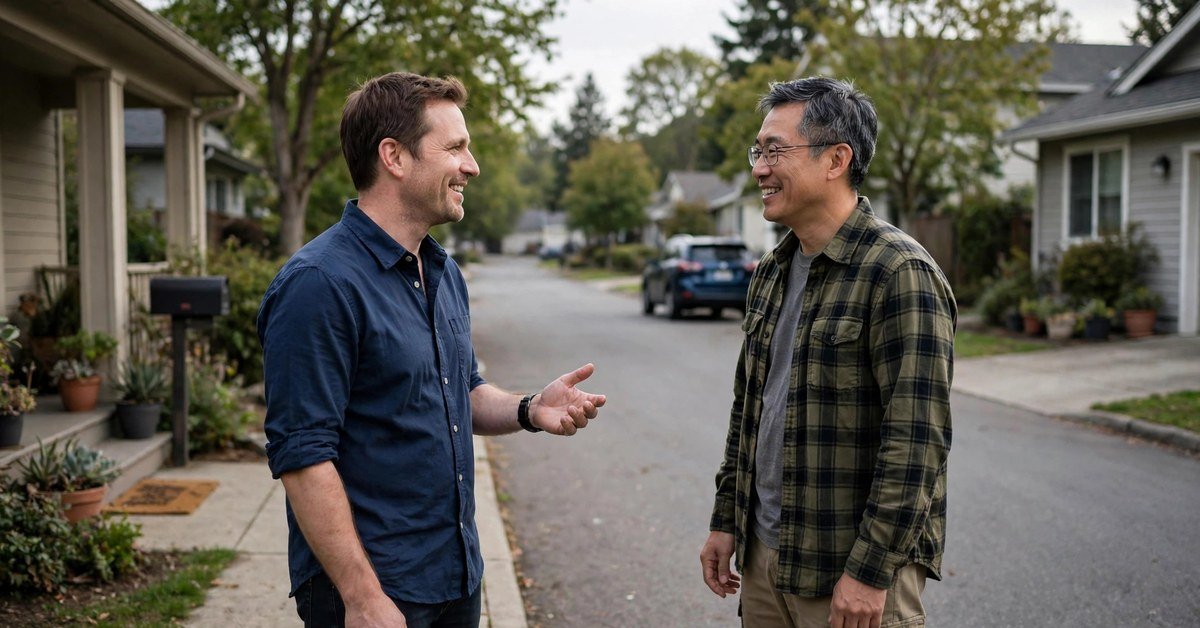
Tom: Morning, Mr Green! Lovely weather today, isn’t it?
Mr Green: Morning, Tom. Yes, perfect for the garden.
Tom: Your flowers look beautiful this year.
Mr Green: Thank you. I planted them in March.
Tom: By the way, we’re having a small barbecue on Saturday. Would you like to come?
Mr Green: That sounds lovely. What time?
Tom: Around six. Just bring yourself — we have plenty of food.
Mr Green: Very kind of you. Can I bring a cake for dessert?
Tom: That would be wonderful. See you on Saturday!
Mr Green: See you then. And thanks again for the invitation.
Useful phrases: Lovely weather, isn’t it? · By the way · See you then
Dialogue 6: At the Post Office
Clerk: Good morning. How can I help?
Lena: Good morning. I’d like to send this parcel to Germany, please.
Clerk: Please put it on the scales. It weighs two kilos.
Lena: How much does it cost to send it?
Clerk: Twelve pounds by air, or eight pounds by land — that takes ten days.
Lena: By air, please. It’s a birthday present.
Clerk: Then let’s hurry. Please write the address clearly here.
Lena: Done. Can I also buy ten stamps, please?
Clerk: Of course. That’s eighteen pounds in total.
Lena: Here you are. Thank you very much!
Useful phrases: I’d like to send this parcel · by air · Here you are
Dialogue 7: Joining a Gym
Staff: Hi there. Can I help you?
Yusuf: Hello. I’d like to join the gym. What do I need to do?
Staff: First, choose a plan. Monthly is thirty pounds, or yearly is three hundred.
Yusuf: Monthly, please — I’m new to this.
Staff: Good choice. Can I have your name and phone number?
Yusuf: Of course. When can I start?
Staff: Today, if you like. Your first class with a trainer is free.
Yusuf: Great. What time does the gym close?
Staff: At ten in the evening. Here’s your card — welcome to the gym!
Yusuf: Thank you. I’m looking forward to my first workout.
Useful phrases: I’d like to join the gym · What do I need to do? · looking forward to
Dialogue 8: Calling a Plumber About a Leak
Plumber: Hello, City Plumbing. How can I help?
David: Hello. I have a problem — there’s a leak under my kitchen sink.
Plumber: Is there much water?
David: A little, but it’s getting worse. I turned off the water.
Plumber: Good thinking. Can I come and look at it today?
David: Yes, please. What time can you come?
Plumber: I can be there at three o’clock. What’s your address?
David: It’s 14 River Street. How much will it cost?
Plumber: The visit is forty pounds, and I’ll tell you the repair price after I see it.
David: That’s fine. Thank you — see you at three.
Useful phrases: there’s a leak · What time can you come? · see you at three
Dialogue 9: At the Library
Librarian: Good afternoon. Can I help you?
Anna: Yes, please. I’d like to borrow this book. How long can I keep it?
Librarian: Three weeks. Do you have a library card?
Anna: Not yet. Can I get one today?
Librarian: Of course. I just need your name and address.
Anna: Here is my ID card. Can I also use the computers here?
Librarian: Yes, they’re free for members. One hour a day.
Anna: Perfect. Where can I find books for learning English?
Librarian: On the second floor, near the window. The easy readers are there too.
Anna: Thank you very much. This library is wonderful!
Useful phrases: I’d like to borrow this book · How long can I keep it? · easy readers
Dialogue 10: Saying Goodbye at the Airport
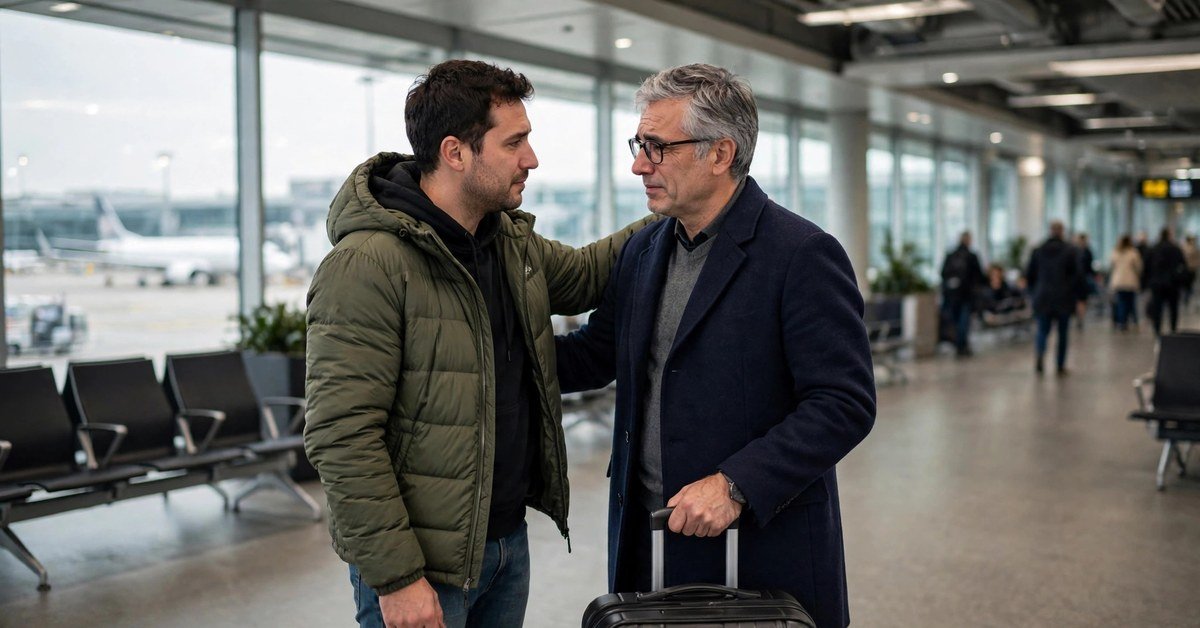
Mia: Well, this is your gate. Your flight leaves in one hour.
Sam: I can’t believe the holiday is over. Thank you for everything.
Mia: You’re welcome. I really enjoyed your visit.
Sam: Me too. Please come and visit me next summer.
Mia: I’d love to. Send me a message when you land, OK?
Sam: I will. And I’ll send you the photos tonight.
Mia: Have a safe flight! Give my love to your family.
Sam: I will. Take care, Mia — and keep practising your English!
Mia: Every day, I promise. Now go — they’re calling your flight!
Sam: Goodbye! See you next summer!
Useful phrases: Have a safe flight! · Take care · See you next summer
Keep Going: A Little Practice Every Day
You now have twenty dialogues in total — enough scripts for most of a normal week. Keep them warm with small daily work: add these 100 daily use English sentences to your routine, repeat one dialogue each morning, and change one small thing every time — a different medicine, a different city, a different day. Changing the details is the moment practice turns into real speaking.
Frequently Asked Questions
1. Do I need to finish Part 1 before starting Part 2?
No. The two pages are brothers, not steps. Start with the dialogues closest to your own life — if you visit the pharmacy every week, Dialogue 1 here is your real first dialogue.
2. Which dialogue should I practise first?
The one you’ll need soonest. A haircut this week? Start at the barber. A parcel to send? The post office. Real need is the best teacher, because you’ll use the lines while they’re still warm.
3. How can I practise the phone dialogue if I have no partner?
Sit back to back with a friend, or record the plumber’s lines on your phone, leave pauses, and answer them. Phone English is harder because you can’t see the face — so practising it at home helps twice as much.
4. Things work differently in my country. Are these dialogues still useful?
Yes. Small details change — prices, forms, opening times — but the skeleton doesn’t: a greeting, your request, a question or two, a polite ending. Learn the skeleton and swap the details.
5. Can I practise these dialogues with my children?
Of course. The sentences are short and clean, and children love playing the shopkeeper or the pharmacist. Keep it a game, stop while it’s still fun, and ten minutes is plenty.
6. What should I study after Part 2?
Keep the circle going: phrases, sentences, and real conversations, a little each day. When these twenty dialogues feel easy, start changing whole lines, not just words — that’s your own English being born.