

Your two best friends have had a falling out, and both of them want you on their side. Or your boss asks, in front of everyone, whether the new plan is a good idea — and honestly, you’re not sure. So you smile, say something vague, and wait. Congratulations: you’ve just decided to sit on the fence.
It happens at work, in families, in group chats. This guide breaks the idiom down properly — what it means, where it came from, and how to use it naturally in real conversation.
Quick Meaning
To sit on the fence means to avoid choosing a side or making a decision. A fence-sitter waits, stays neutral and doesn’t commit — either because they’re truly undecided or because they don’t want the trouble that comes with choosing.
The Cambridge Dictionary puts it plainly: to delay making a decision. Short version? You could pick a side. You just haven’t — yet.

What Does “Sit on the Fence” Mean?
Here’s the thing: people sit on the fence for two quite different reasons, and it helps to know which one you’re looking at.
Sometimes it’s completely innocent. The person is genuinely undecided. They need more information, both options have real pros and cons, and rushing would be daft. A manager weighing up two good job candidates isn’t being weak — she’s being careful. Given another day or two, she’ll climb down and choose.
Picture a young graduate with two job offers on the table. One pays better; the other offers training she actually wants. Every evening she makes a list, stares at it, and decides to sleep on it — again. She’s not avoiding the choice. She’s sitting on the fence because the choice genuinely matters, and both sides of it are pulling at her.

Other times, it’s deliberate. The person probably knows which side they’d pick, but saying so could upset someone, start an argument or cost them something. So they stay pleasantly vague: “Well, both sides have a point.” It’s no surprise that arguments drag on when people won’t see eye to eye — and even less surprising when a third person refuses to say who they agree with.
Notice the tone, too. The idiom usually carries a gentle criticism. It’s rarely a compliment. Friends might say it with a laugh, but a frustrated colleague probably means it as: “Come on — decide.”
Origin
The picture behind the idiom is refreshingly simple. Imagine someone literally sitting on a fence between two fields, or between two neighbours’ properties. They’re not standing in either field. They belong to neither side. From up there, they can watch both sides without joining either one.
That image became popular in American English in the 1800s, especially in politics. Voters and politicians who wouldn’t declare which party they supported were teased as “fence-sitters” — people waiting to see which way the wind blew before climbing down. The label stuck, and the phrase has kept a slightly teasing flavour ever since.
And here’s a detail I like: sitting on a fence isn’t actually comfortable. It’s a temporary perch, not a home. The idiom quietly hints at the same thing — fine for a while, awkward if you stay there forever.
To be fair to the fence-sitters of history, some of them were playing a longer game. Waiting kept their options open, and occasionally the side they eventually joined was glad to have them. Even so, the phrase was born as a joke at their expense, and it has never quite shaken that off.
How to Use It
Arguments and Disagreements. This is the idiom’s natural home. Two people are at odds, and someone in the middle won’t say who they think is right. “I’ve heard both versions of the story, and I’m sitting on the fence until I know more.” Used like this, it buys you time without lying to anyone.
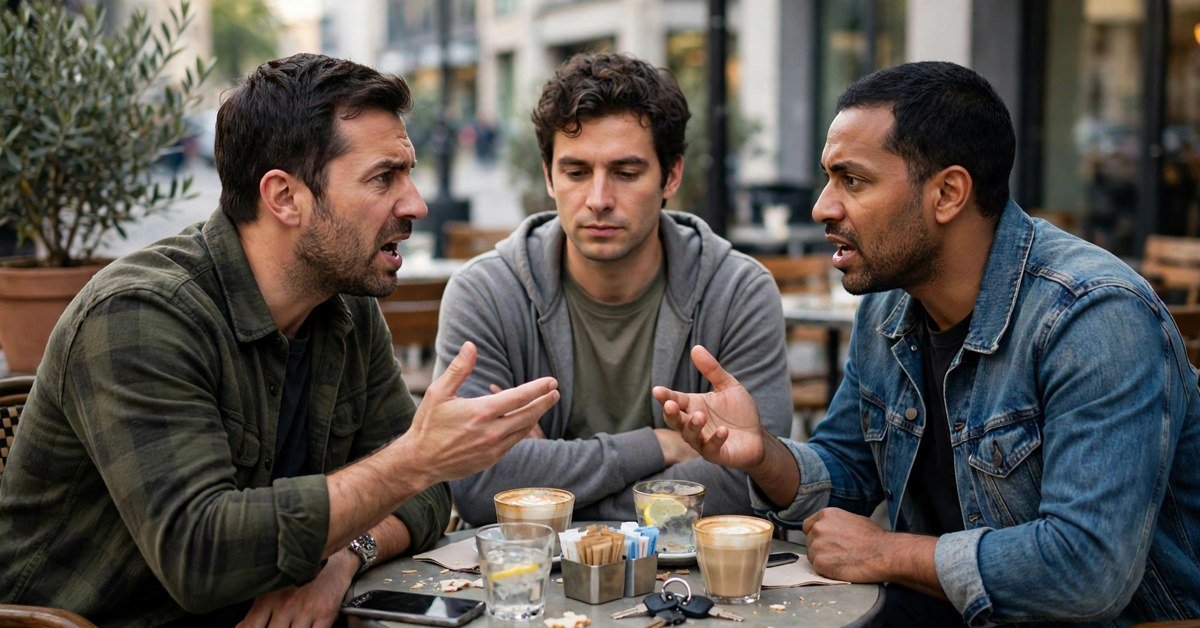
Politics and Opinions. Voters do it, commentators do it, and whole governments get accused of it. “The council has sat on the fence about the new road for two years.” In this context the idiom often sounds critical — it suggests leaders are avoiding a decision the public deserves.
Everyday Decisions. Not every choice involves an argument. Choosing a lunch spot is a piece of cake; choosing a career, a city or a business partner isn’t. “She’s been sitting on the fence about the job offer all week” simply means she hasn’t accepted or refused it yet. No drama — just a decision that matters.
One small grammar note: the verb changes with the tense, but the fence stays put. People sit on the fence today, sat on it yesterday, and have been sitting on it for weeks.

Example Sentences
Notice how the idiom bends to fit arguments, work, family and everyday choices — the fence is always the same, but the reason for sitting on it changes.
- When his two sisters argue about money, Daniel always sits on the fence and changes the subject.
- The committee sat on the fence for months instead of approving or rejecting the plan.
- I’m still sitting on the fence about selling my car — some days I want the money, other days I love the freedom.
- You can’t sit on the fence forever; the deadline for applications is Friday.
- Our teacher refuses to sit on the fence and always tells us honestly which essay is better.
- Half the voters are sitting on the fence, waiting for the final debate before they decide.
- He sat on the fence during the meeting, nodding at everyone and agreeing with no one.
- Maria finally climbed down from the fence and told her parents she was moving abroad.
- It’s easy to sit on the fence when the decision doesn’t affect you personally.
- Stop sitting on the fence and just tell me — do you want to come or not?
Sit on the Fence vs Similar Expressions
These expressions live in the same neighbourhood, but they’re not interchangeable. The differences are mostly about tone.
| Expression | What it means | How it differs |
|---|---|---|
| on the fence | Exactly the same meaning, just shorter | “I’m still on the fence about it” — the most common everyday form |
| play it safe | Avoid risk in general | Broader: it’s about caution, not about choosing between two sides |
| see both sides | Understand two viewpoints fairly | More positive: you can see both sides and still make a decision |
| chicken out | Back out of something through fear | Stronger and ruder: it suggests you planned to act, then got scared |
Collins Dictionary lists synonyms like “be uncommitted” and “be undecided”, which sums the idiom up neatly. And don’t mix it up with beat around the bush: that one is about avoiding the main point when you talk, while fence-sitting is about avoiding a decision itself.
A quick way to keep them straight: ask what the person is avoiding. If they’re avoiding a topic, that’s beating around the bush or playing it safe. If they’re avoiding a choice between sides, that’s the fence. And if they had every intention of acting but lost their nerve at the last second, they’ve chickened out — a much less comfortable place to be than any fence.
Common Mistakes
Reading it literally. Nobody is perched on an actual fence. If a learner pictures garden furniture, the sentence will never make sense — it’s always about decisions and sides.
Using it as praise for fairness. Learners sometimes say “My teacher is fair; she sits on the fence” and mean it kindly. Native speakers will hear mild criticism instead. If you want to praise someone’s balance, say they’re “open-minded” or “fair” — not a fence-sitter.
Saying “sit in the fence.” The preposition is on: you sit on the fence, the same way you sit on a wall or a chair. “In the fence” is a common slip, and it instantly gives you away.
Quick Practice
Try these three before you scroll to the answers.
- Your friend refuses to say whether the team should change its captain. Is he sitting on the fence?
- Which sentence is correct? a) “She is sitting in the fence about the offer.” b) “She is sitting on the fence about the offer.”
- Which sounds more positive: “He can see both sides” or “He’s sitting on the fence”?
Answers: 1) Yes — he’s avoiding taking a side in a disagreement. 2) b) — it’s always on the fence. 3) “He can see both sides” — it praises his fairness, while fence-sitting gently criticises his lack of decision.
FAQ
Is sitting on the fence always a bad thing?
No. Waiting can be wise when a decision is big, the facts are missing or emotions are running high. It only becomes a problem when it turns into a habit and other people are left waiting on you.
What’s the difference between “sit on the fence” and “on the fence”?
Nothing, in meaning. “Sit on the fence” is the full verb phrase, while “on the fence” works as a shorter adjective-style form, as in “I’m still on the fence about the move.” Use whichever fits your sentence.
Can I use “sit on the fence” in formal writing?
It’s fine in journalism, essays and opinion pieces, where a bit of colour is welcome. In formal reports or academic writing, choose something plainer instead, like “remains undecided” or “has not yet committed to a position.”
What do you call a person who sits on the fence?
A fence-sitter. It’s a handy noun for politicians, voters, managers — anyone known for staying uncommitted. Just remember it carries that same slightly teasing tone as the idiom itself.
Is “fence-sitter” an insult?
Only a mild one. Between friends it’s usually teasing, and people even say it about themselves with a smile. Aimed at a leader during a serious debate, though, it can sound like a real accusation of weakness.
Time to Climb Down
So that’s the fence: a handy place to sit while you think, and a risky place to live. We all do it — over jobs, houses, arguments we don’t want to join. The trick is noticing when “I’m still deciding” has quietly become “I’m avoiding this,” and being honest enough to climb down. And once you do climb down, you usually wonder why you waited so long.
A down-to-earth friend is often the one who helps with that, by the way — the kind who listens to both sides and then just asks, “Yes, but what do you think?” If expressions like this are your thing, try our Idiom Finder to look up the next one that puzzles you.

Now it’s your turn: is there a decision you’re sitting on the fence about right now? Tell me in the comments — which side are you secretly leaning towards, and what’s stopping you from climbing down?