


You asked your roommate a simple question: “Did you eat the last slice of pizza?” Ten minutes later, he’s told you about his day, the traffic, and a funny video he saw — but he still hasn’t answered.
That, right there, is the Beat Around the Bush Meaning in action. When someone beats around the bush, they talk and talk, but somehow never say the one thing that actually matters.
In this guide, you’ll learn exactly what the idiom means, where it came from, and how to spot it in everyday conversations. You’ll also get practical tips for cutting through it — whether it’s a coworker, a friend, or you doing the circling.
Beat Around the Bush Meaning – Quick Meaning
Beat Around the Bush Meaning – Quick Answer: To beat around the bush means to avoid saying what you really mean. Instead of stating the important point directly, a person talks around it, hints at it, or fills the time with side details.
In one line:
- Beat around the bush = talk around the point instead of saying it.
For example: “Stop beating around the bush and just tell me — did we get the house or not?”

What Does “Beat Around the Bush” Mean?
To “beat around the bush” means to avoid coming to the point. The speaker knows what the real topic is. You know what the real topic is. But instead of naming it, they circle it — with background stories, half-answers, and polite filler.
The Cambridge Dictionary sums it up neatly as avoiding talking about what is most important. That’s the heart of the idiom: the important thing stays unsaid while everything around it gets discussed at length.
The phrase usually carries a hint of impatience. When you tell someone “don’t beat around the bush,” you’re not furious, exactly. You’re asking for the honest version, without the long warm-up act. Between friends it can sound playful; in a serious talk, it sounds firm.
It works for actions too, not just words. A manager who schedules three “quick chats” before announcing a decision is beating around the bush. So is a friend who texts “so… how’s life?” when what he really wants is to borrow your car.
The Origin of “Beat Around the Bush”
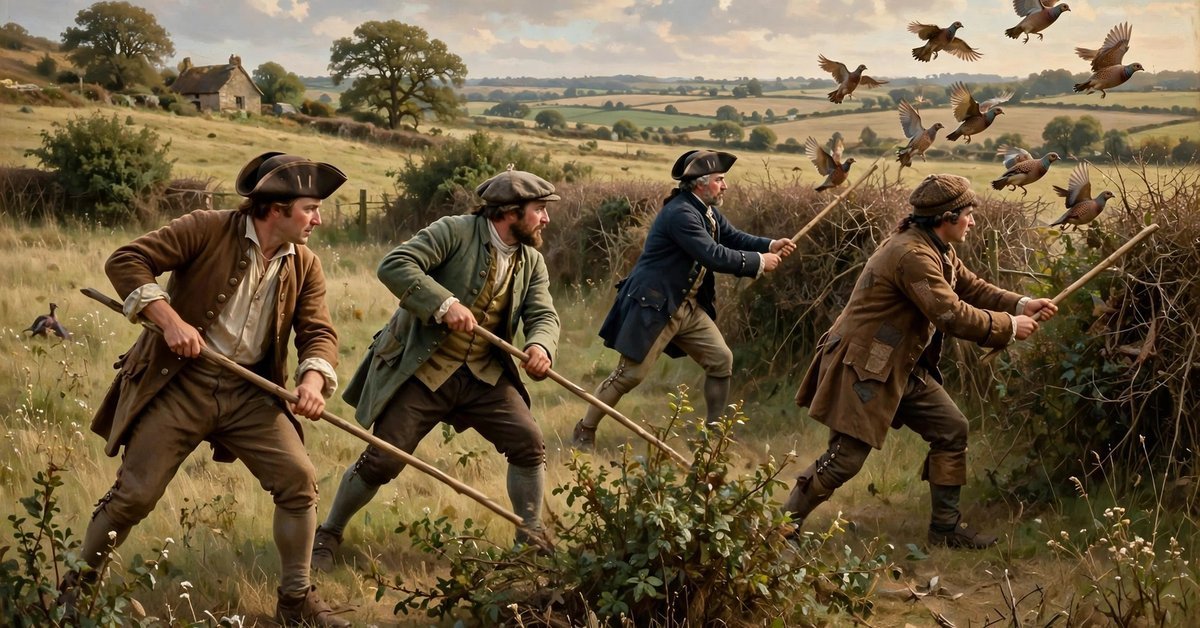
The phrase comes from old hunting days in England. Hunters hired men called beaters to walk through the undergrowth and strike the bushes with sticks. The noise flushed birds and small game out into the open, where the hunters were waiting to catch them.
Here’s the twist. Beating the bush was only the warm-up. The real goal was catching the birds. A beater who kept whacking the edges of the bush but never drove anything out had done plenty of work and achieved nothing. Even a poem from around 1440 made the contrast: some beat the bush, and some take the birds.
The older British form was “beat about the bush,” and it’s still the version you’ll hear most in the UK. Merriam-Webster traces the first known use of “beat about the bush” back to 1520, when it was already being used for wasted, roundabout effort.
Over time, American English settled on “around” instead of “about,” and the meaning shifted fully from hunting to talking: circling a subject without ever landing on it.
How to Use “Beat Around the Bush”
The idiom shows up in a few set patterns. Learn these three and you’ll handle almost every situation.
Pattern 1: Don’t beat around the bush
Use this when you want someone to be direct with you.
- “Don’t beat around the bush, Dad. How much did the car repair cost?”
- “I won’t beat around the bush — we need to talk about the budget.”
Pattern 2: Stop beating around the bush
This one is stronger and more impatient. Save it for when the circling has gone on long enough.
- “Stop beating around the bush and tell me if I’m fired or not.”
Pattern 3: He beat around the bush for…
Use this to describe someone else’s circling, usually with a time attached.
- “She beat around the bush for twenty minutes before finally asking for a day off.”
One grammar note: the verb changes with tense — beats, beat, beating — but the rest of the phrase stays fixed. It’s always “the bush,” singular.
Examples by Situation
Here’s how the idiom plays out in the moments where you’ll actually meet it.
Asking for a Raise
Employee: “So, uh, the team’s been doing great, and rent went up, and I’ve been here three years…” Manager: “Are you asking for a raise?” Employee: “…Yes. Yes, I am.”
Ten sentences of warm-up for a five-word question. Classic.
Breaking Bad News
“There’s something I should tell you. Well, first, you know how cars need oil, and engines get hot, and…” Just say it — the mechanic story can wait. When the news is bad, circling it usually makes the listener more anxious, not less.
Dating and Relationships
He typed “we need to talk,” then sent six messages about the weather, her day, and a meme. By the time the real topic arrived — his overdue share of the rent — she’d already imagined twelve worse things.
In texting, this kind of circling often ends with the other person sending a baffled WTV — because after all that typing, they still don’t know what you actually want.
Customer Support and Sales Calls
You’ve had this call. “Your call is important to us,” followed by four menus, two surveys, and an agent who explains the company’s history before answering whether your refund went through. Companies beat around the bush with scripts; good agents get to the answer fast.
Family Conversations
At dinner, Uncle Rob mentions the neighbour’s new fence, the price of petrol, and a cousin’s wedding — everything except the thing he actually came to say: he’s moving in with Grandma for a while. Families are world champions at this idiom.
Job Interviews
Interviewer: “So, why did you leave your last job?” Candidate: “Well, the office had a great coffee machine, and the commute was interesting…”
Interviewers hear the circling instantly. A short, honest answer beats a scenic tour every time.

Why People Beat Around the Bush
Most people don’t do it to annoy you. There are real reasons we circle the hard sentence.
Fear of conflict. Saying the point might start an argument, so we soften it, delay it, and quietly hope the other person guesses. They almost never do.
Politeness. In many cultures, bluntness feels rude. Circling the point is meant as kindness — right up to the moment it becomes confusing.
Not knowing the answer yet. Sometimes the speaker is still figuring out what they think. The circling is really thinking out loud — fine in small doses, exhausting in large ones.
Protecting feelings. We circle bad news because we care about the person hearing it. The trouble is, the delay often hurts more than the news itself would have.

How to Stop Beating Around the Bush
If you recognise yourself in this idiom, here’s how to land the plane faster.
- Lead with the headline. Say the main point in your first sentence, then add details. “I need Friday off — here’s why” works far better than ten minutes of context first.
- Use a gentle opener, then land it. It’s fine to break the ice with one warm line. Just don’t let the opener become the whole conversation.
- Try the TBH test. Before sending a long message, ask what you’d say if you started with an honest TBH. Then say that.
- Name the discomfort. “This is awkward to say, but…” is honest and disarming. People respect it far more than circling.

What “Beat Around the Bush” Does NOT Mean
It doesn’t mean literal bushes or hunting. Nobody is doing garden work. Like break a leg, which has nothing to do with broken bones, this phrase has nothing to do with actual bushes today.
It doesn’t mean lying. This one matters. A liar says something false. A bush-beater says true things — just not the important one. The problem here is delay, not dishonesty.
It doesn’t mean any small talk at all. A friendly chat before getting down to business is normal. It only becomes this idiom when the real point is being avoided on purpose.
Common Mistakes
Mistake 1: Wrong forms of the phrase. “Beat around the bushes” (plural) and “beat behind the bush” are common slips. The fixed phrase is singular: “the bush.” Small word choices like this are exactly what make English sound polished — the same reason learners mix up your and you’re in writing.
Mistake 2: Using it for quiet people. Don’t describe someone as beating around the bush just because they’re shy or soft-spoken. The idiom is about avoiding a point you could say — not about having nothing to say.
Mistake 3: Using it as a weapon. Snapping “stop beating around the bush!” at every small pause sounds harsh. Save the phrase for when the circling is real, and say it with a smile when you can.
Conclusion
The Beat Around the Bush Meaning in one line: talking around the point instead of saying it.
The phrase has survived for about 500 years because people haven’t changed — we still circle the hard sentence. But now you can spot it, name it, and skip it.
Next time you feel a long warm-up coming on, remember the old beaters. The point was never the bush. The point was the bird.
FAQs
What does “beat around the bush” mean in simple words?
It means avoiding the main point. Instead of saying the important thing directly, a person talks around it with hints, stories, and side details.
Is beating around the bush rude?
Doing it isn’t usually rude — it often comes from politeness or nerves. But telling someone “stop beating around the bush” can sound impatient, so soften it with people you’re close to: “It’s okay, just tell me.”
What is the opposite of “beat around the bush”?
Get to the point, or cut to the chase. “Cut to the chase” is the closest idiom match — it means skipping straight to the part that matters.
Is it “beat around” or “beat about” the bush?
Both are correct. “Beat about the bush” is the older British form. “Beat around the bush” is standard in American English and is now common around the world.
Can you beat around the bush in writing?
Yes — a long email that buries its request in paragraph four is the written version. Put your main point in the first two lines and nobody will ever accuse you of it.
Where does “beat around the bush” come from?
From hunting. Beaters struck bushes with sticks to flush birds out for hunters, and all that beating without a catch became a picture of effort that avoids the real goal. The “about” form shows up in writing as early as 1520.