

Few things make you feel at home in a new language like talking about food. You may not manage politics or poetry yet, but you can point at a menu, ask what’s inside a dish, and say whether you enjoyed it. That small power starts with English words for food — the sixty you’re about to meet.
Here are 60 English words for food and cooking, grouped the way your day actually meets them: fruit and vegetables at the market, tools in the kitchen, the actions of cooking itself, meals and tastes, and the everyday foods and drinks on your table. Every word comes with a plain meaning and a real example, so you can use it at your very next meal.
English Words for Food: How to Learn Them
Don’t try to swallow all 60 in one evening. Learn one group at a time — ten words — and let your kitchen do the teaching. Food words are the easiest in English to practise, because the things they name are already in your hands every day.
Learn in the kitchen, not at the desk. Stick a small note on the fridge that says fridge. Open it and name what’s inside: milk, eggs, cheese, butter. Words you touch while you learn them are words that stay.
Say the word out loud while you cook. Peel, chop, pour, taste — cooking hands you free practice with every meal. The same trick works away from home, too: if a trip is coming up, our 60 English words for travel were built the same way.
Grow words into lines. A single word helps you point; a full sentence helps you eat well. If single words still feel new, begin with our 100 essential English words for beginners, then turn food words into ready lines with our 40 English phrases for daily conversation.
1. Fruits
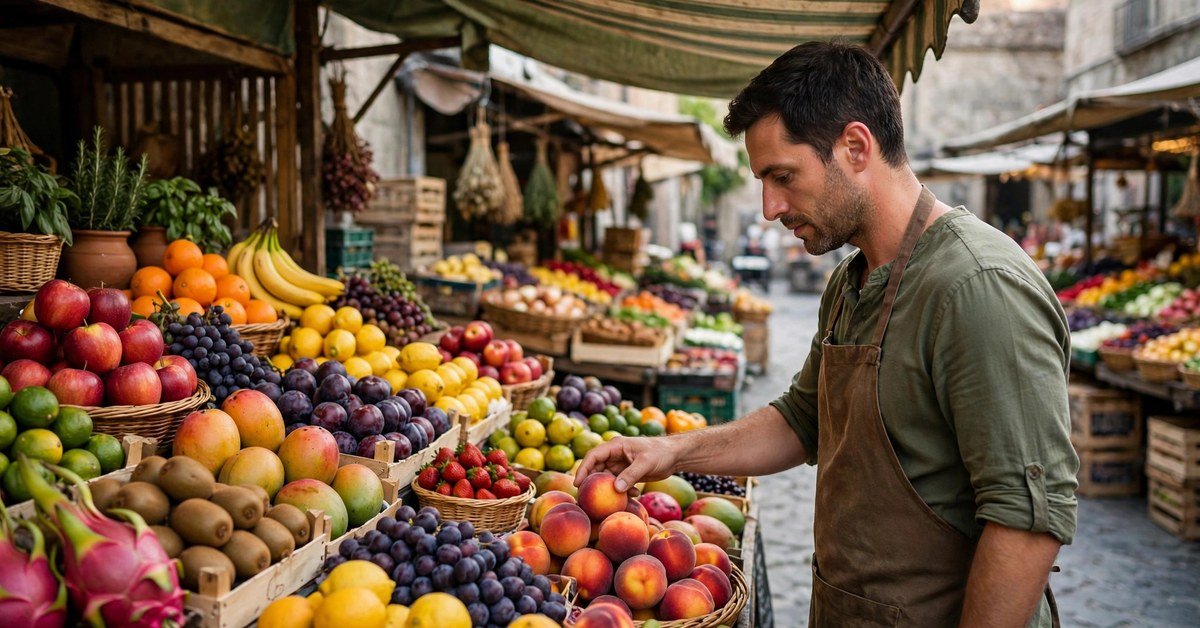
Fruit is where food English gets sweet. These ten names cover market stalls, lunch boxes and breakfast tables almost everywhere in the world.
- apple — a round fruit with red, green or yellow skin and a crisp bite. “An apple a day is a healthy habit — and a crunchy one.”
- banana — a long, soft yellow fruit that’s easy to peel and carry. “He eats a banana before his morning run.”
- grapes — small round fruits that grow in bunches, green or purple. “She bought a bunch of grapes for the picnic.”
- mango — a sweet, juicy tropical fruit with a big seed inside. “A ripe mango smells sweet before you even cut it.”
- orange — a round orange fruit full of juice — the colour is named after it. “Fresh orange juice makes breakfast feel special.”
- strawberry — a soft red fruit with tiny seeds on the outside. “The children picked strawberries straight from the garden.”
- lemon — a sour yellow fruit used to add sharp flavour. “A squeeze of lemon wakes up a plain salad.”
- peach — a soft fruit with sweet flesh and a rough stone in the middle. “This peach is so ripe it drips down my chin.”
- pear — a sweet fruit that’s narrow at the top and round at the bottom. “He packed a pear and a sandwich for lunch.”
- melon — a large, round, juicy fruit, sweet inside a thick skin. “Cold melon is perfect on a hot afternoon.”
2. Vegetables
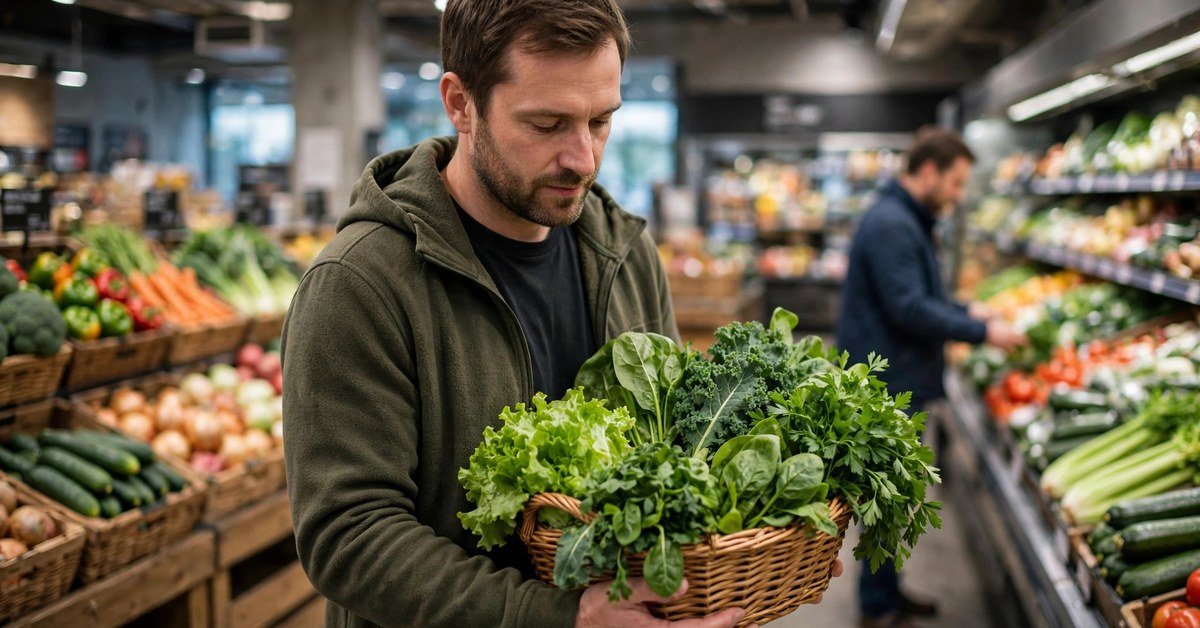
Vegetables do the heavy work in most kitchens. Learn these ten and you can shop for dinner in almost any market on earth.
- potato — a round vegetable that grows underground, cooked in a hundred ways. “We had baked potatoes with cheese for dinner.”
- tomato — a red fruit that we cook and eat like a vegetable. “Slice the tomato thinly for the sandwiches.”
- onion — a round vegetable with layers and a strong smell, used in almost every cooked dish. “Chop the onion slowly, or your eyes will water.”
- carrot — a long orange vegetable, sweet and crunchy. “She added carrots to the soup for colour and sweetness.”
- cucumber — a long green vegetable eaten cold in salads. “Cold cucumber slices feel wonderful in summer.”
- cabbage — a large leafy vegetable with tightly packed leaves. “Cabbage is cheap, filling and surprisingly tasty.”
- pepper — a hollow vegetable, green, red or yellow, sometimes sweet, sometimes hot. “He stuffed the peppers with rice and herbs.”
- garlic — a small, strong-smelling vegetable used to flavour food. “Two cloves of garlic go into the sauce.”
- spinach — soft green leaves, eaten raw or cooked. “Add the spinach at the end — it cooks in one minute.”
- beans — seeds eaten as a vegetable, often in soups or with rice. “Beans on toast is a quick, honest lunch.”
3. In the Kitchen
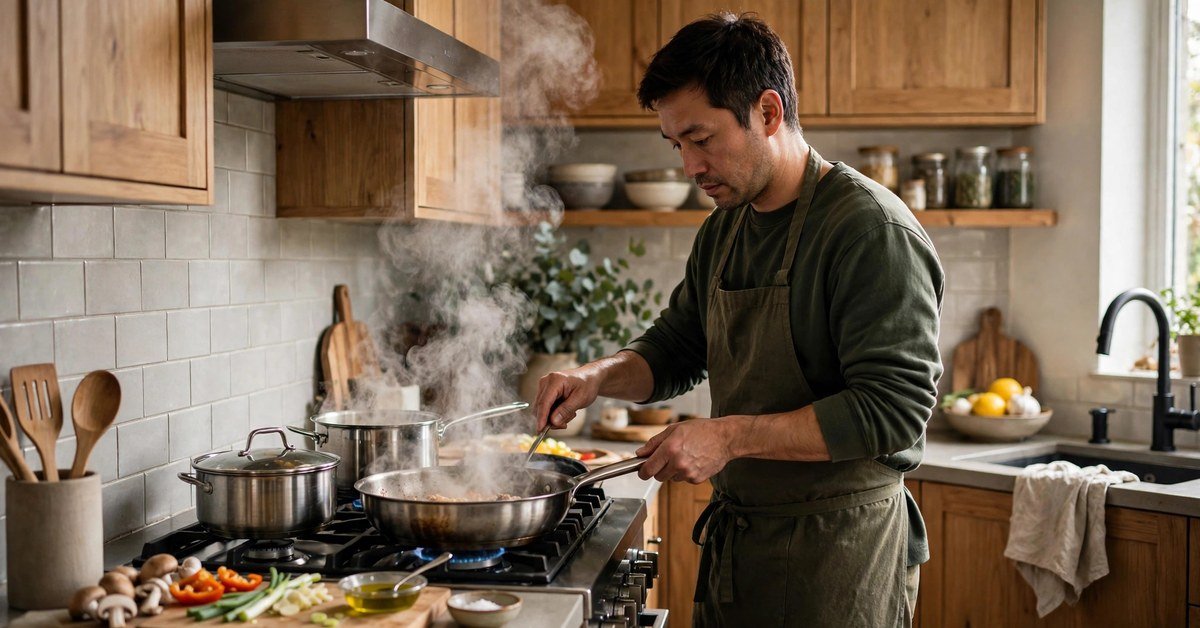
Before the cooking starts, you need the tools. These ten words name the things your hands reach for every single day.
- knife — a sharp tool for cutting food. “Use a big knife for the melon and a small one for the lemons.”
- fork — a tool with points, used for holding and eating food. “He twirled his pasta around his fork.”
- spoon — a tool with a small round bowl shape, for soups and stirring. “Taste the soup with a clean spoon.”
- plate — a flat dish that food is served on. “Put a warm plate under the pancakes.”
- bowl — a deep round dish for soup, salad or mixing. “She mixed the salad in the biggest bowl we own.”
- pan — a flat metal container for frying food. “Heat the pan before you add the eggs.”
- pot — a deep container for cooking soup, rice or pasta. “The pot of rice needs ten more minutes.”
- oven — the hot box in a kitchen where food bakes and roasts. “The bread is still in the oven.”
- fridge — the cold box where fresh food stays fresh. “Keep the milk in the fridge, not on the table.”
- glass — a container for drinking water and juice. “He poured the juice into a tall glass.”
4. Cooking Actions
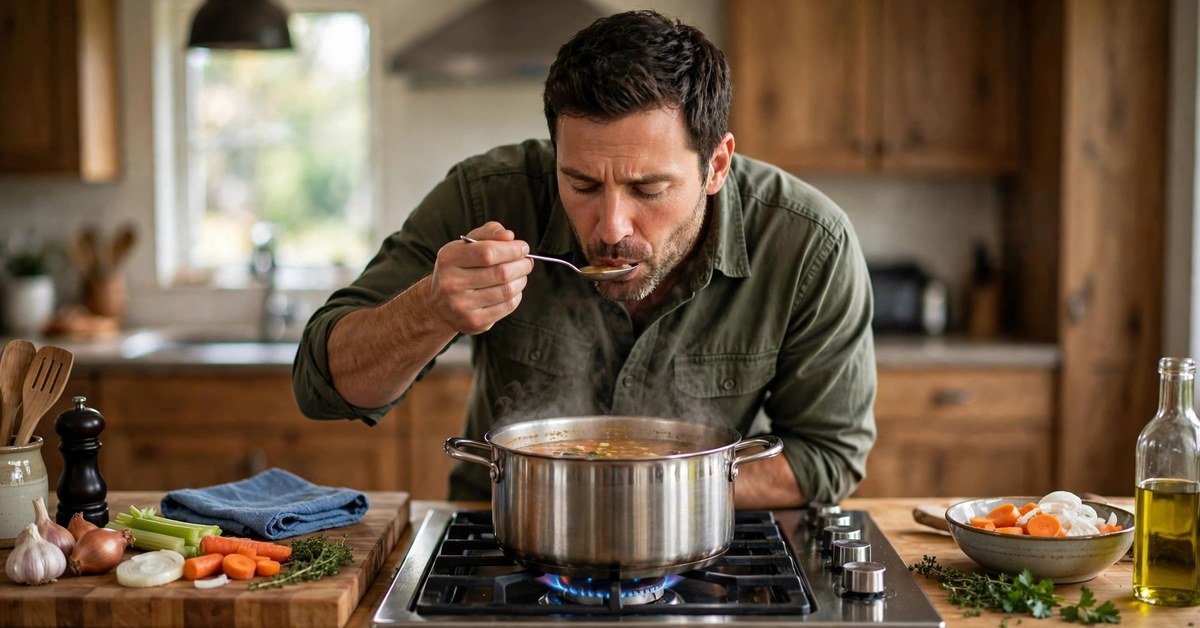
Recipes are just instructions built from verbs like these. Learn the ten actions below and most simple recipes open up to you.
- boil — to cook food in very hot, bubbling water. “Boil the potatoes until they’re soft.”
- fry — to cook food in hot oil in a pan. “Fry the onions until they turn golden.”
- bake — to cook in an oven with dry heat. “My grandfather bakes his own bread every Sunday.”
- chop — to cut into small pieces with a knife. “Chop the garlic finely so it melts into the sauce.”
- mix — to stir two or more things together. “Mix the eggs and sugar before you add the flour.”
- pour — to make a liquid flow from one container into another. “Pour the soup into bowls while it’s hot.”
- taste — to try a small amount to check the flavour. “Taste it before you add more salt.”
- peel — to take the skin off a fruit or vegetable. “Peel the potatoes over the sink — it’s less messy.”
- grill — to cook over direct heat, often outdoors. “We grilled peppers and corn at the beach.”
- freeze — to make food very cold so it keeps for a long time. “Freeze the extra soup for next week.”
5. Meals & Tastes
Meals give the day its shape, and taste words give food its story. These ten let you talk about what you ate — and whether you’d eat it again.
- breakfast — the first meal of the day. “Breakfast at our house is eggs, bread and strong tea.”
- lunch — the meal in the middle of the day. “Lunch is at one today because of the meeting.”
- dinner — the main meal of the evening. “Dinner smells wonderful — what are we having?”
- snack — a small amount of food eaten between meals. “Fruit makes a better snack than biscuits.”
- sweet — tasting of sugar or honey. “The melon was sweet and perfectly cold.”
- sour — having a sharp taste, like lemon or vinegar. “The soup turned sour, so we didn’t eat it.”
- salty — tasting of salt. “The cheese is salty, so drink some water with it.”
- spicy — hot in the mouth, from chillies or strong spices. “Careful — that sauce is spicier than it looks.”
- fresh — newly made or picked, not old. “Nothing beats fresh bread still warm from the oven.”
- delicious — tasting very, very good. “Her tomato soup is simple and absolutely delicious.”
6. Everyday Foods & Drinks
Finally, the everyday heroes — the foods and drinks that sit on almost every table, in almost every country. Short words, used a thousand times.
- water — the clear liquid we all drink to live. “Drink a glass of water before your coffee.”
- juice — the liquid from fruit or vegetables, drunk as a drink. “The children asked for apple juice.”
- tea — a hot drink made by pouring water over dried leaves. “Tea first — then we can talk about anything.”
- coffee — a strong dark drink that helps the world wake up. “He can’t start the day without coffee.”
- milk — the white drink from cows, also used in cooking. “Warm milk helps some people sleep.”
- cheese — a food made from milk, soft or hard, mild or strong. “A little cheese makes any sandwich better.”
- butter — a soft yellow food made from cream, spread on bread. “Melt the butter before you add the eggs.”
- egg — the round food laid by chickens, cooked in many ways. “Two boiled eggs and toast — that’s my breakfast.”
- bread — a basic food baked from flour and water. “She buys bread from the small shop on our street.”
- rice — small white or brown grains, cooked and eaten all over the world. “Rice with vegetables is dinner at least twice a week.”
Quick Practice
Try these without looking back up the page. One: “___ the potatoes before you chop them.” Two: “Heat the ___ before you fry the eggs.” Three: “A lemon tastes ___.” Four: “___ the soup — does it need salt?” Five: “She buys fresh ___ every morning.” Six: “Put the milk back in the ___.”
Answers: 1. Peel. 2. pan. 3. sour. 4. Taste. 5. bread. 6. fridge. Got most of them? These words are already moving into your kitchen. Then watch them working inside full sentences in our 100 more daily use English sentences, and take a playful break with our free idiom quiz.
Want to check a food word you’ve met somewhere else? The Cambridge Dictionary entry for “food” gives clear meanings and examples you can trust. And the British Council’s A1–A2 vocabulary lessons include a whole food and drink topic, with pictures and short practice tasks.
Frequently Asked Questions
How many food words do I really need?
These sixty cover the everyday ground: shopping, cooking a simple meal, and eating out without panic. After them, add quantity words — some, a little, a few — and you’ll manage almost any food conversation.
What’s the difference between boil, fry, bake and grill?
It’s the heat and what touches the food. Boil cooks in bubbling water, fry cooks in hot oil in a pan, bake cooks with dry heat inside an oven, and grill cooks over direct heat, often with lines from the bars.
Are these words British or American?
Nearly all of them are the same everywhere. A few everyday names differ — fridge is short for the American refrigerator, and biscuits in Britain are cookies in America. Learn one version; simply recognise the other.
How can I remember food words faster?
Attach them to real life. Write your shopping list in English, label three things in your kitchen, and cook one simple recipe a week by reading it in English. Words you eat by are words you keep.
Is “delicious” too strong for everyday food?
Not at all — it’s the normal way to praise food you truly enjoyed. For ordinary, pleasant food, nice or tasty is enough. Save delicious for the meals you’d happily eat again tomorrow.
Can I learn food words if I don’t cook?
Of course. Menus, markets and street stalls teach the same words — you just learn the eating half first. Read menus in English when you travel, name things at the market, and the kitchen words will follow when you’re ready.