

You’ve made a decision, taken a break and done your homework — the pairs from Part 1 are settling into your English. But money, buses and promises still wait for their partners. Do you pay a bus or catch it? Keep a promise or do one? These word teams are English collocations too — the same habit-based pairings, just a fresh set of players.
This page adds fifty more, organised around money, the verbs catch, keep, break and give, and a set of strong everyday adjective pairs. If you haven’t met the first fifty yet — the ones built on make, do, take, have and get — start with Part 1: 50 common English collocations with examples, then come back. The two pages were designed to sit side by side.
A quick reminder of why pairs matter. Learn a word alone and your brain still hunts for its partner mid-sentence. Learn the pair as one chunk, and it rolls out whole — calmer, quicker, more natural. Pair that habit with single-word building from our 100 essential English words for beginners, and your sentences start assembling themselves.
English Collocations: The Second Fifty
There’s no master rule behind any of this — just habit, repeated a million times until it sounds “right”. So don’t hunt for logic below. Hunt for sentences about your own life: your money, your promises, your bus. A pair used once for real is a pair you’ll rarely lose.
Money Collocations: Pay, Save, Spend and Earn (10)
Money talk runs on its own verb family. Pay hands money over, save keeps it, spend lets it go, and borrow and lend pass it between people. Ten pairs cover nearly every wallet conversation you’ll ever have.
- pay in cash — hand over paper money instead of using a card. “I paid in cash because the card machine was broken.”
- pay a fine — pay money as a punishment for breaking a rule. “He paid a fine for parking in the wrong place.”
- save money — keep money instead of spending it, for later. “We save money by cooking at home during the week.”
- spend money — use money to buy things. “She spent all her money on books at the fair.”
- waste money — spend money on something useless. “Don’t waste money on shoes you’ll never wear.”
- borrow money — take money from someone and return it later. “He borrowed money from his brother to fix the car.”
- lend money — give money to someone who will return it later. “I never lend money to people I don’t know well.”
- earn money — get money for work you do. “She earns money by teaching English online.”
- charge a fee — ask for a payment for a service. “The bank charges a fee for sending money abroad.”
- free of charge — costing nothing; you pay zero. “The museum lets children in free of charge.”

Collocations with Catch (8)
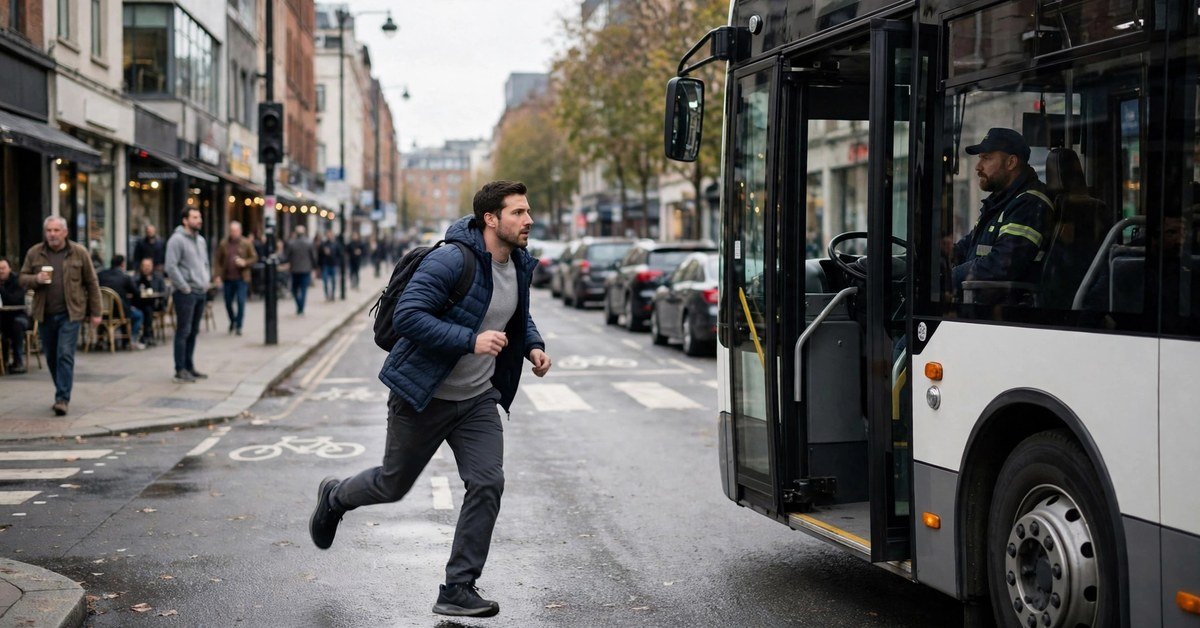
Catch is a busy verb — it grabs buses, colds, glances and thieves. The picture is always the same: something moving, and you getting hold of it just in time. Or, with a cold, just in time to regret it.
- catch a bus — get on a bus before it leaves. “Run — we can still catch a bus if we hurry.”
- catch a cold — become ill with a cold. “Wrap up warm or you’ll catch a cold.”
- catch someone’s eye — make someone look at you. “I waved to catch the waiter’s eye.”
- catch fire — start burning. “The dry grass caught fire in the hot sun.”
- catch a glimpse — see something for a very short moment. “We caught a glimpse of the mountains through the clouds.”
- catch up with — reach someone ahead of you, or hear their latest news. “I spent Sunday catching up with my cousin.”
- catch your breath — rest a moment until you can breathe normally again. “Sit down a moment and catch your breath.”
- catch a thief — find and stop a person who steals. “The police caught the thief near the station.”
Collocations with Keep (8)
Keep is the guardian verb — it holds things steady: promises, secrets, calm. When English wants to say “don’t let this slip away”, it usually reaches for keep.
- keep a promise — do what you said you would do. “He kept his promise and came back to help.”
- keep a secret — not tell anyone something private. “Can you keep a secret? We’re planning a surprise party.”
- keep calm — stay relaxed and not panic. “Keep calm and check the map again.”
- keep in touch — continue writing or speaking to someone. “We still keep in touch after all these years.”
- keep a diary — write about your days in a private book. “She keeps a diary of her travels.”
- keep quiet — stay silent or make no noise. “Please keep quiet while the baby sleeps.”
- keep an appointment — arrive for a planned meeting as agreed. “It’s polite to keep an appointment — or phone to cancel.”
- keep your word — do what you promised. “Trust grows when you keep your word.”

Collocations with Break (8)
Break isn’t only for windows. English uses it whenever something whole suddenly stops — a silence, a habit, a record. Some breaks are sad, some are victories. All eight are everyday.
- break a record — do something faster or better than anyone before. “The runner broke the school record for the 100 metres.”
- break the news — tell someone important news, often bad. “He broke the news gently — the shop would close in June.”
- break a habit — stop doing something you do regularly. “Breaking a habit takes about a month of daily effort.”
- break the law — do something the law forbids. “Drivers who use a phone at the wheel break the law.”
- break a window — crack or smash a window. “A football broke the window of the empty house.”
- break someone’s heart — make someone deeply sad, usually in love. “It broke his heart to leave his home town.”
- break even — earn exactly as much as you spent; no profit, no loss. “The café finally broke even in its second year.”
- break the silence — speak first after a quiet pause. “Finally, the teacher broke the silence and smiled.”
Collocations with Give (8)
Give reaches far beyond objects. You give speeches, help, permission and advice — things nobody can wrap in paper. A generous verb, in every sense.
- give a speech — speak formally to a group of people. “The best man gave a short, funny speech.”
- give a hand — help someone with something. “Can you give me a hand with these bags?”
- give an example — show a case that explains your point. “Give an example so everyone can follow.”
- give a hug — hold someone in your arms to show love or comfort. “She gave her grandfather a hug at the station.”
- give permission — officially allow someone to do something. “The teacher gave us permission to leave early.”
- give a lift — take someone somewhere in your car, for free. “Dad gave me a lift to the airport.”
- give a call — phone someone. “Give me a call when you arrive.”
- give advice — tell someone what you think they should do. “My uncle gave me good advice about saving.”

Strong Everyday Pairs (8)
We end with adjectives and their favourite partners — no make, do, catch or keep in sight. Notice how picky they are: traffic is heavy, voices are low, and a sleeper is sound asleep. Habit again, every time.
- heavy traffic — a large number of cars moving slowly. “Heavy traffic made us late for the film.”
- heavy smoker — a person who smokes a lot. “He used to be a heavy smoker, but he quit last year.”
- strong tea — tea with a powerful, dark taste. “My grandfather likes his tea strong, with no sugar.”
- wide awake — fully awake, not sleepy at all. “The coffee left me wide awake at midnight.”
- sound asleep — sleeping deeply and peacefully. “The children were sound asleep by nine.”
- low voice — a quiet speaking voice. “She spoke in a low voice so nobody else could hear.”
- fresh air — clean, cool air outside. “Let’s open the windows and let in some fresh air.”
- bitterly cold — extremely, unpleasantly cold. “It was a bitterly cold night, well below zero.”

Pairs like these come alive inside conversations. Watch them working in our 40 English phrases for daily conversation — friendly lines where give me a call and keep in touch do their everyday jobs.
Common Mistakes with These Collocations
Every set of pairs has its own traps. Here are the six our students step into most often with this batch.
- ✗ do a promise → ✓ keep a promise. Promises are “kept” in English — you hold them, you don’t perform them.
- ✗ make a cold → ✓ catch a cold. Colds chase you down like buses. You catch them, sometimes despite yourself.
- ✗ strong traffic → ✓ heavy traffic, but ✓ strong tea. Roads get heavy; drinks get strong. There is no reason — it’s the pair English chose.
- ✗ make a speech → ✓ give a speech. A speech is something you hand to an audience, so English gives it.
- ✗ Can you borrow me ten pounds? → ✓ Can you lend me ten pounds? You borrow; the other person lends. The money travels one way, the verbs point both ways.
- ✗ make a record → ✓ break a record. Records exist to be beaten, so the old one “breaks” when you pass it.
Notice the pattern? Each wrong partner is a perfectly good verb — just on the wrong team. See the pair as a single item, and the wrong teammates stop applying for the job.
Quick Practice
No peeking at the lists. Fill each gap with the right partner word — pay, catch, keep, break or give — or the right adjective.
One: “Please ___ an appointment if you book one.” Two: “We ran and just managed to ___ the last bus.” Three: “Can you ___ me a hand with this box?” Four: “The shop finally ___ even after a hard first year.” Five: “Sorry I’m late — the ___ traffic was terrible.” Six: “She’s ___ asleep; don’t ring the bell.”
Answers: 1. keep. 2. catch. 3. give. 4. broke. 5. heavy. 6. sound. Six out of six? Your ear is learning the teams. A couple wrong? Those are exactly the pairs to say out loud three times tonight. Then reward the ear with a playful round of our free idiom quiz.
Want the official word on all this? The Cambridge Dictionary page on “collocation” defines the idea with learner-friendly examples, and the Oxford Learner’s Dictionaries entry for “collocation” shows how dictionaries flag these partnerships, so you can spot them in any entry you look up.
Frequently Asked Questions
What’s the difference between borrow money and lend money?
Direction. Borrow points toward you — money comes into your hands, and you return it later. Lend points away — your money visits someone else and comes back. One sentence keeps them straight forever: “I borrowed fifty pounds from Sara, so Sara lent fifty pounds to me.”
Why do we say heavy traffic but strong tea?
Honestly? Habit — centuries of it. Heavy settled on rain, traffic and smokers; strong moved in with tea, coffee and wind. There’s no test to predict the partner — which is exactly why learning the whole pair, not the single word, saves so much time.
Is catch up with a collocation or a phrasal verb?
Both hats fit — it’s a phrasal verb that behaves like a collocation, one fixed chunk with its own meaning. It has good company: our guide to 50 common phrasal verbs is full of chunks like it, and learners collect them exactly the same way — whole, in a sentence, from real life.
How can I learn fifty collocations without forgetting them?
One group a week, not fifty in a night. Say each pair inside its example, then rebuild the sentence around your own life — your bus, your bank, your grandfather’s tea. Meet the group again two days later and at the week’s end. That spiral is how pairs move from the page into your mouth.
Do collocations matter in exams like IELTS?
Yes, a lot. Examiners are trained to notice natural word partnerships — a candidate who pays a fine, catches a bus and keeps in touch sounds a full band more natural than one building every sentence word by word. Collocations are where “correct” English becomes “real” English.
Can I use these collocations in formal writing?
Almost all of them, yes — pay a fee, break the law, give permission and free of charge appear in official letters every day. A few lean friendly and spoken, like give me a call or catch up with; in a formal letter, write telephone me instead, and save the friendly pairs for conversation.