

Your friend invites you to dinner on Friday. You’d love to go, but you’re swamped with work and running on very little sleep. You don’t want to say no — you just can’t say yes tonight. This is exactly the moment when English speakers take a rain check.
It’s one of the friendliest idioms in everyday English, and once you understand it, you’ll start hearing it everywhere: in films, at the office, even in shops. It began with rain, baseball, and a little paper ticket — but we’ll get to that story in a moment. First, here’s the short version.
Quick Meaning
To take a rain check means to politely postpone an invitation or offer to another time. You’re not refusing it. You’re saying, “I can’t do this now, but please ask me again later.”
Think of it as a soft “not now” with a promise hidden inside it. The plan stays alive — only the date changes. That’s what makes the idiom feel warm instead of disappointing.
What Does “Take a Rain Check” Mean?
The heart of this idiom is a gentle message: not now, but yes later. When you take a rain check, you’re protecting the plan, not killing it. You like the idea, you like the person, and the only problem is the timing.
That intention matters more than the words. If you say “Can I take a rain check?” and genuinely mean it, the other person feels wanted, not rejected. They hear, “This sounds great — let’s find a day that works.” It’s a small sentence that does a lot of social work.
You’ll also hear it as a short question between friends. If someone can’t make it to your barbecue, you might smile and ask, “Rain check?” — meaning, “We’ll do it another time, right?” No hard feelings on either side.
There’s one more meaning, and this one is completely literal. In American shops, if a sale item has sold out, the store may hand you an actual rain check — a slip of paper that lets you buy the item later, at the sale price, once it’s back in stock. The Cambridge Dictionary lists both senses side by side: a ticket for later, and a polite delay in accepting an invitation. The invitation meaning grew out of the ticket, as you’ll see below.
Origin

The phrase comes from American baseball in the late 1800s. In those days, if rain stopped a game — or made it impossible to play at all — fans who had already bought tickets weren’t simply sent home with nothing. They were given a small ticket stub, called a rain check, which let them come back and watch a game on another day instead.
The Merriam-Webster dictionary records the first known use of “rain check” in 1884, squarely in that baseball world. The details vary a little from telling to telling, but this is the story language historians keep coming back to.
From the ballpark, the idea spread into everyday speech. Whenever someone offered you something you couldn’t accept right away — a visit, a meal, an invitation of any kind — you could take a rain check on it. You were keeping the offer safe to use later, exactly like that little stub of ticket.
How to Use It
You’ll hear this idiom most often in relaxed, friendly conversation. Here are the three places it shows up again and again.
Declining an Invitation Politely. This is the classic use. A friend invites you out, the timing is wrong, and you want to keep the door wide open.

You might say: “I’d love to, but can I take a rain check? Work has buried me this week.” Notice how different that feels from a flat “no.” Maybe you’re tired, short on time, or feeling a bit under the weather — whatever the reason, a rain check lets you be honest without sounding rude.
At Work. The idiom works at the office too, as long as the tone between you and your colleagues is friendly.

Imagine a colleague suggests a brainstorming session today, but you’re stuck in back-to-back meetings. You could say, “Can we take a rain check on that and pick it up tomorrow morning?” It sounds cooperative, not dismissive. One small warning, though: with senior clients you’ve only just met, a fuller sentence — “Could we reschedule to Thursday?” — may serve you better.
In Shops and Offers. In the US, don’t be surprised if a shop assistant offers you a real rain check when a discounted item has sold out. It simply means you can come back later and still pay the special price. You’ll also hear the idiom used loosely about offers in general: “The deal sounds great, but I’ll take a rain check until payday.”
10 Example Sentences

Read these aloud if you can. Notice how every single one keeps the plan alive instead of cancelling it.
- Dinner tonight sounds lovely, but I’m exhausted — can I take a rain check?
- Thanks for inviting me to the match. I’ll have to take a rain check this time; my parents are visiting.
- She asked him to the concert, but he took a rain check because his exams start tomorrow.
- Can we take a rain check on the picnic? The forecast says storms all afternoon.
- I owe you a coffee — last time I took a rain check, so this one is on me.
- He’s not refusing your help; he’s just taking a rain check until the big project slows down.
- After that twelve-hour shift, all he wanted was to hit the sack, so he took a rain check on the party.
- They offered me the gym membership at half price, but I took a rain check until my knee feels better.
- “Rain check?” she asked hopefully, when he explained he couldn’t make it to lunch.
- We took a rain check on the road trip and went in spring instead — best decision we ever made.
Take a Rain Check vs Similar Expressions
English gives you several ways to say “not now,” but they don’t all feel the same. Here’s how the closest ones compare.
| Expression | What it really means | Warm or cold? |
|---|---|---|
| take a rain check | Postpone an invitation, with real interest in doing it later | Warm — the plan stays alive |
| raincheck (one word) | Exactly the same idiom, just written as one word; common in American English, especially as a noun | Warm — only the spelling changes |
| postpone | Move something to a later time; neutral and a little formal, used for meetings, deadlines and events | Neutral — businesslike, not personal |
| maybe another time | Unclear — it might be a genuine hope, or a gentle brush-off; tone decides | Mixed — can feel cold if said flatly |
| I’ll pass for now | Declining without any promise to return; the door is more or less closed | Cold — save it for things you truly don’t want |
The big difference is the promise. A rain check keeps an invitation alive, “maybe another time” might or might not, and “pass for now” politely ends the conversation. Choose the one that matches what you actually feel.
Common Mistakes
Using it as a hard refusal — and never following up. This is the fastest way to empty the idiom of its meaning. If you say “rain check” twice to the same friend and never suggest a new date, they’ll simply stop inviting you. The phrase only works when you honestly plan to say yes later.
Dropping the “a.” It’s “take a rain check,” not “take rain check.” That little word matters — you’re taking one ticket, one rain check, for one specific plan.
Mixing up “check” and “cheque.” A cheque is the paper you pay with at a bank in British English. A rain check has nothing to do with banks or paying bills. Whatever your usual spelling habits, this one is always c-h-e-c-k.
Using it for the wrong things. You take a rain check on an invitation or an offer — not on your homework, your deadlines, or the weather. If something simply has to be cancelled, say so plainly instead.
Quick Practice
Reading about an idiom is the easy part — honestly, it’s a piece of cake. Using it correctly is where the real learning happens. Try these three questions, then check yourself below.
1. Your colleague invites you to lunch, but you have a deadline in one hour. What could you say?
2. True or false: Taking a rain check means you never want to do the activity at all.
3. Which sentence is correct? a) “I’ll take rain check on dinner.” b) “I’ll take a rain check on dinner.”
Answers: 1) Something like: “Can I take a rain check? I’ve got a deadline at one — but let’s do lunch tomorrow.” Any friendly version with a real plan to reschedule counts. 2) False — it means “not now, but yes later,” and the invitation stays open. 3) b) — never drop the “a.”
FAQ
Is “take a rain check” rude?
Not at all — it’s one of the politest ways to turn something down. It tells the other person you value the invitation and genuinely want another chance. It only becomes rude if you use it as an excuse and never follow up.
Can I ask for a rain check in a shop?
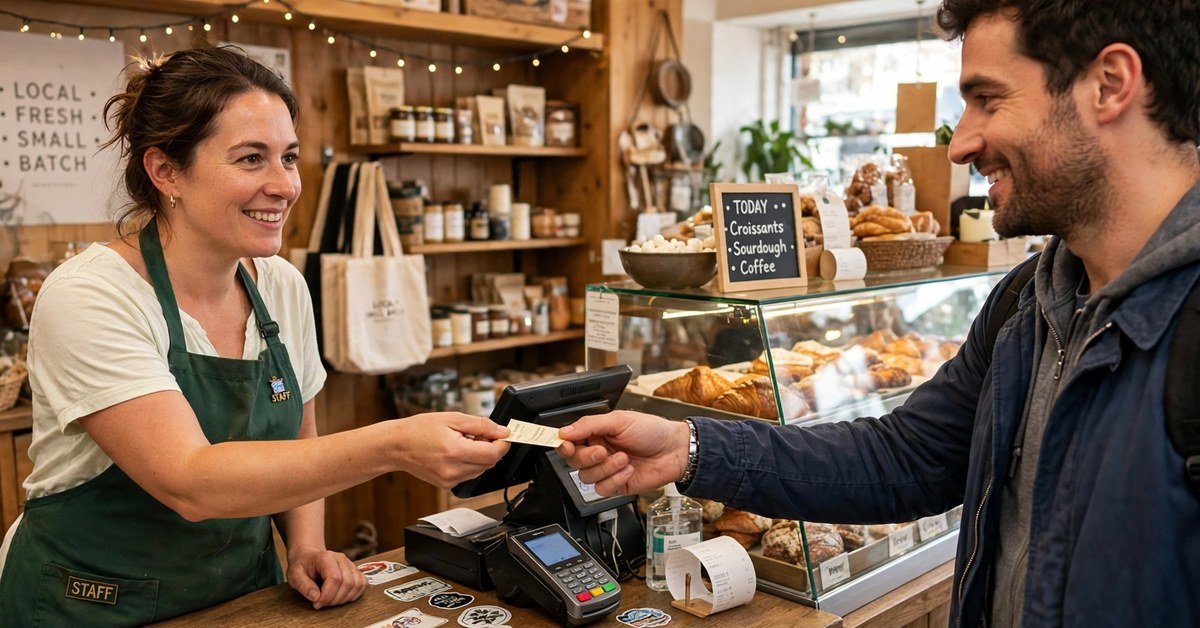
Yes, especially in the US. If a sale item is out of stock, ask at the counter or customer service desk whether they offer rain checks. Policies vary from shop to shop, and some now send a digital version instead of a paper slip, but it never hurts to ask politely.
What’s the difference between “rain check” and “raincheck”?
Only the spelling. The two-word form is the standard way to write the idiom, while the one-word form is common in American English, particularly when the word works as a noun. The meaning — and the friendly feeling behind it — is exactly the same.
Can I use “take a rain check” in a formal email?
Better not, if the situation is truly formal. In a formal email, “Could we reschedule?” or “May we move this to another day?” sounds more professional. In a friendly message to a colleague you know well, though, a rain check is perfectly fine.
How should I reply when someone takes a rain check on my invitation?
Warmly — and with a fresh option. Try: “Of course! How about next week instead?” Don’t be offended or try to make them feel guilty. Remember, the idiom is quietly a compliment: they want to come, just not today.
Final Thoughts
So there it is: one small idiom that lets you say no without really saying no. Most people are fairly down to earth about postponed plans, because everyone has had to delay something they were looking forward to. Keep the promise inside the phrase, and it will serve you well for years.
Want to add more expressions like this to your English? Browse the Idiom Finder and pick another one to learn today — steady little steps like that are how fluency actually happens.
And now, over to you: when was the last time you took a rain check — and be honest, did you actually reschedule, or did the plan quietly disappear? Tell us in the comments below.