

Picture this. Your friend arrives twenty minutes late for lunch, then starts telling you off for keeping him waiting last week. Before you can stop yourself, you smile and say, “Well, that’s the pot calling the kettle black.”
It is one of English’s funniest pictures: two pieces of old kitchen cookware, both black with soot, one accusing the other of being dirty. In this guide, we will look at what the idiom means, where it comes from, and how to use it without starting a fight.

Quick Meaning
The pot calling the kettle black means criticising someone for a fault that you have yourself. The person doing the criticising is just as guilty as the person being criticised — and everyone can see it.
Cambridge Dictionary puts it simply: people should not criticise someone else for a fault that they themselves have. Notice the word “themselves”. Without a shared fault, the idiom does not work. A tidy person telling a messy person to clean up is just advice. A messy person doing the same thing is the pot calling the kettle black.
What Does “The Pot Calling the Kettle Black” Mean?
At its heart, this idiom is about hypocrisy — saying one thing and doing another. But it is softer and funnier than the word “hypocrite”. Calling someone a hypocrite can feel like an attack. Saying “that’s the pot calling the kettle black” usually lands as a joke, even when the point is serious.
The phrase is most often used as a reply. Someone criticises you, and you throw the criticism gently back:
Ali: “You really need to stop checking your phone during dinner.”
Omar: “Says the man who answered three calls during lunch. That’s the pot calling the kettle black.”
The Free Dictionary notes the same idea: a person accusing someone of something they are guilty of themselves. The phrase works in everyday speech, in newspapers, and in political debates — anywhere someone points a finger while standing in the same mud.
The idiom describes the situation, not just the person — an argument, a headline, or even your own behaviour. Admitting “I know, I’m the pot calling the kettle black here” is a disarming way to own a fault first.
Where Does the Saying Come From?
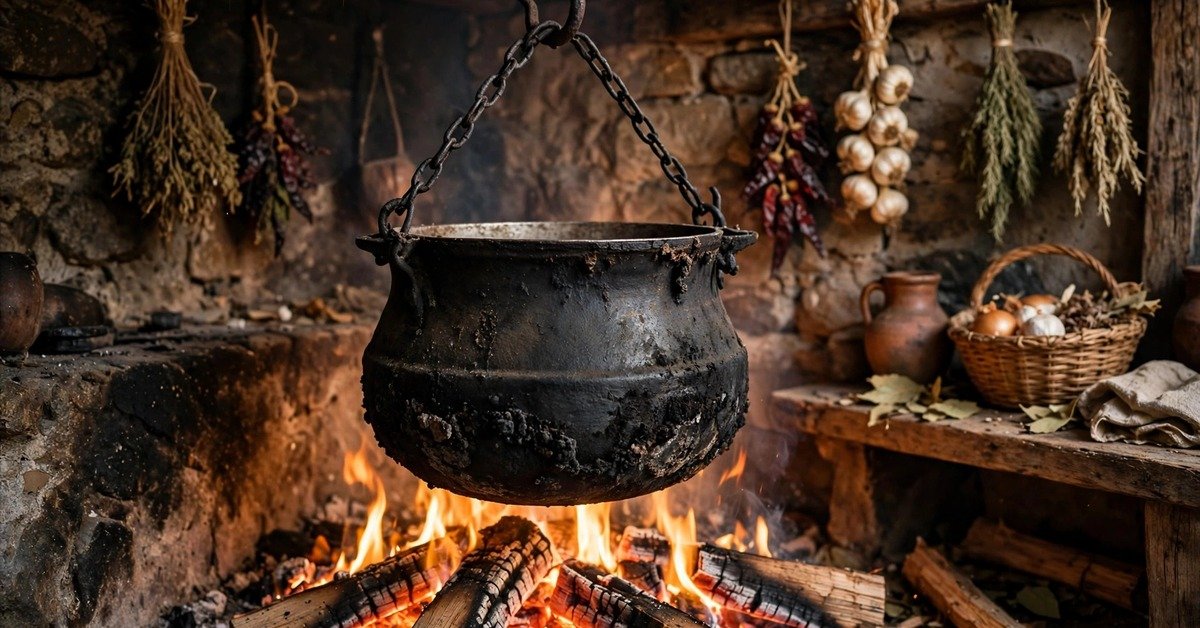
To understand the picture, visit a kitchen from four hundred years ago. There were no gas cookers and no spotless steel pans. Cooking happened over open wood or coal fires, and every pot and kettle was heavy cast iron. Day after day, smoke and flames covered them all in black soot — equally.
Now imagine a blackened pot looking across the fire at a blackened kettle and saying, “You are dirty.” The joke writes itself. The pot cannot see its own soot. That image of shared dirt became the perfect picture of shared faults.
The earliest English version appears in Thomas Shelton’s 1620 translation of the Spanish novel Don Quixote, where a frying-pan tells the kettle to get away, calling it “black-browes”. In 1639, John Clarke recorded the saying in his collection of English proverbs. By 1682, William Penn was using wording very close to ours: “for the Pot to call the Kettle black”.
The phrase kept travelling. In the 1800s, cartoonist Charles H. Bennett drew the pot and the kettle as little characters arguing with each other, and the pictures fixed the saying in people’s minds. The lesson has stayed the same ever since — check your own soot before you complain about someone else’s.
How to Use It
Calling out hypocrisy, gently: This is the idiom’s natural home. When a friend or colleague criticises you for something they do too, the phrase names the double standard without turning the moment into a row. “My brother told me to stop spending money on coffee — the man who buys a new phone every year.”
Joking with friends: Among friends, the idiom is playful and works best with a smile. Said warmly, it tells your friend you are in on the joke. Said coldly, to a stranger, it can sting — so save the sharp version for people who will take it well.
Commentary and debate: Writers and newsreaders use the phrase about public arguments. When one company accuses another of the very practice it follows itself, headlines reach for the pot and the kettle — a quick, vivid way to say “look at your own record first.”
A word of caution. Because the idiom accuses someone of hypocrisy, it can feel rude aimed at a boss, a teacher, or an elder in a formal setting. With them, a softer sentence works better: “I think we both struggle with that one.” And before you judge anyone too quickly, remember to not judge a book by its cover — the fault you think you see may not be the whole story.

10 Example Sentences
- When Imran, who is late every single day, complained that I was five minutes behind, I laughed and said it was the pot calling the kettle black.
- My uncle told me to eat less fried food — while helping himself to a third plate of samosas.
- She accused her sister of gossiping, but she had just spent an hour sharing the same news with the neighbours.
- The captain scolded the young players for arguing with the referee, even though he had been arguing with him all match.
- “You spend too much time on your phone,” said Bilal, without once looking up from his own screen.
- It was the pot calling the kettle black when the shopkeeper complained about his rival’s high prices, since his own prices were higher.
- Ahmed told his son to read more books, but the boy had never once seen his father open one.
- The manager warned the team about long lunch breaks, then disappeared for two hours himself.
- For a man who never returns a borrowed book, telling me to look after his umbrella was quite the pot calling the kettle black moment.
- She called her friend lazy for sleeping until noon — on the morning after she had slept until one.

The Pot Calling the Kettle Black vs Similar Expressions
English has several ways to talk about shared faults. Here is how they compare:
| Expression | What it means | When to use it |
|---|---|---|
| the pot calling the kettle black | criticising someone for a fault you share | pointing out hypocrisy, often with humour |
| people in glass houses shouldn’t throw stones | do not criticise others when you are just as open to criticism | warning someone before they attack |
| look who’s talking | a short, sharp reply to a hypocritical critic | quick comebacks in casual speech |
| the mote and the beam | noticing a small fault in others while missing a bigger one in yourself | serious or literary writing |
| hypocrite | a person who says one thing and does another | direct, and often harsh, criticism |
Think of it this way. “Look who’s talking” is the quickest reply. “Glass houses” is a warning given before someone criticises. The pot and the kettle is the full picture, best when you want the joke and the lesson together. When two people finally admit they share the same fault, they often see eye to eye about it — and the argument quietly ends.
Common Mistakes to Avoid
The grammar here is a piece of cake, but learners still trip over a few points. Each one is easy to fix.
- Getting the word order wrong. The fixed form is “the pot calling the kettle black” — pot first, kettle second. “Pot the kettle black” or “the kettle calling the pot black” sounds wrong to a native ear. Learn it in the right order and it will come out naturally.
- Using it when the fault is not shared. If your friend is genuinely the only messy one in the house, and you are tidy, his complaint about your desk is not the pot calling the kettle black — it is just a complaint. The shared fault is the whole point of the idiom.
- Using it to dodge true criticism. Here is the trap. If someone who is late tells you that you are late, they may be a hypocrite — but you may still be late. Pointing at their soot does not clean yours. Logicians call this the tu quoque fallacy: answering “you too” instead of answering the point.
- Thinking “black” is about skin colour. It is not. The blackness here is soot from an open fire — the literal black coating on old iron cookware. The phrase is about dirt and hypocrisy, and it has nothing to do with race.

Try It Yourself: Spot the Pot and the Kettle
Try these three questions before you look at the answers.
1. Which sentence uses the idiom correctly?
a) The tidy teacher told the messy student to clean his desk. That’s the pot calling the kettle black.
b) The messy teacher told the messy student to clean his desk. That’s the pot calling the kettle black.
2. Your friend says, “You are always on your phone!” You notice he has been on his phone all evening. What is the best reply?
a) “You are a hypocrite and I never want to speak to you again.”
b) “Ha! That’s the pot calling the kettle black.”
3. Fill in the blank: “When the man who never saves money told me to stop wasting cash, it was a clear case of the pot ______ the kettle black.” (called / calling)
Answers: 1) b — the fault must be shared. 2) b — the idiom is lighter and friendlier than a direct insult. 3) calling — the fixed form uses “calling”.
When You Notice the Pot Calling the Kettle Black and Stay Quiet
Sometimes the wisest use of this idiom is silence. At a family dinner, Uncle Bilal told his son to put his phone away while his own phone buzzed in his pocket. Everyone noticed, and everyone kept eating. Sara caught her brother’s eye and they both smiled into their rice. Naming it aloud would have turned a warm dinner into a debate, and nobody wanted that trade.
Staying quiet does not mean missing the lesson. It means reading the room first. In a meeting, a manager may scold the team for late replies while his own inbox sits untouched, and a junior worker who quotes the pot and the kettle aloud will win a laugh and lose goodwill. The smarter move is to notice the pattern and fix your own habit.
Before you speak, ask whether saying it will change anything, or only prove you spotted the irony. If only the second one applies, let the moment pass and keep the idiom for a private chat with a friend later. The pot and the kettle will still be there tomorrow. Handled with that pause, your relationships will be in better shape.
What Readers Ask About the Pot Calling the Kettle Black
Is “the pot calling the kettle black” rude?
It depends on tone and audience. With friends, said with a smile, it is a joke. Said sharply to a boss or a stranger, it accuses them of hypocrisy to their face. When in doubt, soften it: “I think we are both guilty of that one.”
Can I use this idiom in formal writing?
It fits essays and opinion pieces, where a vivid image helps your point. In a business report or a formal email, a plainer phrase such as “a double standard” usually fits better.
Is the phrase offensive or racist?
No. Its history is entirely about soot on cooking pots over open fires, and the “black” means carbon blackening, not skin colour. It is a saying about hypocrisy, used widely in everyday English.
What is the short version of this idiom?
“Look who’s talking” carries the same meaning in three words and is the commonest quick reply. You will also hear “hello, pot, meet kettle” as a playful one-liner, and “a pot and kettle situation” for the whole argument.
Does the idiom mean the criticism is wrong?
Not at all — and this is the most important point. A black pot can still be right that the kettle is black. The idiom points out the hypocrisy of the critic; it says nothing about whether the criticism itself is true.
Final Thoughts
The pot and the kettle have been arguing for four hundred years, and they are not about to stop. That is because the joke is really about us. It is easy to spot the soot on someone else’s cooking pot and much harder to check our own. The next time you feel annoyed at someone’s fault, take one honest second first: is that my fault too?
If the answer is yes, laugh, admit it, and fix it together — the most down to earth response there is. Or simply fix your own soot first and let your example do the talking. Either way, you will sound wiser than the pot.
Keep learning: search for any new expression in our free Idiom Finder, and tell us in the comments — when was the last time you caught yourself being the pot calling the kettle black?