

My grandmother is ninety-one, sharp as anything, and she still cooks a full Sunday lunch for the whole family. But her famous plum pudding? She makes that only once in a blue moon — maybe at Christmas, maybe not even then. And when she does, nobody dares to miss lunch that day.
That’s exactly how this idiom works. English speakers say something happens “once in a blue moon” when it happens so rarely that it almost feels like a special event. In this guide, you’ll learn what it means, where it comes from, and how to use it naturally, with plenty of real-life examples along the way.
Quick Meaning
Once in a blue moon means very rarely — almost never, but not quite never. If something happens once in a blue moon, it happens so seldom that people notice when it does. The Cambridge Dictionary sums it up in a single word: “rarely.”
What Does “Once in a Blue Moon” Mean?
Think of it as a friendlier, more colorful way of saying “very rarely.” It sits in an interesting spot on the scale of frequency. It’s much less often than “sometimes,” but it isn’t “never” either. The thing does happen — just so rarely that each time feels like an occasion.
Native speakers use it for habits, events, and visits, and the tone is usually light. Sometimes it carries a gentle complaint: “He calls me once in a blue moon.” You can hear the small sigh in that sentence. Other times it’s just a plain fact, said with a shrug: “We eat out once in a blue moon, so tonight we’re treating ourselves.”
Grammatically, it’s an adverb phrase, and it usually sits at the end of a sentence: “I see my cousins once in a blue moon.” It can also open a sentence for a bit of style: “Once in a blue moon, the whole street has a barbecue together.”
Learners often ask whether the phrase is old-fashioned. Not at all. People reach for it the same way they reach for piece of cake — it’s short, warm, and everybody understands it instantly, from schoolchildren to grandparents.
What Is a Blue Moon, Really?
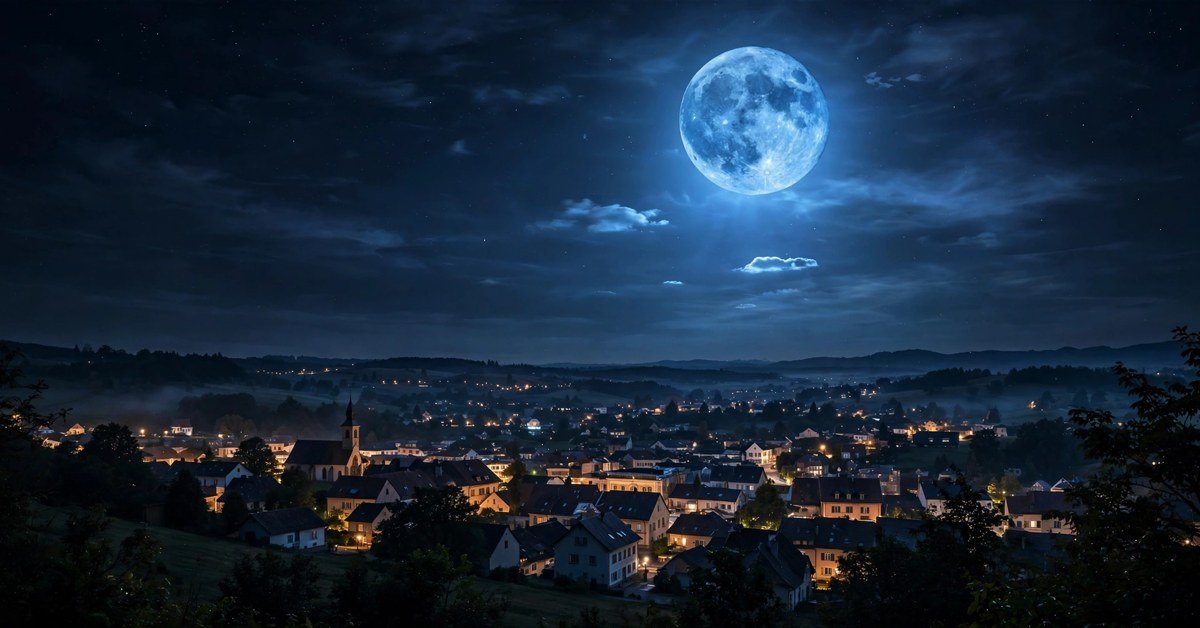
Here’s the part most people get wrong: a blue moon is a real thing, and it usually isn’t blue.
The moon takes about 29.5 days to go from one full moon to the next. Our calendar months are slightly longer than that — 30 or 31 days, except February. So every now and then, a single calendar month squeezes in two full moons instead of one. The second full moon is called a blue moon.
How often does that happen? Roughly once every two to three years. Not never, but rare enough that people point it out when it comes. And when it does come, it looks exactly like any other full moon — big, round, and silvery white.
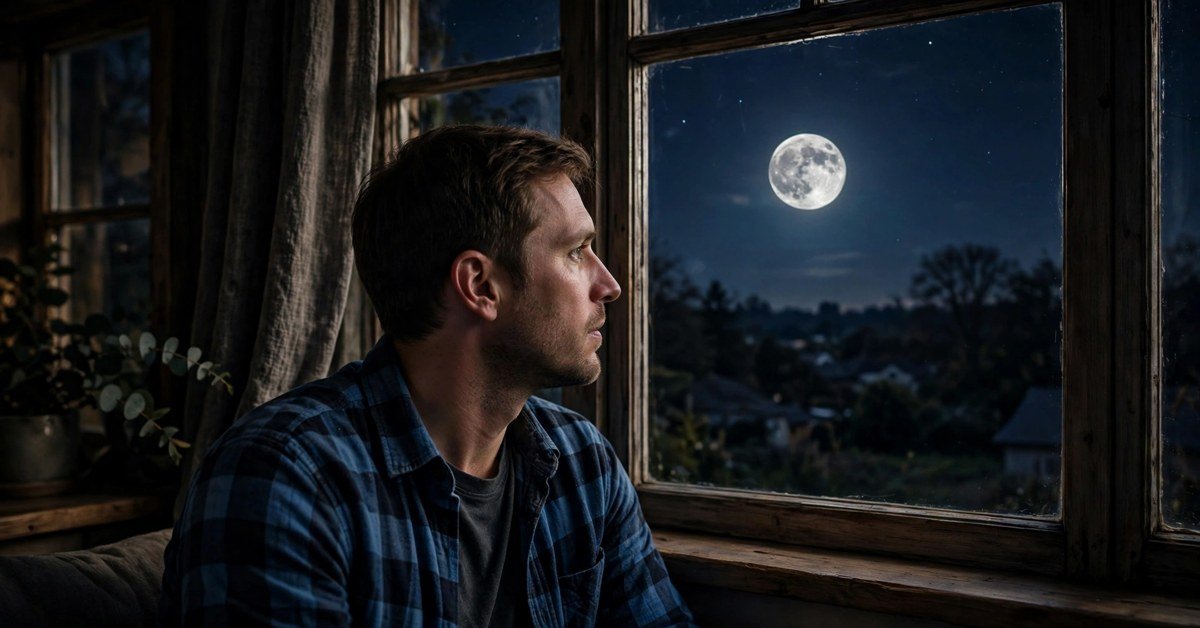
A moon that genuinely looks blue does exist, but it’s even rarer. It happens only when the air is full of fine smoke or dust particles, which scatter the light differently. So the picture behind the idiom is simple: an event so uncommon that when it finally shows up, everyone talks about it. That’s why the phrase means “very rarely.”
Origin
Honestly, nobody can point to one exact moment when this phrase was born, and you should be suspicious of any website that claims it can. What we do know is that by 1821, “blue moon” was already appearing in print in the sense of “a very long time,” as Merriam-Webster notes. Through the 1800s, “once in a blue moon” settled into its modern meaning of “very rarely.”
The “second full moon in one month” meaning arrived much later, in the 1900s, long after the idiom was already common. But it fits the idea of rarity so well that the two are now tied together in most people’s minds. As for why “blue” in the first place — that’s never been proven. The rare sight of a genuinely blue-looking moon may have helped the word stick, but treat that as a possibility, not a settled fact.
How to Use It
The idiom works best for three kinds of everyday situations. Let’s look at each one.
Habits and Routines. Use it for things you do very seldom. “I cook a proper big breakfast once in a blue moon — usually it’s just tea and toast.” I’m a night owl, so an early night is rare for me: “Once in a blue moon, I actually manage to hit the sack before ten.” Health fits here too. My grandfather is strong for his age, and he only stays in bed feeling under the weather once in a blue moon.
Weather and Events. Rare weather and one-off events are perfect territory. “It snows in our city once in a blue moon, so when it does, everyone takes photos and the schools close early.” The same goes for things like an eclipse, a power cut that lasts all day, or a visit from a famous singer to a small town. If the whole neighborhood would talk about it for a week, the idiom fits.
People and Visits. This is probably the most common use of all. “My cousin moved to Canada ten years ago, so we see her once in a blue moon.” Notice it isn’t rude — it usually carries a bit of affection, and sometimes a wish that it happened more often. My uncle is the most down-to-earth person I know, but his job keeps him abroad, so he comes home once in a blue moon, and the house fills up when he does.

10 Example Sentences
- We eat at a fancy restaurant once in a blue moon — most nights, we cook at home.
- My phone battery lasts a whole day only once in a blue moon; usually it’s dead by dinner.
- Once in a blue moon, our teacher cancels the test, and the whole class cheers.
- He apologizes once in a blue moon, so when he finally said sorry, everyone was stunned.
- The bus to our village arrives on time once in a blue moon — bring a book for the wait.
- She writes poems once in a blue moon, usually on long train journeys.
- Our local team wins a match once in a blue moon, but we cheer for them anyway.
- I bump into my old school friends once in a blue moon, mostly at weddings.
- Once in a blue moon, my father tells stories about his childhood, and we all go quiet and listen.
- It snows in our hometown once in a blue moon, so the whole town comes outside to enjoy it.
Once in a Blue Moon vs Similar Expressions
A few expressions live in the same neighborhood, but they don’t all mean the same thing. Here’s the quick difference:
| Expression | What it really means | Tone and feel |
|---|---|---|
| rarely / seldom | not often; very few times | Plain and neutral — safe anywhere, even in formal writing |
| once in a blue moon | very rarely; almost never | Friendly and colorful — the everyday spoken choice |
| in ages | not for a very long time, as in “I haven’t seen him in ages” | Casual; talks about the long gap since the last time |
| when pigs fly | it will never happen | Joking or sarcastic — much stronger, and a bit cheeky |
The key difference is at the bottom of the table. “Once in a blue moon” says almost never — the thing can still happen. “When pigs fly” says never, full stop, and usually with a grin. If your boss asks when you’ll finish an impossible task, choose carefully between them.
Common Mistakes
Using it for “sometimes.” If you go to the gym twice a month, don’t say you go “once in a blue moon.” That’s regular, not rare. For that, “now and then” or “from time to time” is the honest choice. The idiom only works when the thing is genuinely rare.
Using it for monthly events. A blue moon is not a monthly thing — remember, it happens about once every two to three years. Saying “we get paid once in a blue moon” only works as a joke about a very late salary. If something happens every month or every few weeks, the idiom doesn’t fit.
Dropping the word “a.” The phrase is “once in a blue moon.” Learners often say “once in blue moon,” and native speakers will understand you, but it sounds unfinished. The little word matters.
Breaking up the phrase. Keep the words together and in order: once – in – a – blue – moon. “I visit my aunt once in a blue moon” is right. Pulling the phrase apart or moving parts of it around quickly turns the sentence into nonsense.
Quick Practice
Try these three. The answers are right below, so no peeking until you’ve had a go.
- Your friend visits you once every two years. Complete the sentence: “He visits me ______.”
- Which sentence uses the idiom correctly? A) I brush my teeth once in a blue moon. B) I eat caviar once in a blue moon.
- Your sister phones you almost never. Make one sentence about her calls using the idiom.
Answers: 1) once in a blue moon. 2) B — caviar is a rare treat for most of us, while brushing your teeth is a daily habit, so A only works as a joke about terrible teeth. 3) Any sentence like “My sister calls me once in a blue moon” is correct.
FAQ
How often is “once in a blue moon” in real life?
There’s no exact number attached to it. People use it for things that happen a few times a year at the very most — and often much less than that, like once a year or once every couple of years. A good test: if you’d notice it and remark on it when it happens, the idiom probably fits.
Is a blue moon actually blue?
Almost never. A calendar blue moon — the second full moon in a single month — looks completely normal in the sky. The moon only takes on a blue tint when the air is full of fine smoke or dust, and that is itself a very rare sight.
Can I use “once in a blue moon” in formal writing?
It’s better not to. This is an informal, conversational idiom, so it sounds out of place in essays, reports, and formal emails. In those settings, “rarely” or “very seldom” carries the same meaning without the casual flavor.
What’s the difference between “once in a blue moon” and “rarely”?
Meaning-wise, almost nothing. The difference is color and warmth. “Rarely” is plain and neutral, while the idiom paints a small picture and feels friendly, even a little humorous. Use “rarely” in a report; use the idiom around the dinner table.
Is “once in a blue moon” positive or negative?
It can be either, and the sentence decides. “We get a holiday once in a blue moon” sounds like a small complaint, while “Once in a blue moon, everything goes right” feels warm and lucky. The idiom itself is neutral — your tone gives it its mood.

Final Thoughts
That’s the whole trick: if something happens so rarely that it feels like an event when it finally does, “once in a blue moon” is the phrase you want. If you’d like to explore more expressions like this one, our Idiom Finder is a good place to wander next.
Now it’s your turn. What’s something you do only once in a blue moon — and why so rarely? Write your sentence in the comments; I’d genuinely love to read it.