

Your home is where your real English life happens. You might speak English at work or in class, but it’s at home that you tell the plumber which tap is leaking, or ask your landlord about the broken oven. Those everyday moments need exact words — and that’s what this page gives you.
Below you’ll find 60 words for house and home, arranged room by room: the living room, the kitchen, the bedroom, the bathroom, and the spaces around the house. Each word comes with a simple meaning and one natural example sentence, so you can steal the whole line and use it today. If you’re still building your basics, start with our 100 essential English words first, then come back. And if you’ve already enjoyed our English words for school and education, this list works in exactly the same friendly way.
Here’s the learning trick my students swear by: don’t study this list sitting down. Walk through your house, touch each thing as you meet it, and say its name and example sentence out loud. A word you’ve touched is a word you remember.
English Words for House and Home: The Living Room
Let’s start where guests sit and families gather. These twelve things fill almost every living room.
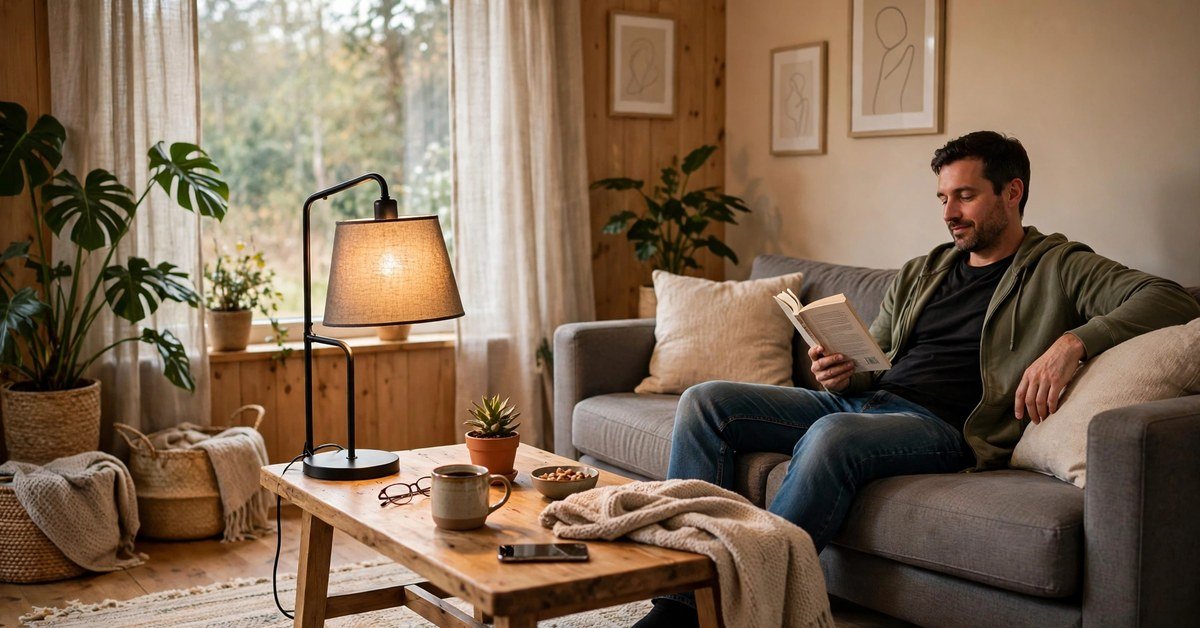
- sofa — a long, soft seat for two or three people — We spent the evening on the sofa, watching the match.
- armchair — a comfortable chair with armrests, for one person — Grandfather reads his newspaper in the armchair by the window.
- coffee table — a low table in front of a sofa — Please put your cup on the coffee table, not the floor.
- rug — a small, thick piece of material that covers part of a floor — The children play on the rug by the fire.
- curtain — a cloth hanging across a window to block light — Close the curtains; the sun is shining in my eyes.
- cushion — a soft bag used to make a seat more comfortable — She put a cushion behind her back and relaxed.
- bookshelf — furniture with shelves for keeping books — My English books sit on the bookshelf by the door.
- lamp — a device that gives light, on a table or floor — Turn on the lamp; it’s getting dark in here.
- ceiling — the inside surface at the top of a room — There’s a small crack in the ceiling above the door.
- wall clock — a clock that hangs on a wall — The wall clock says half past six — we’re late!
- television — a device with a screen for watching programmes and films — We never watch television during dinner.
- fireplace — a space in a wall for building a fire indoors — In winter we sit by the fireplace with hot tea.
The Kitchen
The kitchen is the busiest room in the house — and the one landlords ask about most. Learn these twelve, and you’ll never point and say “that thing” again.

- fridge — a large container that keeps food and drink cold — Put the milk in the fridge, please.
- stove — the top of a cooker, where you heat pots and pans — The soup is cooking on the stove.
- oven — a closed space in a cooker where food is baked — The bread is in the oven; it smells wonderful.
- sink — a large bowl fixed to a wall, for washing dishes — Don’t leave dirty plates in the sink.
- tap — a device you turn to control the flow of water (a faucet in American English) — This tap is leaking, so I’ll call a plumber tomorrow.
- kettle — a container with a lid, used for boiling water — I’ll put the kettle on for tea.
- cupboard — furniture with doors, used for storing food or dishes — The cups are in the cupboard above the sink.
- plate — a flat, round dish that food is served on — He put two plates on the table for us.
- spoon — a small object with a round end, used for eating liquid food — You eat soup with a spoon, not a fork.
- saucepan — a deep metal pan with a handle and lid — Boil the potatoes in a big saucepan.
- mug — a large cup with a handle, for hot drinks — She drinks coffee from her favourite blue mug.
- frying pan — a flat metal pan for frying food — He fried the onions in the frying pan.
The Bedroom
Your bedroom is where the day begins and ends. These twelve words cover the bed itself and everything around it.
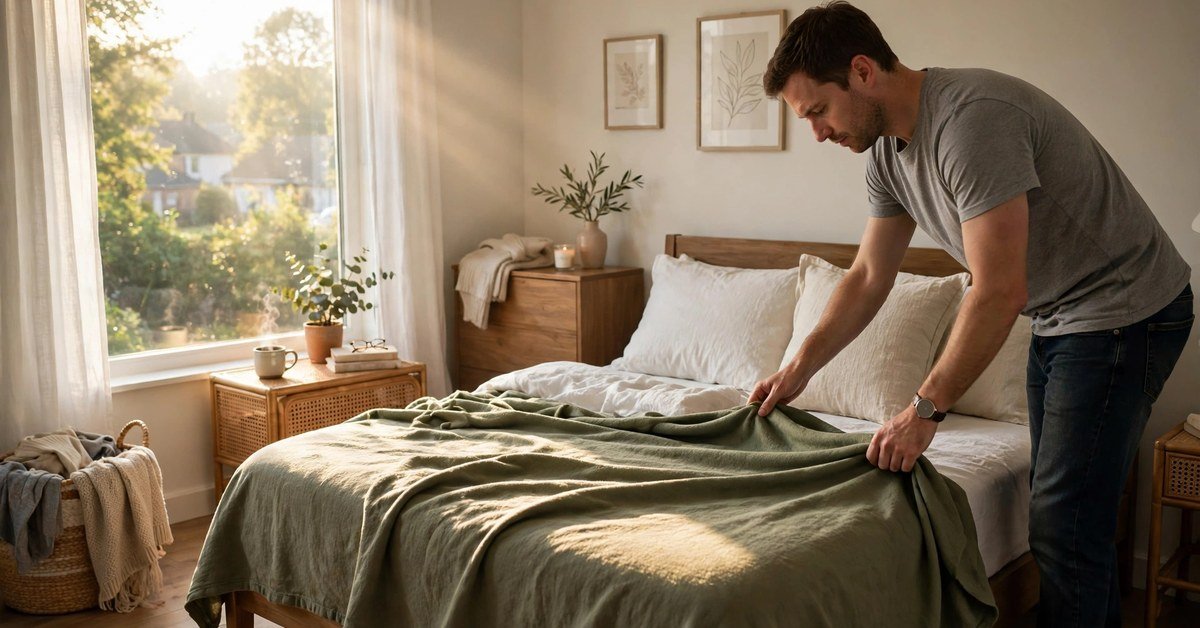
- pillow — a soft object you rest your head on when you sleep — I sleep with two pillows under my head.
- blanket — a thick cover used to keep you warm in bed — It’s cold tonight; take an extra blanket.
- wardrobe — a tall cupboard where you hang your clothes — Hang your shirts in the wardrobe, please.
- drawer — a box-shaped container that slides in and out of furniture — My socks are in the top drawer.
- mattress — the thick, soft part of a bed you lie on — This new mattress is much softer than the old one.
- bedside table — a small, low table next to a bed — She keeps a book and water on her bedside table.
- alarm clock — a clock that rings at a set time to wake you — Set the alarm clock for six o’clock.
- hanger — a curved piece of wood or plastic for hanging clothes — Put your coat on a hanger behind the door.
- mirror — special glass that shows the image in front of it — He looked in the mirror and fixed his hair.
- sheet — a large, thin piece of cloth that covers a bed — Mum changes the sheets every Friday.
- slippers — soft, comfortable shoes that you wear inside the house — I wear slippers at home, never outdoor shoes.
- pyjamas — loose jacket and trousers worn in bed (pajamas in American English) — The children are already in their pyjamas.
The Bathroom
Small room, busy words. These twelve cover everything for washing, brushing and getting ready.
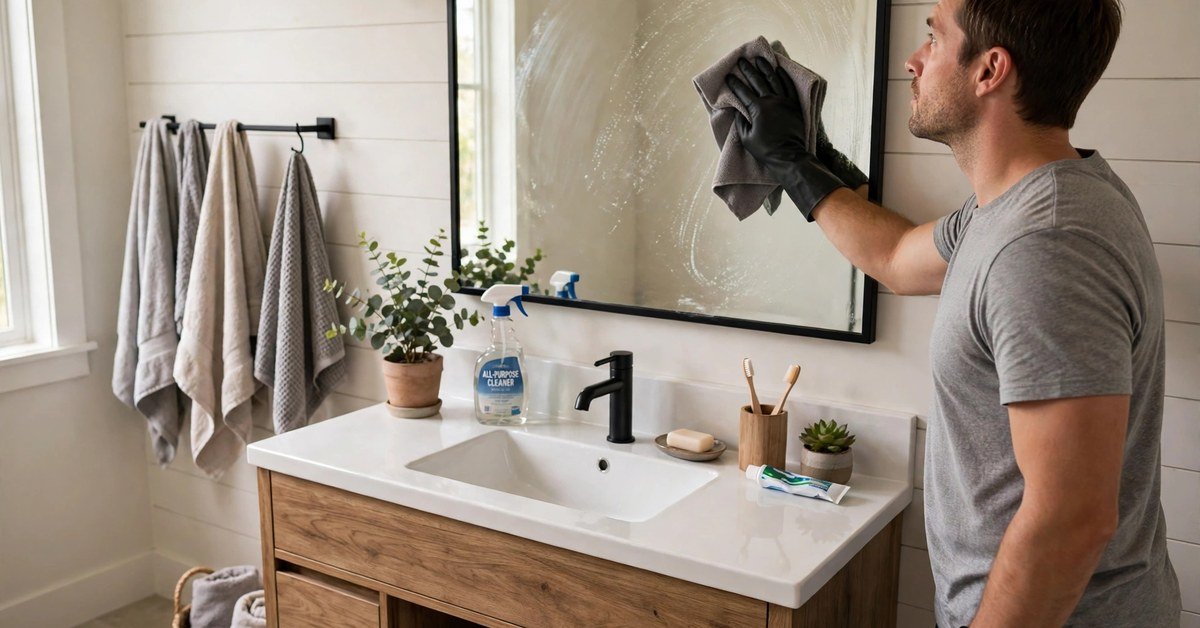
- towel — a piece of thick, soft cloth used for drying yourself — Dry your hands on the clean towel.
- shower — a device that sprays water over your body — I take a quick shower every morning.
- bathtub — a long container you fill with water and lie in — After the long walk, she relaxed in a hot bathtub.
- soap — a solid or liquid used with water to wash your skin — Wash your hands with soap before lunch.
- shampoo — a liquid soap made for washing your hair — This shampoo smells of coconut.
- toothbrush — a small brush with a long handle for cleaning teeth — Change your toothbrush every three months, dentists say.
- toothpaste — a thick substance put on a toothbrush to clean teeth — We’re out of toothpaste; add it to the shopping list.
- tiles — thin, flat squares of clay or stone covering walls and floors — The bathroom tiles are white and easy to clean.
- drain — the hole in a bath or sink where water flows away — The drain is blocked; water goes down slowly.
- razor — a small tool with a sharp blade for shaving — He cut himself with the razor this morning.
- sponge — a light, soft material full of holes that absorbs water — She wiped the bath with a wet sponge.
- hairdryer — a device that blows hot air to dry hair — My sister dries her hair with a hairdryer.
Around the House
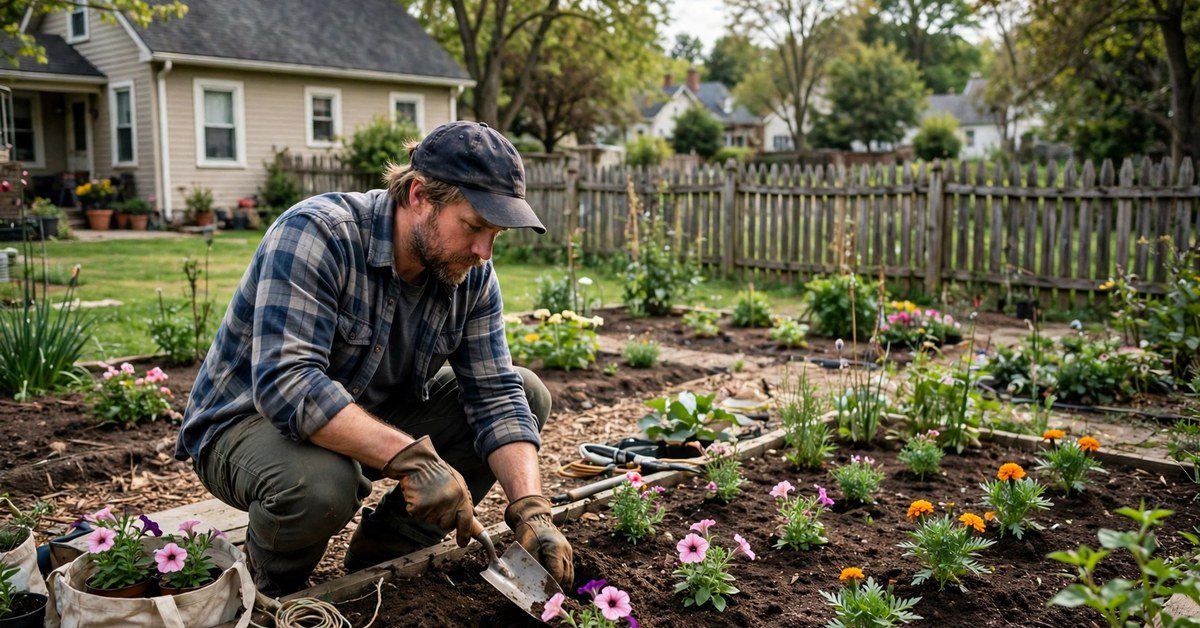
Finally, let’s step outside, to the parts of the house you can see from the street — plus a few hard-working tools.
- stairs — a set of steps between two levels of a building — Be careful on the stairs; they’re steep.
- roof — the top covering of a building — The roof leaks whenever it rains hard.
- gate — a hinged door in a fence or wall around a garden — Please close the gate so the dog can’t get out.
- garden — land next to a house where flowers, grass and vegetables grow — We grow tomatoes in the back garden.
- key — a small metal object you put into a lock to open it — I’ve lost my front-door key again!
- lock — a device that fastens a door and opens only with a key — The lock on the bathroom door is broken.
- broom — a brush with a long handle for sweeping floors — Sweep the kitchen floor with the broom, please.
- dustbin — a large container for holding rubbish (a trash can in American English) — Take the bag out to the dustbin.
- ladder — two long poles joined by steps, used for climbing — He climbed the ladder to clean the windows.
- balcony — a small platform with a railing outside an upstairs room — We drink our morning coffee on the balcony.
- doorbell — a button by the front door that rings when pressed — The doorbell rang twice, but nobody was there.
- windowsill — the flat surface at the bottom of a window — She keeps small plants on the kitchen windowsill.
House or Home? The Small Difference
Learners often ask about this pair, so here’s the short answer: feelings. A house is the physical building — bricks, a roof, doors and windows. You can count houses and buy one in a day. The Cambridge Dictionary entry for “house” describes exactly that: a building where people live.
A home is where your life and your people are — the place you belong. It doesn’t have to be a building you own, which is why the Cambridge Dictionary entry for “home” talks about the place where you live and feel you belong. Compare: “Their new house has five bedrooms and a big garden” is pure facts; “After two years abroad, the little flat finally feels like home” is pure feeling.
Two phrases lock this in. We say at home (“I’m at home today”), never “in home”. And homework — school work done at home — keeps the word home even in a library.
Five Phrases for Talking About Your Home
Words don’t live alone — at home, they travel in set phrases. Each phrase below pairs its words in a fixed way, like the pairs in our guide to English collocations. Learn each phrase whole, and you’ll sound natural instantly.
- make yourself at home — tell a guest this so they relax and feel welcome.
- home sweet home — say it happily when you arrive back home after a journey.
- move house — to leave your home and go to live in a different one (British English; Americans usually say just “move”).
- house-hunting — looking for a house or flat to buy or rent.
- a home away from home — a place that feels just as comfortable as your own home.
Frequently Asked Questions
What’s the difference between a flat and an apartment?
They mean the same thing: a set of rooms inside a larger building. Flat is British, and apartment is American. So a “two-bedroom flat” in London is a “two-bedroom apartment” in New York.
Is “restroom” a home word or a public word?
It’s a public word, used mostly in American English for a toilet in a restaurant, station or airport. In someone’s house, ask for the bathroom (American) or the toilet (British). “Restroom” sounds oddly formal at home.
How do I learn home words fast?
Use the room-walk method from the top of this page: touch each thing at home and say its name and example sentence aloud. Ten minutes a day for one week covers all five groups. Sticky notes on the fridge, the mirror and the door help more than you’d expect.
What do you call the small room under the stairs?
Most people call it an under-stairs cupboard in British English, or a closet under the stairs in American English. Families store coats, shoes and cleaning things there. Many learners know it as the tiny room where Harry Potter slept!
Which is correct: “at home” or “in home”?
Always at home. “I’m at home this evening” is the natural sentence; “in home” is never used on its own. The same phrase can also mean relaxed and comfortable — which is why we tell a guest, “Make yourself at home.”
That’s your whole house in English — sixty words, five rooms, and no more pointing and saying “that thing by the… you know.” This page is part of our growing English vocabulary collection; if you enjoyed it, you’ll also like our English words for health and the body. And when you’re ready to use today’s words, our daily use English sentences are full of home situations — lost keys, burnt toast, surprise guests.