
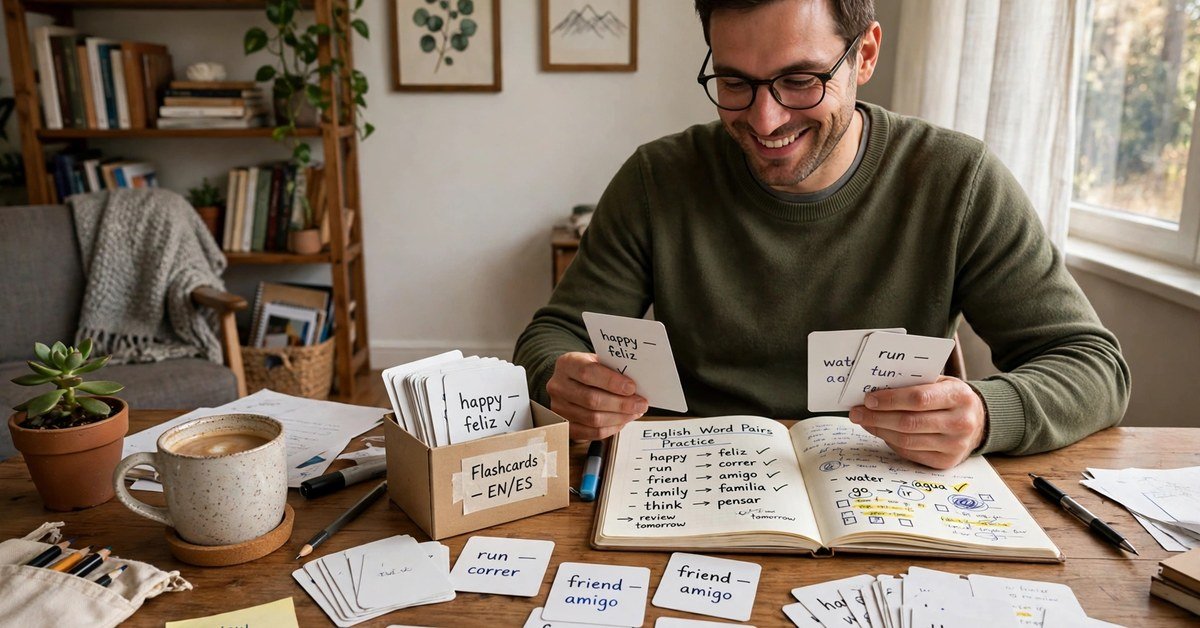
Welcome back to the series! In Part 1 and Part 2, we collected one hundred word partners that native speakers use every day. Quick reminder before we start: a collocation is simply a pair or group of words that naturally travel together. We say “make a mistake”, never “do a mistake” — the grammar of “do a mistake” isn’t the problem; it just sounds strange, because English ears are waiting for “make”. If you’d like the dictionary’s own explanation, the Cambridge Dictionary entry for “collocation” puts it beautifully.
This time, Part 3 takes you into five fresh corners of life — travel and holidays, technology and the internet, money and shopping, feelings and relationships, and nature and the weather. Every one of these fifty English collocations is new: not a single one appeared in Parts 1 or 2, so your notebook grows by fifty more, not by the same old friends in new clothes.
One piece of advice: never learn a collocation sitting alone. A word partner without a sentence is like a song without music — impossible to remember. Read each example out loud, then build one true sentence about your own life. That’s how these phrases move from the page into your mouth.
Travel & Holidays: English Collocations for Your Next Trip
Holidays are where your English gets to breathe — airports, hotels, new cities. These ten partners cover every trip, from packing to coming home.

- board a plane — to get onto a plane at the airport — We boarded the plane and found our seats.
- miss a flight — to arrive too late for your plane — She missed her flight and waited six hours for the next one.
- go sightseeing — to visit famous, interesting places in a city — On our first day in Rome, we went sightseeing.
- take a trip — to travel somewhere for a short time for pleasure — Last summer we took a trip to the mountains.
- go on holiday — to travel somewhere and rest for a few days or weeks — Every August, the whole family goes on holiday to the seaside.
- pack a suitcase — to put your clothes into a suitcase before a journey — I packed my suitcase the night before the journey.
- travel light — to travel with very few bags — He always travels light — just one small backpack and a smile.
- stay at a hotel — to sleep in a hotel while travelling — We stayed at a small hotel near the beach.
- go abroad — to travel to another country — More students are going abroad to study this year.
- travel insurance — an agreement that pays your costs if you fall ill or lose things while travelling — Don’t forget to buy travel insurance before you fly.
Technology & the Internet
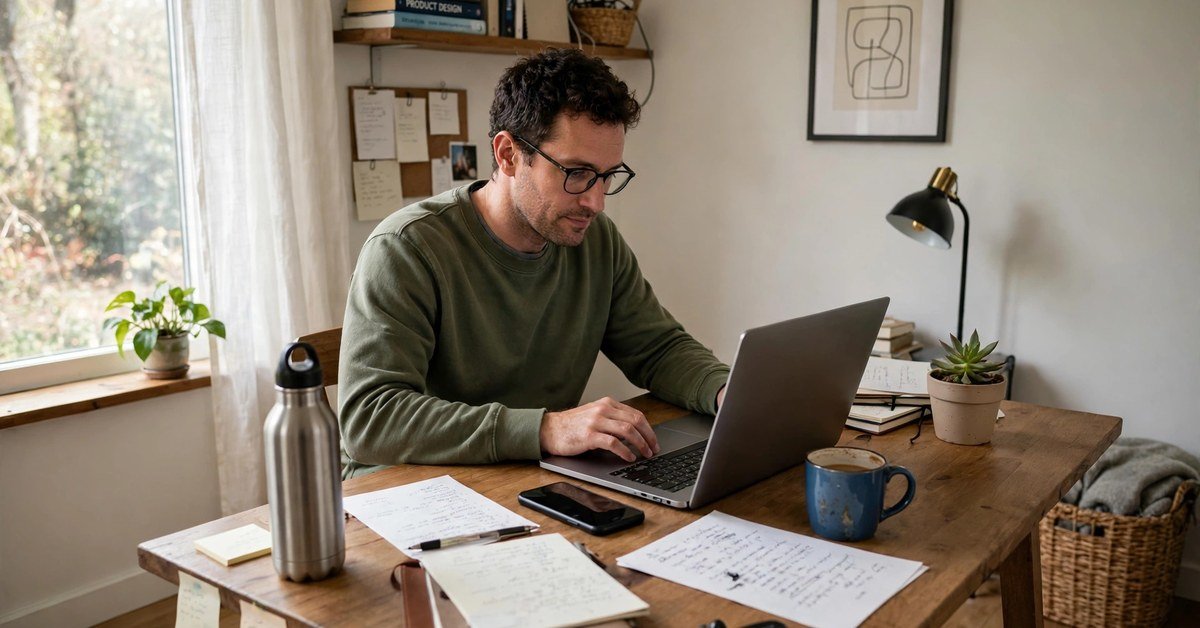
Phones and laptops fill our days, and English has grown a family of word partners around them — ten you’ll hear in every office, classroom and group chat.
- surf the internet — to spend time moving between websites without one clear plan — In the evening, I surf the internet and read the news.
- send an email — to write and send a message by email — Please send me an email with the photos from the party.
- download an app — to copy a program from the internet onto your phone — She downloaded a new app to learn English words.
- create an account — to register with a website or app so you can use it — You need to create an account before you can buy anything.
- reset your password — to make a new password when you forget the old one — I couldn’t log in this morning, so I reset my password.
- connect to Wi-Fi — to join a wireless internet network — Is there a café near here where I can connect to Wi-Fi?
- back up your files — to make extra copies of your files so you never lose them — Always back up your files before you buy a new laptop.
- click on a link — to press a highlighted word or picture to open a page — Click on the link in the message to watch the video.
- go viral — when a video or post spreads quickly to millions of people online — His funny cat video went viral in two days.
- run out of battery — when your phone has no power left — My phone ran out of battery on the train.
Money & Shopping
Money talk feels stressful in any language; the right word partners make it calm and clear. These ten cover banks, bills and the high street.

- open a bank account — to start an account with a bank — When I got my first job, I opened a bank account.
- withdraw money — to take money out of your bank account — I need to withdraw some money from the cash machine.
- ask for a refund — to ask a shop to give your money back — The shoes were the wrong size, so I asked for a refund.
- be short of money — to have less money than you need — We’re a bit short of money this month, so let’s cook at home.
- cost a fortune — to be extremely expensive (informal) — That leather handbag costs a fortune — I could never buy it.
- get a discount — to pay less than the usual price — Students can get a discount at this bookshop.
- on sale — offered at a lower price than usual — These jackets are on sale this week only.
- go window shopping — to look at shop windows without buying anything — We spent the afternoon window shopping in the city centre.
- split the bill — to share the cost of a meal with others — There were four of us at dinner, so we split the bill.
- pay in instalments — to pay for something in small parts over time — They bought the new fridge and paid in instalments over six months.
Feelings & Relationships
Feelings are hardest to explain in a second language — your heart knows the words, but your mouth can’t find them. These ten collocations, together with our phrases for daily conversation, will help you say what you really mean.

- fall in love — to begin loving someone in a romantic way — They met at university and slowly fell in love.
- fall out with someone — to argue seriously with someone and stop being friendly — He fell out with his brother over money.
- get along with someone — to have a friendly, easy relationship with someone — I get along with all my new classmates — they’re kind and funny.
- have a crush on someone — to have strong, short-lived romantic feelings for someone — When I was fourteen, I had a crush on a boy in my class.
- in a good mood — feeling happy, relaxed and friendly — She’s in a good mood today because her exam went well.
- lose your temper — to suddenly become very angry and show it — He lost his temper and shouted at the taxi driver.
- burst into tears — to suddenly start crying — When she heard the good news, she burst into tears.
- feel homesick — to miss home and family while away — In my first week abroad, I felt terribly homesick.
- be proud of someone — to feel pleased about someone’s success — Her whole family is proud of her — she worked so hard.
- feel left out — to feel sad because others do not include you — At the party, nobody talked to him, and he felt left out.
Nature & Weather
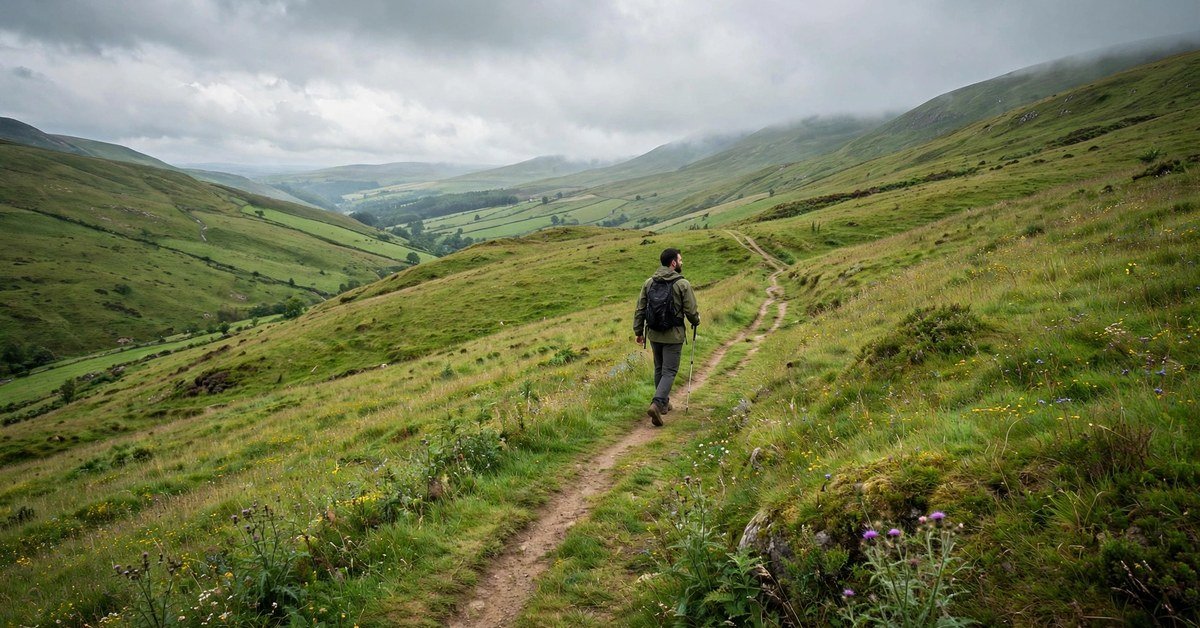
We talk about the weather every day, and nature gives English some beautiful word partners. Finish with these ten.
- bright sunshine — strong, warm sunlight on a clear day — We ate our lunch outside in the bright sunshine.
- clear blue sky — a sky with no clouds at all — It was a perfect morning — a clear blue sky and not a sound.
- thick fog — a heavy, low cloud that makes it hard to see — Thick fog covered the road, so we drove very slowly.
- gentle breeze — a soft, light wind that feels pleasant — A gentle breeze moved the curtains by the open window.
- dark clouds — heavy grey clouds that often bring rain — Dark clouds filled the sky, and we ran for home.
- climate change — the long-term change in the Earth’s weather, caused mainly by human activity — Climate change is making summers hotter in many countries.
- natural disaster — a sudden natural event, like a flood or earthquake, that causes great damage — The flood was the worst natural disaster in the region’s history.
- protect the environment — to keep the natural world clean and safe — When we recycle, we help protect the environment.
- watch the sunset — to look at the sun going down in the evening — Every evening, they walk up the hill and watch the sunset.
- plant a tree — to put a young tree in the ground to grow — Each student planted a tree in the school garden.
Collocations Learners Mix Up
Three partnerships cause more confusion than all the rest together. Learn the direction of each pair now, and you’ll never hesitate over them again.
say hello / tell a story — We say hello, say sorry and say goodbye — but we tell a story, tell the truth and tell a joke. The simple rule: you say something, but you tell someone something.
borrow money / lend money — You met both of these in Part 2, and learners still mix them up daily, so here’s the direction to remember: when money travels towards you, you borrow it; when it travels away from you to help someone, you lend it.
watch TV / see a film — We watch TV, a match or a video — the activity continues while we look. But we see a film, a play or a concert — we experience the whole event, usually outside the house.
How to Learn Collocations Faster
You now have one hundred and fifty collocations across this series — a small mountain. These four habits are how real learners climb it without giving up.
Learn the partner, not the word. When you meet a new noun, don’t write it down alone. Ask one question: “What verb travels with you?” A notebook page that says “flight” teaches you almost nothing; a page that says “miss a flight / board a plane” teaches you English.
Keep a notebook by topic, not by alphabet. Give each area of life its own page — travel on one, money on the next. Your brain remembers stories and places better than alphabetical lists, and when you’re at the airport, one page gives you every phrase you need.
Check your partners in a learner’s dictionary. Good dictionaries record word partnerships for you. The Oxford Learner’s Dictionaries entry for “collocation” explains how these partnerships work — five minutes there will sharpen every dictionary page you read afterwards.
Steal one a day into your own sentence. Pick one collocation each morning and use it in a real sentence about your day. Paste it into our free word counter to check it and read it aloud twice. One honest sentence a day beats fifty silent flashcards.
Frequently Asked Questions
How many collocations should I learn each week?
Ten to fifteen a week is a kind speed for most learners. That’s two or three from each group on this page, learned inside real sentences. In a month, you’ll hold fifty to sixty new partners — and, more importantly, you’ll actually remember them, because each arrived with a story attached.
Is it really wrong to say “do a mistake”?
Native speakers will understand you, so it isn’t a disaster — but it marks you instantly as a learner, and “make a mistake” costs you nothing extra to say. Collocations are where fluency hides: the words are easy, it’s the partnerships that make you sound natural. Fix the big ones first.
Are collocations the same as phrasal verbs?
They’re cousins, not twins. A collocation is any natural word partnership — “heavy rain”, “miss a flight”. A phrasal verb is a specific pattern: a verb plus a small word like up, out or off, which often changes the meaning completely. If those little words confuse you, our guide to what a phrasal verb means explains them with examples.
Can I learn collocations just by reading English?
Reading is the best way to meet collocations — your eyes start noticing which words travel together. But meeting isn’t owning. To make a partnership yours, you have to use it: say it in a sentence about your own life, write it in a message, tell it to a friend. Read to meet them; speak to keep them.
Do British and American speakers use different collocations?
Mostly, they share the same partners, so anything on this page is safe on both sides of the Atlantic. A few famous pairs do split: British speakers “go on holiday” and “pay in instalments”, while American speakers usually “go on vacation” and “pay in installments” — same idea, slightly different clothes. Pick one variety, stay consistent, and you’ll be understood everywhere.
1 thought on “50 More Common English Collocations (Part 3)”