

English never really left the countryside. Long after most people moved into towns and offices, the language kept its fields, its weather and its rivers — because nature gives us pictures that need no explaining. Everyone has felt a storm coming. Everyone has watched something small grow into something big. Everyone knows what it means to be out of your depth, even if they’ve never swum in deep water.
That’s why nature idioms show up everywhere: in offices, in classrooms, in messages between friends. A new colleague is “a breath of fresh air.” A project is “the tip of the iceberg.” A friend tells you to “stop and smell the roses” when life gets too busy. Nobody is talking about actual air, icebergs or roses — but everyone understands at once, because the pictures come from a world we all share.
This guide collects 20 common idioms about nature, grouped the way nature itself feels: first the sky and the weather above us, then the trees, plants and land under our feet, then water and the sea, and finally the nature idioms that have settled so deeply into daily talk that we barely notice they’re about nature at all. Each one comes with a short, plain meaning and one real-life example, so you can start using them instead of just recognising them.

Sky & Weather: What Hangs Above Us
1. A breath of fresh air
Meaning: Someone or something new and pleasant that brings relief after something dull or difficult.
Example: “After months of the same routine, her new ideas were a breath of fresh air for the whole team.”
Step out of a stuffy room and the first breath outside feels like waking up — that’s the picture. People use it for the new colleague who changes the mood, the honest friend after a week of polite small talk, or the simple plan that replaces a complicated one. It says the old air had gone stale, and something better just walked in.
2. A ray of sunshine
Meaning: A person who brings happiness and warmth wherever they go.
Example: “Her little boy is a ray of sunshine — he makes everyone in the room smile.”
Sunshine after grey weather changes everything, and so does this kind of person. People say it with real affection, usually about someone cheerful without trying: the neighbour who always waves, the child who laughs easily, the colleague who stays kind on the hardest days. It’s a warm compliment, and it works because everyone knows exactly how sunlight feels after rain.
3. Calm before the storm
Meaning: A quiet, peaceful period just before trouble or a busy, difficult time begins.
Example: “The office was strangely quiet this morning — the calm before the storm, with the big launch tomorrow.”
Before a real storm, the air goes still: no wind, no birds, an odd heavy quiet. People borrow the picture for the hush before exams, before a wedding, before any big event they know will be hard work. It isn’t fear, exactly — it’s knowing what’s coming and enjoying the quiet while it lasts. The phrase carries a small smile, because everyone recognises the feeling.
4. A storm in a teacup
Meaning: A big fuss or argument about something small and unimportant.
Example: “The whole row about the meeting room was a storm in a teacup — nobody remembers it now.”
A teacup is tiny. A storm inside one is all noise and no real damage — which is exactly the point. People use the phrase to put an argument back in its place: yes, voices were raised, but nothing that matters was at stake. It’s a gentle way of saying “we all overreacted,” and it usually makes people laugh at themselves, which is often what ends the fuss.
5. Reach for the stars
Meaning: To aim for something very ambitious, even if it seems almost impossible.
Example: “She grew up in a small village and reached for the stars — now she studies at a university abroad.”
The stars are the furthest things we can see, so reaching for them means refusing to aim low. People say it to children, to students, to anyone standing at the start of something big. It isn’t a promise of success — it’s permission to want something large. The phrase is hopeful without being foolish: the stars are far, but reaching is how every journey starts.
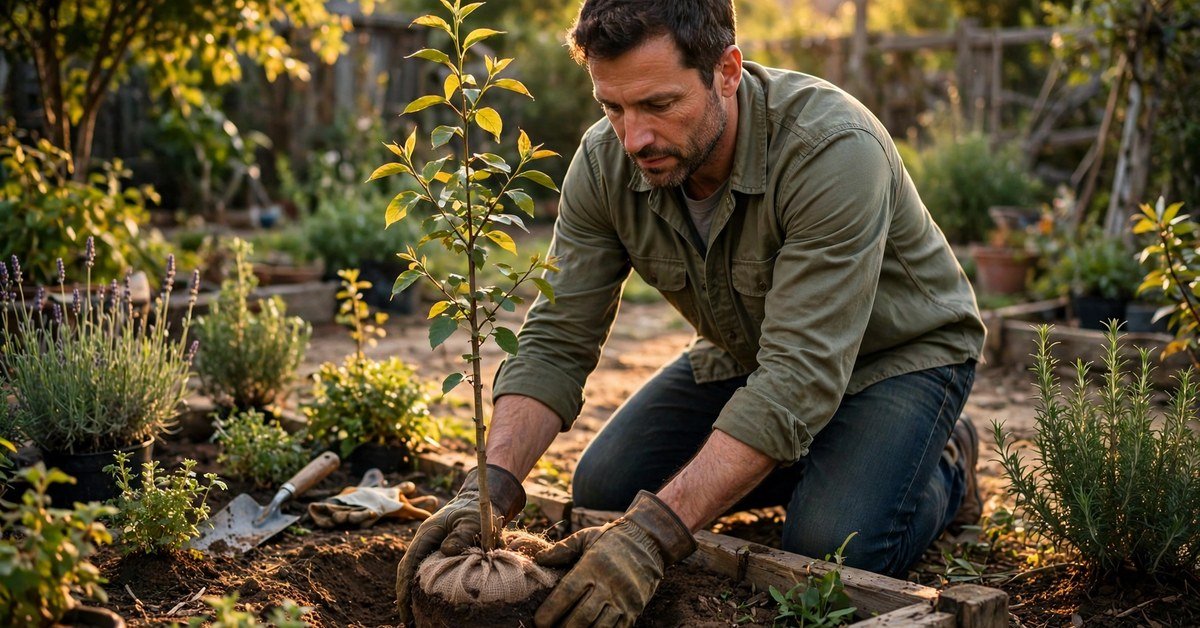
Trees, Plants & the Land: What Grows Under Our Feet
6. Out on a limb
Meaning: In a risky, exposed position, without support — saying or doing something others may not agree with.
Example: “He went out on a limb and defended the unpopular plan in front of everyone.”
Climb out along a tree branch and you’re on your own: the branch is thin, the ground is far below, and nobody can help you from the trunk. People use the picture for the brave, lonely stand — the opinion nobody else will voice, the guess nobody else will make. It takes courage to go out on a limb, and the phrase respects that, even when the branch shakes.
7. Nip in the bud
Meaning: To stop a problem early, before it has a chance to grow bigger.
Example: “The teacher nipped the argument in the bud before it became a real fight.”
A bud is a flower before it opens. Nip it off and the flower never grows — the problem never gets its chance. Gardeners do it to shape a plant; people do it to shape a situation. The phrase praises quick, calm action: the small talk that prevents the big row, the early repair that saves the whole machine. Catch it small, and it stays small.
8. Stop and smell the roses
Meaning: To slow down and enjoy the good things in life instead of always rushing.
Example: “He works twelve hours a day — someone needs to tell him to stop and smell the roses.”
Roses don’t hurry, and they don’t wait either — they bloom, and if you rush past, you miss them. People use the phrase as kind advice, usually to someone they care about: slow down, look around, enjoy the meal, the evening, the child growing up in front of you. It isn’t about being lazy. It’s about remembering that the point of the journey was never just to arrive.
9. Can’t see the forest for the trees
Meaning: To be so focused on small details that you miss the bigger picture.
Example: “He spent a week perfecting one paragraph and couldn’t see the forest for the trees — the whole essay needed restructuring.”
Stand among trees and all you see is bark, leaves, branches — the forest itself disappears. People use the phrase when detail work takes over: the report polished word by word while the argument falls apart, the budget checked to the penny while the business drifts. It’s a call to step back, lift your eyes, and look at the whole shape of things again.
10. The grass is always greener
Meaning: Other people’s lives or situations always look better than your own, even when they aren’t.
Example: “He left his job thinking the grass was greener elsewhere — the new one had the same problems.”
Grass across the fence always looks greener, because you see it from a distance, in good light, without standing in it. Up close, it has the same dry patches as yours. People use the phrase with a knowing smile — about jobs, towns, other people’s marriages, other people’s lives. It’s a reminder that comparison from far away is never fair, and that your own grass usually needs watering, not a new field.

Water & Sea: Going With the Current
11. Tip of the iceberg
Meaning: A small, visible part of a much larger problem or situation, most of which is hidden.
Example: “The one complaint we heard was just the tip of the iceberg — dozens of customers felt the same.”
An iceberg shows a tenth of itself above the water; the dangerous nine-tenths hide below. People use the picture for problems that turn out bigger than they looked: the one mistake that reveals a broken system, the one bill that reveals a mountain of debt. It warns against comfort — what you can see is never the whole story, and the hidden part is what sinks ships.
12. A drop in the ocean
Meaning: A tiny amount compared to what is needed; something so small it makes almost no difference.
Example: “His donation was kind, but against the whole rebuilding cost it was a drop in the ocean.”
One drop changes nothing in an ocean — the picture is humbling, and people use it honestly. It describes the small effort against the huge need: the hour of study before a big exam, the single tree planted in a burned forest. But it isn’t always sad. Sometimes people say it and keep going anyway, because drops are all anyone has, and oceans are made of them.
13. Go with the flow
Meaning: To relax and accept what is happening instead of fighting it or trying to control everything.
Example: “The train was cancelled, so we went with the flow and spent the day exploring the town instead.”
A river flows where it flows; swimming against it only tires you out. People use the phrase for the easy, wise choice: the changed plan, the delayed flight, the day that refuses to go as scheduled. Going with the flow isn’t giving up — it’s choosing not to waste your strength on what you can’t change, and finding something good in what happens instead.
14. Test the waters
Meaning: To try something carefully in a small way first, before committing to it fully.
Example: “Before opening a full shop, she tested the waters by selling at the weekend market.”
Nobody jumps into unknown water without checking it first — is it cold, is it deep, is it safe? People do the same with ideas: the trial shift before the new job, the small order before the big contract, the one honest conversation before the hard decision. Testing the waters is wisdom, not fear. It says: I want to know what I’m stepping into before I dive in.
15. In deep water
Meaning: In serious trouble or difficulty, especially with money or a task that has grown too big.
Example: “After borrowing to pay his debts, he found himself in deep water with no easy way out.”
Shallow water is safe — you can stand, you can walk out. Deep water is different: your feet don’t touch the bottom, and every movement matters. People use the phrase for debt, for deadlines, for any trouble that has grown past easy fixing. It asks for help without shame: deep water is where everyone needs a hand, and saying so is the first step back to shore.

Nature in Daily Talk: So Familiar We Forget It’s Nature
16. Down to earth
Meaning: Practical, realistic and easy to talk to; not proud or showy.
Example: “For a famous writer, she’s surprisingly down to earth — she still answers her own emails.”
Down to earth means feet on the ground, not head in the clouds. People use it as one of the warmest compliments in English: the successful person who hasn’t changed, the expert who explains things simply, the friend who stays real when everything around them is show. We have a full guide to it — our post on down to earth explains its meaning and use in detail. In short: it describes the person you’d actually want to sit next to, however high they’ve climbed.
17. Break the ice
Meaning: To ease the awkwardness at the start of a meeting or conversation, so people relax and start talking.
Example: “He broke the ice with a joke about the weather, and soon everyone was chatting.”
Ice between strangers is cold and silent — nobody knows what to say, and the silence grows. Breaking it means the first warm word, the small joke, the kind question that lets everyone breathe out. Our post on break the ice covers where it comes from and how to use it. In short: it’s the kindest job in any room, and it’s usually done by the person brave enough to speak first.
18. A needle in a haystack
Meaning: Something almost impossible to find because it is hidden among a huge amount of other things.
Example: “Finding one lost earring in that messy drawer was like looking for a needle in a haystack.”
A haystack is enormous; a needle is tiny, and it looks like straw. People use the phrase for the hopeless search: the one file in a thousand folders, the one honest review in pages of noise, the one familiar face in a festival crowd. It usually comes with a laugh of defeat — and sometimes with the happy ending, when the needle is found after all.
19. In full bloom
Meaning: At the best, most beautiful stage of growth; flourishing and at full strength.
Example: “The garden is in full bloom — every rose open, every path lined with colour.”
Bloom is the flower at its best: open, bright, alive. People use the phrase for gardens, and for everything that flourishes the same way: a business in full bloom, a friendship in full bloom, a talent finally showing itself. It carries joy and a little wonder — growth is slow and quiet, and then suddenly, for a short perfect season, everything is open at once.
20. Snowed under
Meaning: Overwhelmed with far too much work or too many things to do.
Example: “She’s snowed under with exam marking — she hasn’t had a free evening all week.”
Snow piles up quietly and then, all at once, you can’t open the door. Work does the same: one more email, one more task, one more favour, until the pile buries the person underneath. People say it with tired honesty, and it usually means “please be patient with me” — the snow will melt, the work will clear, but right now there’s too much of it to see over.

Three Mistakes Learners Make with Nature Idioms
1. Saying “a storm in a teacup” about a real disaster. The phrase is only for small things blown up big — the fuss, not the flood. A real crisis, a real loss, a real danger is never a storm in a teacup, and calling it one sounds cold. Save the phrase for the argument about nothing, the panic over a typo, the drama that everyone laughs about a week later.
2. Using “go with the flow” as an excuse for doing nothing. Going with the flow means adapting wisely to what you can’t control — not ignoring what you can. The cancelled train is a reason to go with the flow; the exam you haven’t studied for is not. The phrase is about flexible strength, not passive drifting, and people can hear the difference.
3. Mixing up “tip of the iceberg” and “a drop in the ocean.” They both involve water, but they mean opposite things. The tip of the iceberg warns that a problem is much BIGGER than it looks — most of it is hidden. A drop in the ocean says an effort is much SMALLER than what’s needed — it barely makes a dent. One is about hidden size; the other is about small effect. Keep them apart and both stay sharp.
Your Turn: Try These Nature Idioms Yourself
Try these five sentences. Each one needs one idiom from the list above.
1. After a week of boring meetings, the new manager’s energy was __________.
2. We heard one complaint, but that was only __________ — many more customers were unhappy.
3. Don’t buy the whole shop yet — __________ with a small market stall first.
4. He was so busy checking tiny details that he __________.
5. With fifty essays to mark this weekend, she’s completely __________.
Answers: 1. a breath of fresh air · 2. the tip of the iceberg · 3. test the waters · 4. couldn’t see the forest for the trees · 5. snowed under
How did you do? If you got three or more, you’re already using these idioms naturally. Try writing one sentence of your own for each idiom you missed — your own example is worth ten read ones.
Nature is only one of the themes English loves to talk about. The weather side of it — feeling ill, raining hard, skies clearing — lives in our collection of idioms about weather, including our guides to under the weather and raining cats and dogs, and the journeys nature sends us on — including “a fish out of water” — are in our idioms about travel. The people, feelings and seasons around them live in our collections of idioms about family, idioms about love, idioms about food, idioms about time, idioms about money and idioms about sports. All of them use the same simple pattern — meaning, example, practice — so once you know one list, the rest feel familiar.
What Learners Ask About Nature Idioms
Are nature idioms old-fashioned?
Not at all — they’re some of the freshest-sounding phrases in everyday English. “A breath of fresh air,” “go with the flow” and “snowed under” are used daily in offices, classrooms and group chats. Nature pictures never go out of date, because nature itself never does.
What’s the difference between “calm before the storm” and “a storm in a teacup”?
Calm before the storm describes quiet before REAL trouble or hard work — the trouble is coming, and everyone knows it. A storm in a teacup describes a fuss about something SMALL — the trouble was never real. One warns you to rest while you can; the other tells you to relax because nothing is wrong.
Is “the grass is always greener” always negative?
Usually it’s a gentle warning against envy, but it can be kind too. Said about yourself, it admits a very human feeling: of course the other job, the other town, the other life looks better from here. The wisdom is in the “always” — it happens to everyone, so there’s no shame in feeling it, only in acting on it blindly.
Can I use “down to earth” in a job interview?
Yes — about yourself, carefully. “I’m quite down to earth” can sound honest and grounded, but it works better as something others say about you. In an interview, show it instead: speak plainly, give real examples, and let the interviewer reach the conclusion themselves.
Do dictionaries list these idioms?
Yes. The Cambridge Dictionary entry for “a breath of fresh air” and its entry for “tip of the iceberg” both give clear definitions and examples — a good place to check an idiom before you use it in an important message.
Which nature idiom should I learn first?
Start with “a breath of fresh air,” “go with the flow” and “snowed under.” They’re the three you’ll hear most in everyday work and study — and once you know them, the rest of the list starts to feel familiar.
A Final Thought
Nature idioms last because nature is the one experience nobody has to be taught. You don’t need to explain a storm, a river or a flower — everyone has stood under a sky, watched something grow, or felt the ground under their feet. The idiom borrows that shared feeling and lends it to an ordinary moment, and suddenly the moment means more.
So don’t just memorise this list. Pick three idioms that feel like your life, and use them this week — in a message to a friend, in a story about work or study, or just in a sentence you write for yourself. That’s how an idiom stops being a list item and starts being your English.
And if you want to keep building, step outside — really outside — and look at what’s around you: the sky, the trees, the water, the ground. Then come back and try the idioms on top of what you saw. The words will stick because the world they came from is still right there, waiting to be noticed.