

English speakers talk about the weather more than almost anything else — and not just when it rains. We use weather words to describe moods, money, work and relationships, often without noticing. Someone is “under the weather” when they feel ill, a plan is “in the wind” when it might change, and a friend who disappears in hard times is a “fair-weather friend.” None of it is really about the forecast.
That’s what this guide is for. Below are 20 common idioms about weather, grouped the way the weather actually feels: rain and storms first, then clouds and sky, then cold, then sunshine and fair weather. Five of them already have their own full guides on this site, so those entries are short here and link straight to the full explanation — the other fifteen are explained in full below, each with a short, plain meaning and one real-life example.
A quick note before we start: weather idioms are almost always informal. They’re perfect for everyday conversation, messages and stories. You wouldn’t put most of them in a formal report — but in daily English, they’re everywhere, because the weather is the one thing everyone has in common.

Rain: When It Pours
1. To rain cats and dogs
Meaning: To rain very heavily.
Example: “We were going to walk to the market, but it started raining cats and dogs, so we waited inside.”
This one already has its own full guide — read raining cats and dogs for the full meaning, more examples and the mistakes learners make with it.
2. To save for a rainy day
Meaning: To keep some money aside for a time in the future when you might really need it.
Example: “He puts a little money aside every month. He says you should always save for a rainy day.”
The picture is simple: a rainy day is a hard day, and the money you saved is the umbrella. Parents say this one a lot, and so do people giving money advice — it is less about weather and more about being prepared.
3. Come rain or shine
Meaning: Whatever happens, in good times and bad — nothing will stop it.
Example: “Come rain or shine, he walks to the office every morning. He has never missed a day.”
You will hear this about promises and habits. A wedding guest might say “I’ll be there, come rain or shine,” and it means the weather — or anything else — will not change the plan.
4. Right as rain
Meaning: Completely fine, healthy and back to normal.
Example: “He was ill all week, but after two days of rest he was right as rain again.”
This is a warm, cheerful idiom, mostly used after someone has been ill or after something has been fixed. If a mechanic hands your car back and says “she’s right as rain,” he means everything works as it should.
5. To take a rain check
Meaning: To say no to an invitation now, but ask to do it another time instead.
Example: “I’d love to come to dinner, but I’m busy tonight. Can I take a rain check?”
This one already has its own full guide — read take a rain check for the full meaning and the polite way to use it.
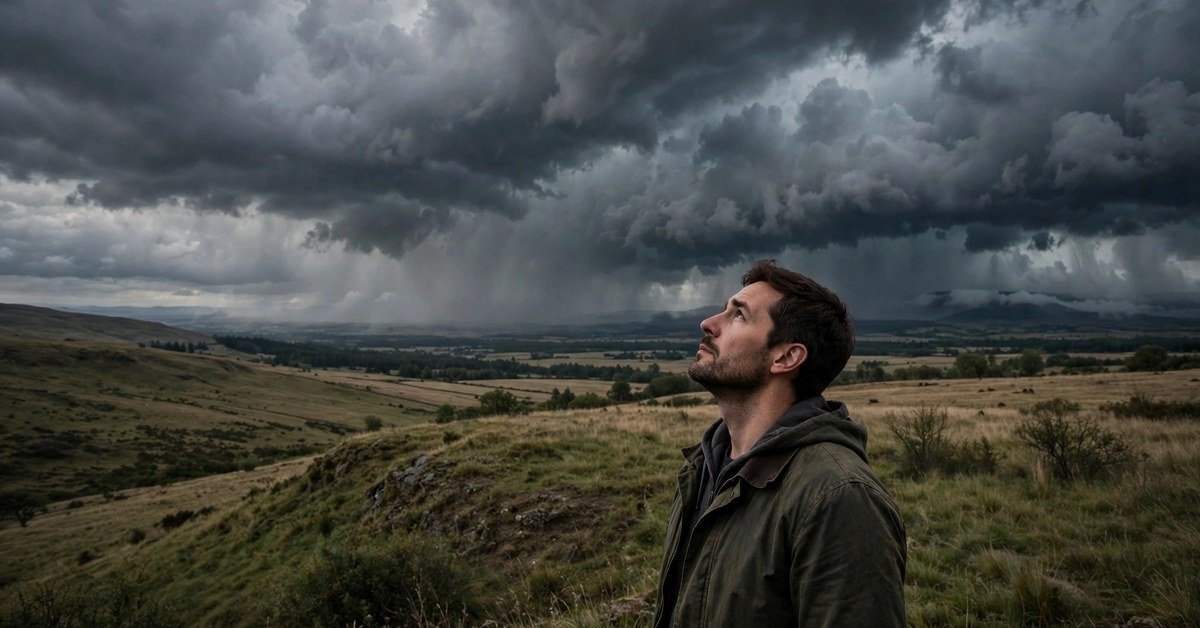
Storms: Trouble in the Air
6. A storm in a teacup
Meaning: A big fuss or argument about something small and unimportant.
Example: “The whole office argued for an hour about the new chairs. It was a storm in a teacup — nobody really cared.”
Americans say “a tempest in a teapot,” which means the same thing. Either way, the picture is funny on purpose: a tiny storm, in a tiny cup, over almost nothing.
7. The calm before the storm
Meaning: A quiet, peaceful time just before something difficult or busy begins.
Example: “The shop was quiet all morning. It was the calm before the storm — by evening, the whole town was there.”
People use this before exams, weddings, big matches and busy days at work. It is not always a warning; sometimes it is just the honest feeling that something big is coming.
8. To weather the storm
Meaning: To get through a difficult time without giving up, and come out the other side.
Example: “The small shop weathered the storm of the slow season and is doing well again now.”
The picture is a ship in bad weather, holding steady until the sea calms. Use it for money trouble, illness, a hard year at work — any long difficulty that you survive by staying steady.
9. To steal someone’s thunder
Meaning: To take the attention or praise that someone else was expecting, often by announcing their news first.
Example: “He was going to tell everyone about his new job, but his brother stole his thunder by announcing it at dinner.”
“Thunder” here means the big, impressive moment — the applause that should have been theirs. It is usually said with a smile, but the person whose thunder was stolen rarely finds it funny.
10. A face like thunder
Meaning: A face that shows someone is very angry — dark, serious and frightening, like a storm sky.
Example: “When he saw the broken window, his face was like thunder. Nobody said a word.”
This is a strong image, so use it for real anger, not mild annoyance. It paints the whole mood in four words: everyone in the room knows to stay quiet.

Clouds and Sky: Moods Above Us
11. To be under the weather
Meaning: To feel slightly ill — not seriously sick, just unwell.
Example: “I’m feeling a bit under the weather today, so I’ll stay home and rest.”
This one already has its own full guide — read under the weather for the full meaning and more examples.
12. Every cloud has a silver lining
Meaning: Even in a bad situation, there is usually something good to be found.
Example: “He lost his job, but every cloud has a silver lining — it gave him time to start the business he always wanted.”
This is the hopeful idiom in the list. People say it to comfort someone, not to dismiss their trouble — the cloud is real, and so is the silver edge around it.
13. To be on cloud nine
Meaning: To be extremely happy, as if you were floating high above everything.
Example: “When she passed the exam, she was on cloud nine for the whole week.”
This one already has its own full guide — read on cloud nine for the full meaning and more examples.
14. To have your head in the clouds
Meaning: To be lost in your thoughts or daydreams, not paying attention to what is happening around you.
Example: “He has his head in the clouds during every meeting. He never hears the questions.”
It is a gentle criticism, not a harsh one. It means someone is dreaming instead of focusing — sweet in a child, less helpful in a meeting.
15. To be under a cloud
Meaning: To be suspected of doing something wrong, or to have a bad reputation for a while, even if nothing is proven.
Example: “After the money went missing, he was under a cloud at work for months, even though he had done nothing.”
Unlike “under the weather,” which is about health, this one is about trust. The cloud is suspicion, hanging over someone until it clears.
16. To chase rainbows
Meaning: To spend your time trying to achieve something impossible or unrealistic.
Example: “He keeps chasing rainbows, looking for a job that pays double and needs no work at all.”
A rainbow is beautiful but you can never reach the end of it — that is the point. The idiom is a kind warning: dream, but keep your feet on the ground too.

Cold, Sun and Fair Weather
17. To break the ice
Meaning: To ease the awkwardness when people meet for the first time, and help them start talking comfortably.
Example: “He told a joke at the start of the meeting and it broke the ice — after that, everyone relaxed.”
This one already has its own full guide — read break the ice for the full meaning and more examples.
18. Snowed under
Meaning: To have far too much work to do — so much that you feel buried by it.
Example: “I can’t meet this week, I’m snowed under with exam marking.”
The picture is a person buried in snow, with only their head showing. Students, teachers and office workers all say this one when the work piles up faster than they can clear it.
19. A fair-weather friend
Meaning: A friend who is only around in good times and disappears when you need help.
Example: “When his business failed, his fair-weather friends stopped calling. Only two real friends stayed.”
This is the opposite of a true friend, and people say it with real disappointment. The weather test is simple: a fair-weather friend is there for the sunshine, not the rain.
20. A breath of fresh air
Meaning: Someone or something new and refreshing that makes a situation feel better.
Example: “The new teacher is a breath of fresh air — the whole class is enjoying lessons again.”
It can describe a person, a new idea, a change of place, even a new habit. After a long, stuffy time, fresh air is exactly what it feels like.

Three Mistakes Learners Make with Weather Idioms
1. Using them literally. “I’m under the weather” does not mean you are standing outside in the rain, and “snowed under” does not mean there is snow on your desk. Learn each idiom as one whole meaning, not word by word — that is how native speakers store them too.
2. Mixing the pictures. “A storm in a teacup” and “the calm before the storm” are both storm idioms, but they mean very different things — one is a fuss about nothing, the other is quiet before trouble. Pick one picture per sentence and let it do its job.
3. Using “under the weather” for serious illness. It means slightly unwell — a cold, a headache, a tired day. If someone is seriously ill, say that plainly. The idiom is for small troubles, not big ones.
If you want the words for talking about the weather itself, not just the idioms, our guide to English words for weather covers the everyday vocabulary — and if the weather has left you feeling unwell, under the weather explains that feeling in plain English.
Your Turn: Try These Weather Idioms Yourself
Fill each gap with the right idiom from the list above. Answers are at the end of this section.
1. He was ill all week, but after two days of rest he was __________ again.
2. The whole office argued about the new chairs. It was __________ — nobody really cared.
3. When his business failed, his __________ stopped calling. Only two real friends stayed.
4. I can’t meet this week, I’m __________ with exam marking.
5. He puts money aside every month. He says you should always __________.
Answers: 1. right as rain · 2. a storm in a teacup · 3. fair-weather friends · 4. snowed under · 5. save for a rainy day
How did you do? If you got three or more, you’re already using these idioms naturally. Try writing one sentence of your own for each idiom you missed — your own example is worth ten read ones.
For the bigger picture, weather is only one theme English loves to talk about. We also use idioms to describe love — like being on cloud nine when you are happy — and to describe effort, which is why knowing how to go the extra mile matters just as much as knowing how to describe the rain.
What Learners Ask About Weather Idioms
Are weather idioms okay to use with friends?
Yes — that’s exactly where they belong. They’re warm, informal and natural in conversation, in messages and in stories. Just keep them out of formal essays and official letters.
What’s the difference between “under the weather” and “under a cloud”?
“Under the weather” is about health — you feel slightly ill. “Under a cloud” is about reputation — people suspect you of something. Same word “under,” two very different troubles, so don’t mix them up.
Can I use “a storm in a teacup” about a serious argument?
It’s best not to. A storm in a teacup is specifically a fuss about something small. Calling a serious argument that name can sound like you’re not taking it seriously.
Do dictionaries list these idioms?
Yes. The Cambridge Dictionary entry for “every cloud has a silver lining” and its entry for “save for a rainy day” both give clear definitions and examples — a good place to check an idiom before you use it in an important message.
Which weather idiom should I learn first?
Start with “under the weather,” “raining cats and dogs” and “right as rain.” They’re the three you’ll hear most in everyday conversation — and once you know them, the rest of the list starts to feel familiar.
A Final Thought
Weather idioms work because the weather is the one thing everyone shares. Saying “I’m busy” is true, but it doesn’t carry the feeling. Saying “I’m snowed under” does — the picture does the work that plain words can’t.
So don’t just memorise this list. Pick three idioms that feel like you, and use them this week — in a message to a friend, in a chat about the rain, or just in a sentence you write for yourself. That’s how an idiom stops being a list item and starts being your English.
And if the rain keeps you indoors, a few kind words go a long way — our collection of birthday wishes in English can help you say it well.
1 thought on “Idioms About Weather: 20 Common Idioms with Meanings and Examples”