

If you’ve come across “YHU” in a text, comment, or social media post, you might pause for a second and wonder whether it means something different from the usual “you.” Short forms like this can look confusing at first, especially when people intentionally change the spelling in casual online conversations.
In most cases, YHU simply means “you.” It’s a stylized, informal spelling that people use to make their messages feel more relaxed, playful, or personal. The pronunciation and basic meaning stay the same; only the way it’s written changes.
In this guide, we’ll look at what YHU means in text, where you’re most likely to see it, and how its tone can change depending on the conversation. You’ll also get simple examples and tips for using YHU naturally without overthinking it.
What Does “Yhu” Mean?
“Yhu” is just a stylized way of typing “you.” That’s it. No hidden meaning, no red flag, no secret confession. People write “yhu” instead of “you” the same way they write “u” or “yu” it’s a shortcut that feels more casual, more personal, and honestly, a little more fun to type.
You’ll mostly see it in:
- Text messages between friends
- Instagram and Snapchat DMs
- TikTok comments
- Group chats where nobody is trying to sound formal
So if someone texts, “hru yhu doing today,” they’re simply asking, “How are you doing today?” Nothing more complicated than that.
Why Do People Spell “You” as “Yhu”?
This isn’t a typo, and it isn’t random. There are a few real reasons this spelling caught on.
1. It’s Part of a Bigger Texting Trend

Gen Z texting culture is full of altered spellings “sm” for “so much,” “fr” for “for real,” “yhu” for “you.” These aren’t mistakes; they’re style choices. Swapping a normal word for a slightly stretched-out version signals that the conversation is relaxed, not formal.
2. It Adds a Bit of Personality
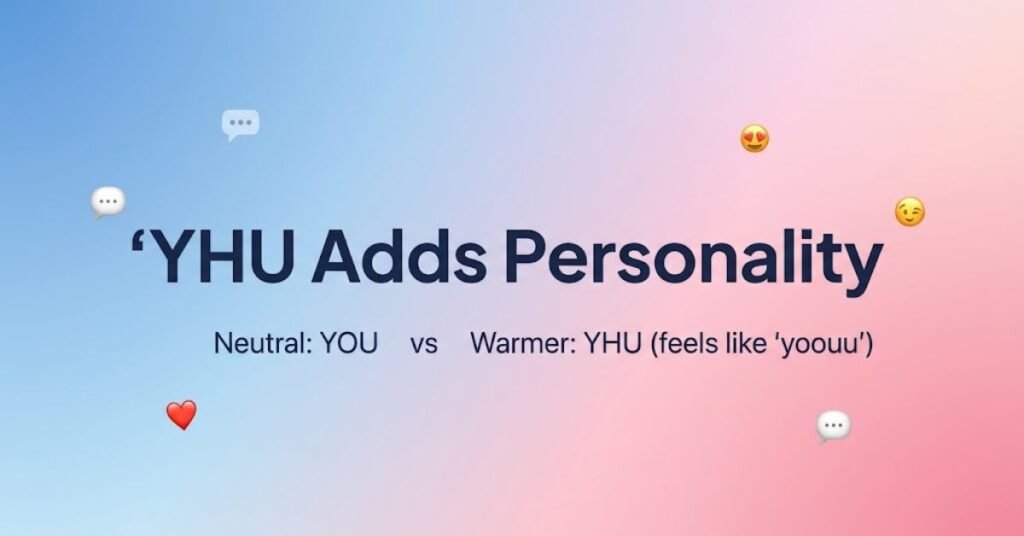
Typing “you” is neutral. Typing “yhu” feels warmer, almost like a verbal tic carried into text similar to how someone might say “yoouu” out loud with a playful stretch. It softens the message and makes it feel more like a real voice than a formal sentence.
3. It’s Faster to Type on Some Keyboards

On phone keyboards with predictive text or swipe typing, short irregular spellings sometimes flow off the thumbs faster once a person is used to the pattern, especially in fast-paced group chats.
4. It Signals “This Is Casual”
Using “yhu” instead of “you” is a small, easy way to tell the other person: relax, we’re not being formal here. It’s the texting equivalent of dropping capital letters at the start of a sentence.
Does “Yhu” Mean Something Different From “You”?
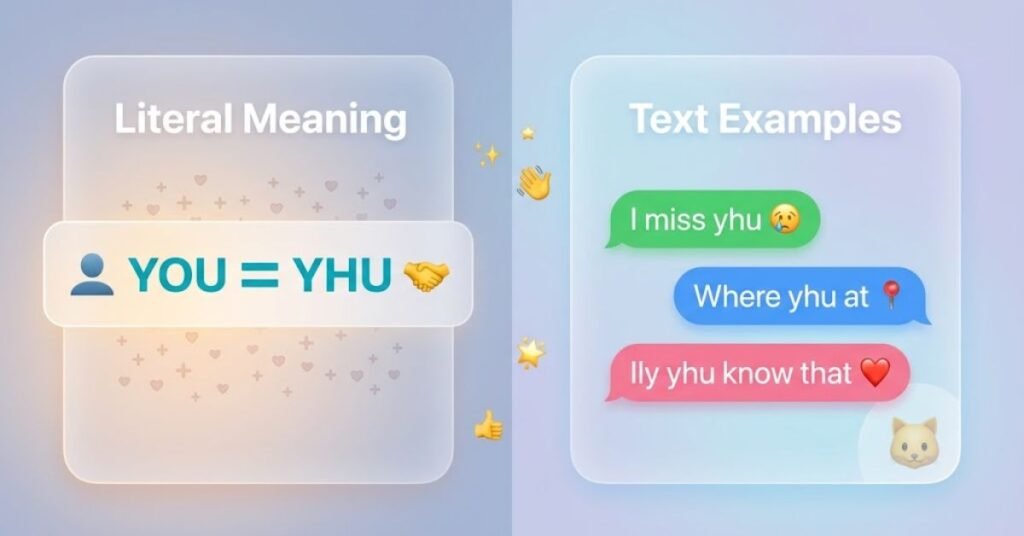
No and this is the part people get confused about most often. “Yhu” carries the exact same meaning as “you.” The spelling changes, the definition doesn’t. Context is what gives it emotional weight, not the letters themselves.
- “I miss yhu” = I miss you.
- “Where yhu at” = Where are you?
- “Ily yhu know that right” = I love you, you know that, right?
The tone can feel a little softer or more affectionate simply because it’s an informal choice, but grammatically and semantically, it’s identical to “you.”
What Does “Yhu” Mean From a Girl (or a Guy)?

A lot of people search this specifically because someone they’re texting used “yhu” and they’re trying to read into it. Here’s the honest answer: it usually doesn’t mean anything romantic on its own. It’s a texting habit, not a signal.
That said, context still matters:
| If the message says… | It probably means… |
| “hey yhu up?“ | Casual check-in, nothing deep |
| “miss yhu” | Genuine affection but judge by the relationship, not the spelling |
| “yhu good?” after a fight | They’re checking in, trying to reconnect |
| “ok yhu do that” | Slightly sarcastic or annoyed tone |
If you’re trying to figure out whether someone likes you, look at the whole conversation tone, emojis, response speed, and consistency not the spelling of one pronoun.
“Yhu” vs. “Yh” vs. “Yu” vs. “Gng” What’s the Difference?
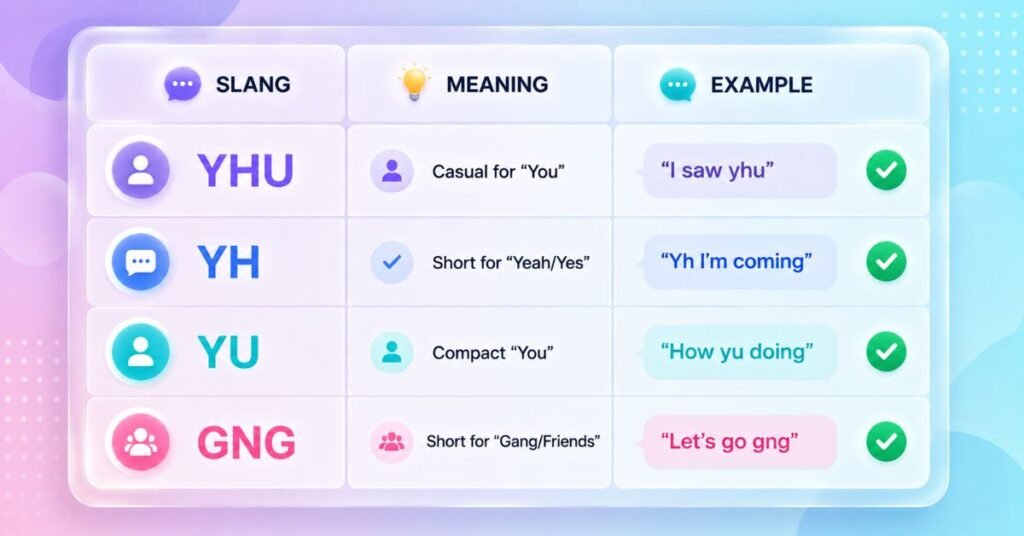
These terms are easy to confuse, so here’s a quick breakdown of what each one means.
- Yhu – A casual spelling of “you.” (e.g., “I saw yhu there”)
- Yh – A short way of typing “yeah” or “yes.” (e.g., “yh I’m coming”)
- Yu – Another informal spelling of “you,” very close to “yhu” but slightly more compact.
- Gng – Short for “gang,” often used to refer to friends or a close group. (e.g., “let’s go gng”)
The easiest way to remember it: yh answers a question, yhu refers to a person. They’re not interchangeable even though they look similar at a glance.
Where Did “Yhu” Come From?
Like most modern text slang, “yhu” doesn’t have one single inventor or exact origin date. It grew naturally out of texting culture on platforms like Snapchat, Instagram, and group messaging apps, where stretched-out or altered spellings became a way for younger users to add personality to short, fast conversations. It sits in the same family as other letter-swap slang like “wut,” “rn,” and “sm” that trades formal spelling for expressive texture.
How to Use “Yhu” Correctly in a Sentence
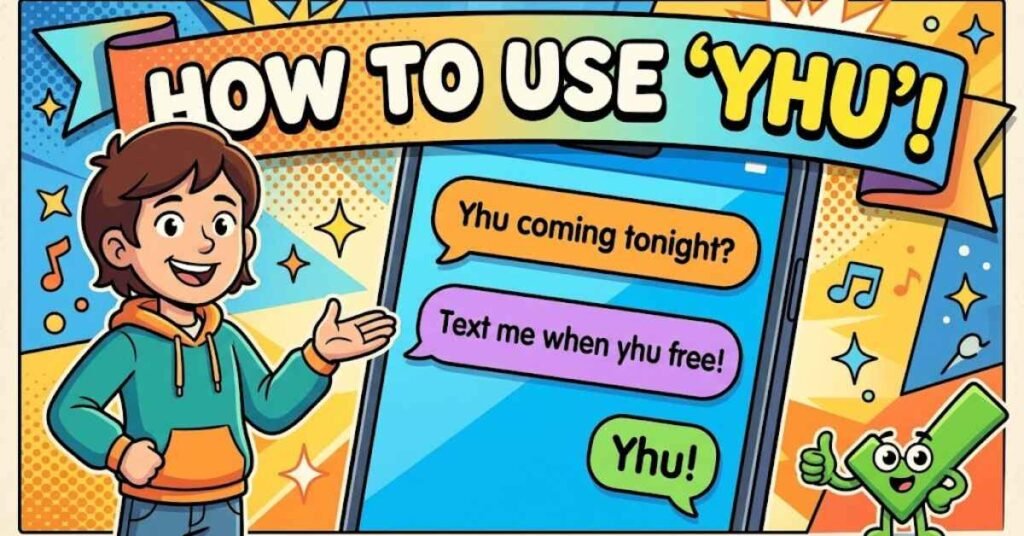
If you want to try it out yourself, here are some natural examples:
- “Yhu coming to the party tonight?”
- “I really appreciate yhu, fr.”
- “Can’t believe yhu said that lol”
- “Text me when yhu free”
A few tips:
- Use it with friends or in casual settings not in a job application or a message to your professor.
- It works best replacing “you” specifically, not “your” or “you’re.”
- Don’t overuse it in every sentence like most slang, it lands better when it’s natural rather than forced.
Is “Yhu” Only Used by Gen Z?

Mostly, yes it’s most common among teens and young adults who grew up texting on smartphones. But slang spreads fast. Millennials in casual group chats, content creators replying to comments, and even some brands trying to sound relatable have started picking it up too. If someone older uses it, they’re probably just matching the casual tone of the conversation.
YHU Questions, Answered
Does “yhu” mean “you” on Snapchat too?
Yes. Platform doesn’t change the meaning “yhu” means “you” whether it’s a text, a Snapchat, an Instagram DM, or a TikTok comment.
Is “yhu” a red flag or something to worry about?
No. It’s simply a spelling style, not a warning sign. Don’t read hidden meaning into it.
What does “ihu” mean in text?
“Ihu” is typically short for “I hate you” often used jokingly between friends, similar in tone to how “smh” is rarely meant literally.
What does “yho” mean in text?
“Yho” is generally just another casual variant of “you,” used the same way as “yhu” or “yu.”
Should I reply using “yhu” too?
Only if it fits the vibe of the conversation. Matching someone’s texting style is a small, natural way to sound relaxed and in sync but it’s never required.
Final Words
“Yhu” is one of the simplest pieces of text slang out there once you strip away the confusion: it just means “you,” dressed up in a more casual, personal spelling. There’s no hidden agenda in the letters the real meaning lives in the sentence around it. Next time it pops up in your messages, you’ll know exactly what’s being said, and maybe you’ll even start typing it yourself.
8 More YHU Examples From Real Chats
The examples above show “yhu” inside single sentences, but in real life it usually appears in the middle of a back-and-forth chat. Short spellings also tend to travel together — the same conversations that use “yhu” often include other shorthand like SPWM, which puzzles just as many readers. Here is what “yhu” looks like when a conversation is actually flowing.
A: yhu still coming to football practice on Saturday?
B: yeah, wouldn’t miss it. what time are yhu getting there?
A: around nine. save me a spot in the warm-up
Plain English: Both friends are simply saying “you” — the spelling just keeps the chat light and casual.
A: random message but i miss yhu
B: stoppp, i miss yhu more
A: then call me tonight, yhu never call anymore
Plain English: A soft, affectionate exchange — the stretched-out spelling makes “I miss you” feel warmer.
A: yhu went quiet in the group chat today, everything okay?
B: yeah just a long day at work, thanks for asking
A: okay good, had to check on yhu
Plain English: A is checking on a friend — here “yhu” carries care and concern, nothing more.
A: did yhu see the new update?
B: downloading it right now
A: hurry up, the whole squad is waiting on yhu
Plain English: Fast gaming-chat talk, where “yhu” keeps the pace quick and informal.
A: be honest, did yhu finish the history homework?
B: of course i did, yhu know i always do it first
A: legend. help me with question three?
Plain English: Ordinary school chat — nothing hidden in it, just “you” in a relaxed spelling.
A: that jacket looks so good on yhu
B: yhu think so? it’s actually really old
A: old or not, it suits yhu
Plain English: A compliment between friends, softened by the playful spelling.
A: please tell me yhu didn’t eat the last slice
B: …define “last slice”
A: ok yhu officially owe me a whole pizza now
Plain English: The annoyed tone comes from the situation, not the word — “yhu” still just means “you.”
A: where are yhu, we’re all outside already
B: two minutes, just grabbing my keys
A: hurry, yhu know how impatient my brother gets
Plain English: A simple “where are you?” — the spelling changes nothing about the question.
How to Reply When Someone Sends YHU
Because “yhu” is only a spelling, what you say back matters far more than whether you copy the spelling yourself. Match the energy of the message and you will almost always get it right. Here are natural replies for the three situations that come up most often.
When a friend is just chatting casually — messages like “yhu up?” or “yhu coming later?” are light check-ins, so keep your answer just as relaxed:
- “yesss, what’s the plan?”
- “of course, wouldn’t miss it”
- “yhu already know I am 😌”
When the message feels warm or affectionate — a “miss yhu” or “proud of yhu” deserves a reply with the same warmth:
- “miss yhu more, stop it”
- “that genuinely made my day”
- “call me tonight? miss talking to yhu”
When the tone sounds annoyed or sarcastic — something like “ok yhu do that” is best answered calmly rather than with more sarcasm:
- “wait, are we good? that sounded a bit off”
- “okay, that came out wrong — my bad”
- “let me explain before this gets weird”
Want a few more lines that work in almost any chat? These English phrases for daily conversation are the ones people actually reach for day to day, slang or no slang.
YHU Questions, Answered
Is “yhu” the same as “u”?
Almost — both mean “you,” and neither one changes what a sentence means. The difference is feel. “U” is the shortest, plainest shortcut, while “yhu” stretches the word out, so it tends to read warmer and a bit more playful. In quick, dry chats you will see “u” more; in friendly, softer conversations, “yhu” shows up more often.
Does it matter if someone writes “YHU” in all caps?
No. Capital letters don’t give the word a new meaning — it still just means “you.” Caps usually follow the style of the whole message: some people type in caps for emphasis or excitement. A lone “YHU” inside an otherwise normal message is nothing to read into.
Can “yhu” refer to more than one person?
Yes, exactly like “you” itself. In a group chat, someone might write “yhu all saw the game, right?” and mean everyone reading. Who it is aimed at is usually clear from the conversation — who was mentioned last, or who answers first.
What if a message with “yhu” still doesn’t make sense?
Try the simplest trick first: swap in “you” and read the sentence again — it clicks almost every time. If it still feels off, the confusing part is probably a different slang word sitting in the same message. Look that one up in our Idiom Finder instead of guessing, and the rest of the chat usually falls into place.