
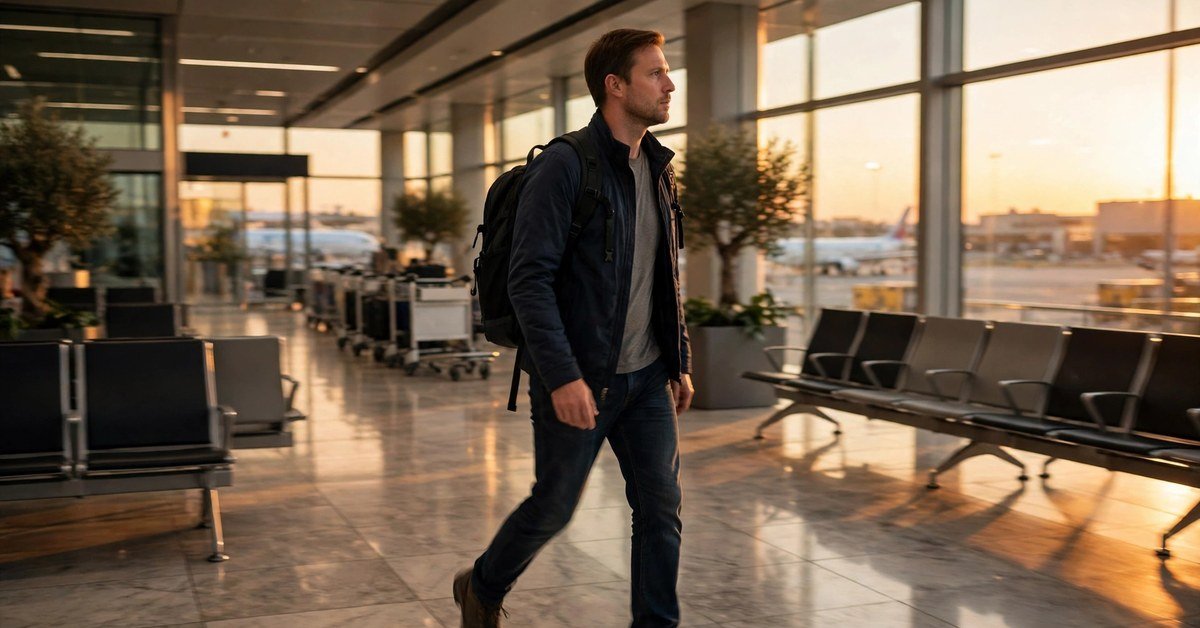
You don’t have to be a frequent flyer to use travel idioms. English speakers reach for them at work, at home, in exams and in everyday chat — often without noticing. A manager says the team is going around in circles. A friend says she’s got itchy feet and needs a change of scenery. A teacher tells a student who missed a deadline that he’s missed the boat. None of them are talking about a real journey. They’re borrowing the language of travel because travel is full of moments everyone understands: packing up, setting off, losing your way, hitting a delay, and finally coming home with a story to tell.
That’s what this guide is for. Below are 20 common idioms about travel, grouped the way a real trip actually feels: first setting off, when the bags are packed and the road is calling; then finding your way, when the map stops making sense; then planes, boats and delays, where things rarely go exactly to plan; and finally the feeling travel leaves behind, the part that stays with you long after you’ve unpacked. Each one comes with a short, plain meaning and one real-life example, so you can start using them instead of just recognising them.
A quick note before we start: travel idioms are informal and everyday. They’re perfect for conversation, for stories about work and study, and for messages to friends. You wouldn’t put most of them in a formal letter or an official report — but in daily English, they’re everywhere, because almost everyone has packed a bag, waited at a station, or dreamed about going somewhere new.
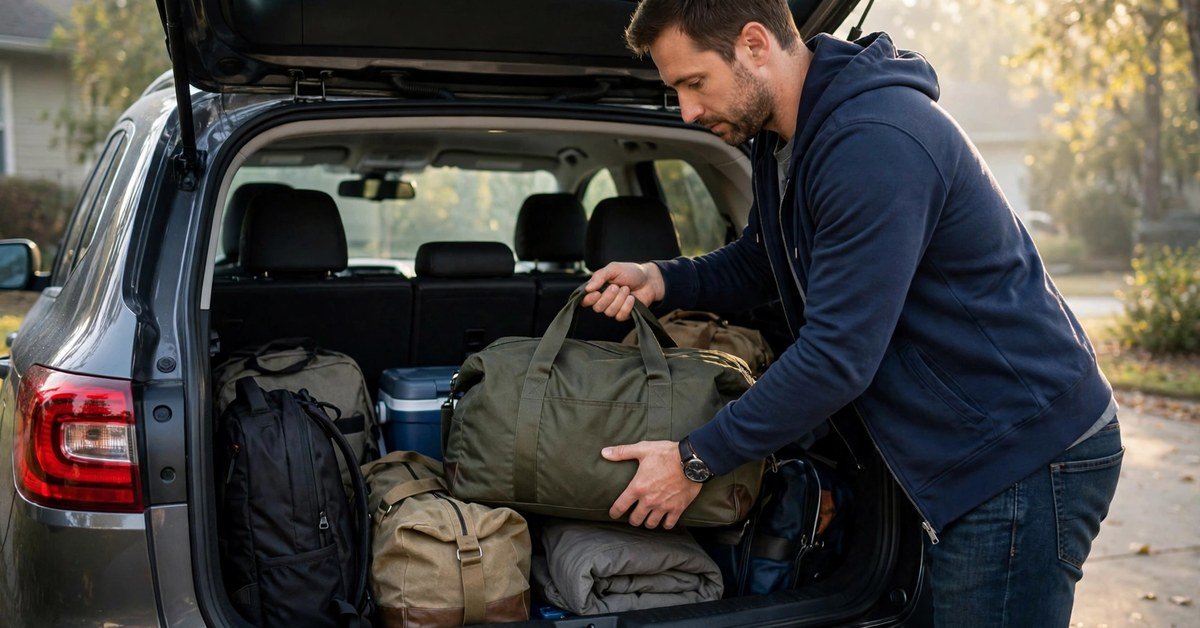
Setting Off: When the Bags Are Packed
1. Hit the road
Meaning: To leave a place and begin a journey, usually by car or on foot.
Example: “We’ve said our goodbyes, so let’s hit the road before the traffic gets bad.”
The picture is simple: your feet, or your wheels, meet the road and the trip begins. People use it when the waiting is over and it’s time to move — after breakfast, after a long goodbye, after the bags are finally in the car. It sounds more alive than “leave” or “go,” which is the point: hitting the road is a beginning with energy in it, even if the journey is only across town.
2. On the road
Meaning: Travelling from place to place, especially for work or for a long time.
Example: “He’s on the road most of the month, visiting shops in three different cities.”
Being on the road isn’t one trip — it’s a way of life for a while. Salespeople, drivers, musicians and sports teams live on the road: hotels, motorways, early starts, meals eaten in a hurry. People use the phrase with a mix of pride and tiredness, because life on the road sounds exciting until the third hotel breakfast in a row. It can also be gentle and simple: “I’m on the road” just means “I’m travelling, call me later.”
3. Travel light
Meaning: To travel with very little luggage, taking only what you really need.
Example: “I only took a small bag — I like to travel light and skip the long wait at the carousel.”
Travelling light is a choice, and for some people it’s almost a philosophy. One small bag, no heavy suitcase, nothing to drag up the stairs. People say it with pride after a smooth trip, and with regret when they realise they’ve forgotten the one thing they actually needed. The phrase has travelled beyond holidays, too: a person who travels light through life is someone who doesn’t carry too many worries, or too much stuff, with them.
4. Itchy feet
Meaning: A strong wish to travel and see new places, especially after staying in one place for a long time.
Example: “After a year in the same town, I’ve got itchy feet — I need to go somewhere new.”
Nobody’s feet actually itch. The phrase is a picture of restlessness: the longer you sit still, the more your feet want to move. People use it with a laugh, usually when they’re planning a trip they can’t quite afford yet, or dreaming about one they took years ago. It’s a warm phrase, not a complaint — itchy feet means you still want to see the world, and that’s a good thing to feel.
5. Hit the trail
Meaning: To start a journey, especially a walk, a hike, or a long trip through the countryside.
Example: “We packed sandwiches and water, then hit the trail just after sunrise.”
A trail is a rough path, not a smooth road, so this phrase carries a feeling of adventure that “hit the road” doesn’t quite have. Walkers say it at the start of a hike, and travellers say it when they’re leaving the city behind for open country. It sounds cheerful and determined — boots on, bag on, let’s go — and it suits anyone who likes the journey as much as the destination.

Finding Your Way: When the Map Stops Making Sense
6. Off the beaten track
Meaning: In a place where few people go, far from the usual tourist routes and busy towns.
Example: “We found a tiny café off the beaten track, where nobody spoke English and the food was wonderful.”
The beaten track is the path everyone walks, worn smooth by thousands of feet. Off it, things are quieter, stranger, and often more interesting. People use the phrase for villages, beaches, cafés and whole countries — anywhere the crowds haven’t found yet. It carries a quiet pride, too: finding somewhere off the beaten track means you looked a little harder than everyone else, and it was worth it.
7. Take the scenic route
Meaning: To choose a longer, prettier way to get somewhere instead of the fastest one.
Example: “We took the scenic route along the coast, and the drive took two hours longer — nobody minded.”
The scenic route is the road with the views: the coast, the hills, the little villages with flowers in the windows. People take it when the journey matters as much as arriving, and the phrase has grown a second meaning — doing something the slow, enjoyable way instead of rushing. “Let’s take the scenic route through this project” means let’s enjoy it, let’s not hurry. Either way, it’s a choice to slow down on purpose.
8. Go around in circles
Meaning: To keep doing the same thing without making any progress, like walking in a circle and ending up where you started.
Example: “We talked for an hour but went around in circles — nobody could agree on a plan.”
Going around in circles is frustrating, and everyone knows the feeling. A meeting that repeats the same points, a map that keeps leading you back to the same corner, a problem you think about all night and solve never. The phrase works because the picture is so clear: you’re moving, you’re busy, you’re tired — and you’re still exactly where you began. People say it with a sigh, and usually right before someone suggests a fresh start.
9. Hit a dead end
Meaning: To reach a point where you can’t go any further and there’s no way forward.
Example: “We followed the road into the hills and hit a dead end — a locked gate and nothing beyond it.”
A dead end is a road that simply stops. No turning, no shortcut, just a wall or a fence and the long way back. People borrow the phrase for plans and ideas as well as roads: a job application that goes nowhere, a search that finds nothing, a story that stops making sense. It’s honest, not dramatic — a dead end says “this way doesn’t work,” and the only sensible thing is to turn around and try another road.
10. Get your bearings
Meaning: To work out where you are, or to understand a new situation, after feeling lost or confused.
Example: “Give me a minute to get my bearings — I’ve just arrived and I don’t know which way the hotel is.”
Sailors used bearings to find their direction from the stars and the compass, and the phrase still carries that feeling of stopping, looking around, and thinking clearly. Travellers use it in a new city, on the first morning in a strange hotel, or after a long flight when nothing looks familiar. But it works far beyond travel: starting a new job, joining a new class, moving to a new town — anywhere you need a quiet minute to work out where you are before you move.

Planes, Boats and Delays: When Things Don’t Go to Plan
11. Miss the boat
Meaning: To lose an opportunity by being too slow to act.
Example: “The cheap tickets sold out in an hour — if you wait until tomorrow, you’ll miss the boat.”
The picture is a boat pulling away from the shore while you’re still running down the pier. Nobody means to miss it; they just waited a little too long, thought it over one more time, or planned to act later. We have a full guide to it — our post on miss the boat explains where it comes from and how to use it without sounding harsh. In short: use it when the chance was real and the delay was the problem, not when someone never had a chance at all.
12. Smooth sailing
Meaning: Easy progress with no problems or difficulties, like a boat moving gently over calm water.
Example: “Once the tickets were booked, the rest of the trip was smooth sailing.”
Smooth sailing is the part of the journey everyone hopes for: no delays, no lost bags, no arguments about the map. People use it after the hard part is over — the forms are filled in, the tickets are booked, the plan is finally working — and also as a hopeful wish: “Here’s to smooth sailing from now on.” It’s a calm phrase, said with relief, and it usually comes right after a story about the part that wasn’t smooth at all.
13. In the same boat
Meaning: In the same difficult situation as someone else, facing the same problem together.
Example: “Don’t worry, we’re all in the same boat — none of us has heard back about the job yet.”
If a boat is sinking, everyone in it is in trouble together — nobody is watching safely from the shore. That’s why the phrase feels kind: it says “you’re not alone in this.” People use it when money is tight, when a whole class fails the same test, or when a flight is delayed and a hundred strangers share the same long wait. It’s a small comfort, but a real one: the problem is shared, so the worry is shared too.
14. Fly by the seat of your pants
Meaning: To do something without a proper plan, making decisions as you go along and hoping it works out.
Example: “We had no hotel booked and no map — we just flew by the seat of our pants for three days.”
The phrase comes from early pilots, who flew by feel rather than instruments, trusting their instincts in the seat of their pants. Travellers use it for trips with no plan at all: no bookings, no timetable, just a bag and a hope. It sounds brave and a little bit foolish at the same time, which is exactly right — flying by the seat of your pants can lead to the best stories of your life, and to the night you sleep in a train station. People tell it as a joke afterwards, either way.
15. On the fly
Meaning: Done quickly while you are busy or moving, without stopping to plan properly.
Example: “I changed the whole talk on the fly, ten minutes before I had to give it.”
Doing something on the fly means doing it in motion — fixing a plan on a moving train, rewriting a speech in the taxi, ordering lunch while you’re already walking to the meeting. It isn’t careless; it’s quick thinking under pressure. Travellers live on the fly all the time: new plans, new routes, new ideas, made while the world keeps moving. The phrase carries energy and a little pride — you didn’t stop, you adapted, and it worked.

The Feeling Travel Leaves: What Stays After You Unpack
16. Have the travel bug
Meaning: To have a strong love of travelling, as if travelling were something catching that you can’t shake off.
Example: “Ever since her first trip abroad, she’s had the travel bug — she’s already planning the next one.”
A bug you catch and can’t get rid of: that’s the joke inside this phrase, and it’s a happy one. People who have the travel bug don’t just enjoy one holiday — they come home already dreaming about the next place, the next map, the next strange breakfast in a city they’ve never seen. It’s a warm way to describe someone, and a warm way to describe yourself: it says the world got under your skin, in the best possible way.
17. A change of scenery
Meaning: A move to a new place, or a new environment, to feel fresh and escape a boring or difficult routine.
Example: “After months of working from the same small room, a weekend away was just the change of scenery I needed.”
Sometimes it’s not a holiday you need, it’s simply a different view: new streets, new sounds, new faces at the next table. People use the phrase for a weekend away, a new job in a new city, or even just working from a café instead of the kitchen table. It isn’t about running away — it’s about giving your mind something new to look at, so the old problems look a little smaller when you come back.
18. Live out of a suitcase
Meaning: To travel so often that you never really settle anywhere, living from a bag instead of a home.
Example: “For two years he lived out of a suitcase, moving from one city to another for work.”
Living out of a suitcase sounds romantic for about a week: new cities, new hotels, no washing-up. Then the romance wears thin — the same few shirts, the same small bag, nowhere that feels like yours. People use the phrase with a mix of admiration and sympathy, because it describes a life that is exciting and exhausting at the same time. It’s the honest side of travel that the postcards never show.
19. Pack your bags
Meaning: To get ready to leave a place, usually quickly, and often because something has changed.
Example: “When he got the new job in another city, he packed his bags and left within a week.”
Packing your bags is the moment a decision becomes real. The bags are on the bed, the clothes are folded, and there’s no going back to how things were. People use it with excitement — a new job, a new country, a trip you’ve waited years for — and with sadness, too, when a stay comes to an end or a plan falls apart. Either way, it’s a phrase about a turning point: the bags are packed, so the next chapter has already begun.
20. The world is your oyster
Meaning: You have many wonderful opportunities open to you, and you are free to choose any of them.
Example: “You’re young, you speak three languages — the world is your oyster, go and see it.”
An oyster hides a pearl inside, so the phrase is a picture of a world full of hidden treasures waiting to be found. People say it to young travellers, to graduates, to anyone standing at the start of something big. It’s generous and hopeful — not a promise that everything will be easy, but a reminder that the choices are real and the world is bigger than the room you’re sitting in right now.

Three Mistakes Learners Make with Travel Idioms
1. Using “miss the boat” for any kind of lateness. Missing the boat means missing a real opportunity because you were too slow — a cheap ticket, a job, a chance that won’t come back. Being five minutes late for a bus isn’t missing the boat; it’s just being late. Save the phrase for the moment when the chance itself has gone, not just the transport.
2. Saying “in the same boat” about a good situation. The phrase is for trouble shared, not luck shared. If two friends both win a prize, they aren’t in the same boat — they’re just both lucky. Use it when the problem is real and nobody is better off than anyone else; that’s when it sounds kind instead of strange.
3. Mixing up “hit the road” and “hit the trail.” They sound alike, but they aren’t the same. Hit the road means to leave and start a journey, usually by car or on foot, from anywhere to anywhere. Hit the trail means to start out on a rough path, a hike, or a journey through the countryside — boots and open country, not motorways. One is about leaving; the other is about the wild path ahead.
Your Turn: Try These Travel Idioms Yourself
Try these five sentences. Each one needs one idiom from the list above.
1. We’ve finished breakfast and the bags are in the car — time to __________.
2. The cheap tickets sold out while he was still thinking about it. He __________.
3. We talked for an hour but made no progress — we just went __________.
4. After a year in the same town, she’s got __________ and wants to travel.
5. Don’t worry, we’re all __________ — none of us has a ticket yet.
Answers: 1. hit the road · 2. missed the boat · 3. around in circles · 4. itchy feet · 5. in the same boat
How did you do? If you got three or more, you’re already using these idioms naturally. Try writing one sentence of your own for each idiom you missed — your own example is worth ten read ones.
For the bigger picture, travel is only one of the themes English loves to talk about. We use idioms to describe the people we travel with — which is why our collection of idioms about family sits so well next to this one — and to describe love, food, time, money, the weather and sport, in our guides to idioms about love, idioms about food, idioms about time, idioms about money, idioms about weather and idioms about sports. All seven use the same simple pattern — meaning, example, practice — so once you know one list, the rest feel familiar.
What Learners Ask About Travel Idioms
Are travel idioms only for people who travel a lot?
No — that’s the best thing about them. Most English speakers use them without ever leaving their own country. “Miss the boat,” “go around in circles” and “hit a dead end” are office and classroom phrases now, not just travel phrases. You don’t need a passport to use them well.
What’s the difference between “hit the road” and “on the road”?
Hit the road means to leave and start a journey — the beginning, one moment. On the road means travelling from place to place over a longer time — a way of life for a while. A family hits the road on Saturday morning; a salesperson is on the road all month.
Is “fly by the seat of your pants” rude?
No, it’s playful, not rude — but use it about yourself far more often than about others. About yourself, it sounds brave and honest: “I had no plan, I just flew by the seat of my pants.” About someone else, it can sound like you’re saying they were careless, so soften it: “he likes to keep his plans flexible” says the same thing more kindly.
Can I use “smooth sailing” at work?
Yes, and people there hear it all the time. Once the hard part of a project is done, saying “it should be smooth sailing from here” means you expect no more big problems. Just remember it describes the easy part after the struggle — if the hard part hasn’t happened yet, the phrase comes too early.
Do dictionaries list these idioms?
Yes. The Cambridge Dictionary entry for “hit the road” and its entry for “off the beaten track” both give clear definitions and examples — a good place to check an idiom before you use it in an important message.
Which travel idiom should I learn first?
Start with “hit the road,” “miss the boat” and “in the same boat.” They’re the three you’ll hear most in everyday work and study — and once you know them, the rest of the list starts to feel familiar.
A Final Thought
Travel idioms work because a journey is a story everyone already knows. Saying “we made no progress” is true, but it doesn’t carry the feeling. Saying “we went around in circles” does — the picture does the work that plain words can’t.
So don’t just memorise this list. Pick three idioms that feel like your life, and use them this week — in a message to a friend, in a story about work or study, or just in a sentence you write for yourself. That’s how an idiom stops being a list item and starts being your English.
And if you want to keep building your travel English, start with the journeys you already take every day — the road to work, the trip to the market, the plan you’re dreaming about for next year — then come back here and try the idioms on top of them. The words will stick because the journeys already matter to you.
1 thought on “Idioms About Travel: 20 Common Idioms with Meanings and Examples”