

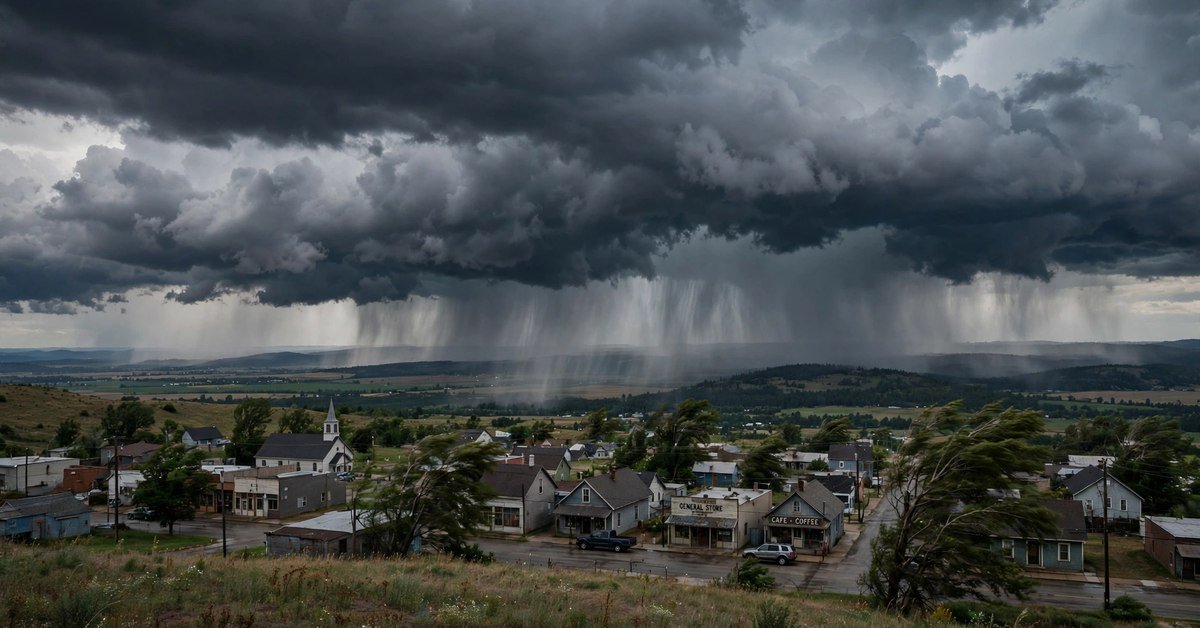
Picture this. You’re about to step out of the door, coffee in hand, when the sky suddenly opens up and it starts raining cats and dogs. Rain hammers the street, puddles appear in seconds, and your shoes are soaked before you even reach the corner.
An English speaker standing next to you would probably laugh and say, “It’s raining cats and dogs out there!”
No, animals are not falling from the sky. When someone says it is raining cats and dogs, they simply mean it is raining very heavily. It is one of the most famous idioms in the English language — and also one of the strangest.
In this post, we’ll look at what it means, where it might have come from, whether people still say it today, and how you can use it yourself without sounding like a textbook.

Quick Meaning
Raining cats and dogs means raining very heavily.
If it is raining cats and dogs, the rain is coming down hard and fast — the kind of rain that soaks you in a minute and turns quiet streets into small rivers. You would never use it for light rain or a few gentle drops.
Example: “We had to cancel the picnic because it was raining cats and dogs.”
What Does “Raining Cats and Dogs” Mean?
Like every idiom, this expression doesn’t mean what the words say on their own. Nobody is throwing pets out of aeroplanes. The whole phrase, taken together, is just a colourful way of saying “very heavy rain.”
The dictionaries keep it simple. The Cambridge Dictionary lists “it’s raining cats and dogs” as an idiom for raining heavily, and Merriam-Webster defines “rain cats and dogs” in exactly the same way: to rain heavily.
So why cats and dogs? Mostly for comic effect. The picture the phrase paints is so silly and over the top that it matches the drama of a sudden downpour. English loves exaggeration like this, especially when the weather is involved.
English is actually full of weather expressions. A person who feels slightly ill might say they are feeling under the weather, and a huge storm of rain can be described as raining cats and dogs. Learn the weather ones together and they’ll stick in your memory much faster.
One useful grammar note: the word “rain” still behaves like a normal verb. You can say “It rained cats and dogs all night” or “I think it’s going to rain cats and dogs later.” The cats and dogs part never changes — only the verb does.
Where Did “Raining Cats and Dogs” Come From?
Here’s the honest answer first: nobody knows for sure. Any website that tells you the origin with total confidence is guessing, so let’s separate the fun stories from the facts.
The thatched roof story. In old England, houses had thick roofs made of straw, called thatch. The story goes that cats, dogs, and other small animals would climb into the warm straw to sleep, and heavy rain would wash them out, so they came sliding down. It’s a charming picture — but there’s no real evidence for it.
The flooded streets story. Centuries ago, London’s drains were terrible. After a violent storm, the filthy floodwater carried all kinds of things through the streets, sadly including dead animals that had drowned. To anyone watching, it could look as if cats and dogs had somehow fallen from the sky. Again, this is a possible explanation, not a proven one.
What we can document. The writer Jonathan Swift clearly knew this world of flooded streets. His 1710 poem “A Description of a City Shower” describes a storm washing dead cats through London’s flooded streets — the exact image behind the idiom. And in 1738, Swift used the phrase itself in print, in a satirical work where a character worries it will “rain cats and dogs.”
That 1738 use is the earliest famous appearance of the phrase in print, and Swift writes it like something his readers already knew. So the expression was probably being spoken long before anyone wrote it down. The truthful summary? The stories are fun, the Swift connection is real, and the exact birth of the phrase is lost to history.
Is It Still Used Today?
Yes — but with a small catch, and it’s better to be honest with you about it.
Every English learner meets this idiom early, and every native speaker understands it. You’ll find it in children’s books, films, English lessons, and newspaper headlines. It is much more common in British English than in American English, where some people find it a little old-fashioned — sweet, but old-fashioned.
What you probably won’t hear is a group of teenagers in London or New York using it in everyday chat. When the rain starts hammering down, younger speakers are more likely to say:
- “It’s pouring.”
- “It’s bucketing down.” (British)
- “It’s chucking it down.” (British, very informal)
- “It’s raining heavily.”

So should you still learn it? Absolutely. Think of it as a classic. You need it to understand films, books, and jokes, and if you use it yourself, native speakers will smile — it sounds warm, playful, and very “English lesson,” in the best way.
How to Use It
Weather Talk. This is the idiom’s natural home. British people especially love discussing the weather, and this phrase adds colour to small talk: “Don’t go out now — it’s raining cats and dogs. Wait ten minutes.”
Stories and Writing. The phrase is perfect for setting a scene: “The day of the village fair arrived, and of course, it was raining cats and dogs.” Rain in stories creates mood, and this expression does it with a smile.
Light Humour. Because the picture is ridiculous, the idiom works best when you want to sound cheerful about miserable weather. It is hard to say “raining cats and dogs” in an angry way. Save it for friends, family, and relaxed conversation — in a formal report, just write “heavy rain.”

10 Example Sentences
- We cancelled the football match because it was raining cats and dogs by half-time.
- Take an umbrella — it’s raining cats and dogs out there!
- It rained cats and dogs all night, and the garden was flooded by morning.
- I got completely soaked walking home. It started raining cats and dogs halfway there.
- The forecast says it will rain cats and dogs this weekend, so let’s stay in and watch films.
- By the time the bus finally arrived, it was raining cats and dogs and I was drenched.
- “Look at this rain!” “I know — it’s raining cats and dogs. Typical British summer!”
- The wedding photos had to move indoors when it suddenly started raining cats and dogs.
- My grandfather loves storms. When it’s raining cats and dogs, he makes tea and watches from the window.
- It hardly ever rains cats and dogs in the desert, but when it does, everyone takes photos.

Raining Cats and Dogs vs Similar Expressions
Several expressions describe heavy rain, but they don’t all sound the same. Here’s how they compare:
| Expression | Meaning | Tone | Where you’ll hear it |
|---|---|---|---|
| Raining cats and dogs | Very heavy rain | Playful, classic, slightly old-fashioned | Books, lessons, British conversation |
| Pouring down | Heavy rain | Neutral and modern | Everywhere — the safest choice |
| Raining heavily | Heavy rain | Plain and formal | News reports, formal writing |
| Bucketing down | Very heavy rain | Informal | British English |
| Chucking it down | Very heavy rain | Very informal, chatty | British English, among friends |
If you’re ever unsure which one to choose, “It’s pouring” is the modern all-rounder. Native speakers of all ages use it, and it never sounds strange. Keep “raining cats and dogs” for when you want a little charm and personality.
Common Mistakes to Avoid
Taking it literally. Learners sometimes picture real animals, or even worry the phrase describes something cruel. It doesn’t. No animals are involved — it is pure exaggeration for a very heavy downpour.
Using the singular. Never say “raining cat and dog.” The phrase is always plural, and always in the same order: cats first, then dogs. “Raining dogs and cats” sounds wrong to native ears, the same way “fish and chips” can’t become “chips and fish.”
Using it for light rain. This idiom is only for serious, heavy rain. If it’s just a few drops, say “It’s drizzling” or, in Britain, “It’s spitting.” Using “cats and dogs” for drizzle is like calling a bicycle an aeroplane — far too much.
Using it in formal writing. In an exam essay, a business email, or a weather report, write “heavy rain” or “heavy rainfall” instead. The idiom belongs to friendly, spoken English.
Your Turn With Raining Cats and Dogs
Try these three. The answers are right below the questions — no peeking!
- Your friend texts you: “Bring an umbrella, it’s raining cats and dogs.” What does she mean? (a) Her pets are outside (b) The rain is very heavy (c) There is light rain
- Which sentence is correct? (a) It rained cat and dog yesterday. (b) It rained cats and dogs yesterday.
- Complete the sentence: “We stayed at home because it was _______ cats and dogs.”
Answers: 1 — (b) The rain is very heavy. 2 — (b). 3 — raining.
Want to look up another weather idiom in seconds? Try our free Idiom Finder — type part of the phrase and it will find the matching idiom for you.
Explaining Raining Cats and Dogs to a Curious Child
Adults smile at this idiom, but children take it seriously. When Uncle Dan told his nephew it was raining cats and dogs outside, the boy ran to the window, expecting animals tumbling from the sky. Dan knelt beside him and explained that no animal was falling at all. The phrase was a joke picture for rain so heavy the street looked like a small river.
That window scene is the fastest way to teach the idiom. Ask the child to draw what the words say, cats and dogs dropping past the clouds, then what they mean, a person holding an umbrella under slanting rain. The gap between the two drawings is the whole lesson. Idioms paint one picture and mean another, and a child who draws that gap will remember it.
Reuse the same trick with any young learner. Let them enjoy the silly picture first, laugh together, and only then give the plain meaning. A child who laughs at raining cats and dogs will remember it far longer than one who only copies a definition. Keep the drawing on the fridge, and every rainy morning becomes a small revision lesson.
Raining Cats and Dogs: Questions Readers Ask
Is “raining cats and dogs” British or American?
Both British and American speakers know it, but it has a stronger British feel. Americans understand it perfectly well; many just find it a bit old-fashioned or charmingly British. If you use it in Britain, it will sound completely at home.
Can I use “raining cats and dogs” in formal writing?
No, it’s best to avoid it there. In exams, reports, and business emails, write “heavy rain” or “it rained heavily” instead. The idiom is made for conversation, friendly messages, and stories, where its playful tone is a strength rather than a problem.
What is the modern way to say “raining cats and dogs”?
The most common modern choice is simply “It’s pouring,” which works everywhere and at every age. In Britain you will also hear “It’s bucketing down” and the very informal “It’s chucking it down.” All three mean the rain is heavy; they just sound more everyday than the classic idiom.
Does the phrase work in the past tense?
Yes, it does. The cats and dogs stay exactly the same, and only the verb changes: “It rained cats and dogs all weekend.” You can also use it for the future — “It’s going to rain cats and dogs tonight” — or with “start,” as in “It started raining cats and dogs.”
Why do English learners learn this idiom so early?
Because it’s famous, memorable, and genuinely fun — the same reason teachers introduce piece of cake in the first weeks of a course. The silly picture makes it almost impossible to forget, and it turns up in textbooks, films, and cartoons all over the world.
One Last Thought
“Raining cats and dogs” may not be the phrase young people reach for first anymore, but it has survived for nearly three hundred years for a reason — it’s vivid, funny, and instantly understood. Learn it, enjoy it, and don’t be afraid to use it next time the sky opens up.
While you’re building your collection of classics, you might also enjoy learning what it means to hit the sack after a long day, or why a practical, sensible person is described as down to earth. They’re the same kind of friendly, everyday idioms this one belongs to.
And now a question for you: what does your own language say when the rain comes down really hard? Is there a funny picture in it, like cats and dogs? Tell us in the comments — we’d genuinely love to read your version.
2 thoughts on “Raining Cats and Dogs: Meaning and Origin”