


You walk into a room full of strangers. Nobody is talking. The silence feels heavy, and you are not sure what to say first.
Then someone smiles, asks a simple question, and suddenly everyone relaxes. That one small moment is exactly what the Break the Ice Meaning is all about.
This guide explains what “break the ice” means, where it came from, and how to use it naturally. You will also get real examples for work, school, parties, dates, and texting, plus a list of safe icebreaker ideas you can use today.
Break the Ice Meaning – Quick Meaning
Break the Ice Meaning – Quick Answer: To “break the ice” means to ease awkwardness and start a conversation so people feel comfortable with each other.
It describes the first friendly step that turns strangers into people who talk. The “ice” is the tension, shyness, or formality in the room. When you break it, conversation starts to flow.
In one line:
- Break the ice = make the first move so talking feels easy.
For example, “She told a joke to break the ice.” It works in casual chats, classrooms, offices, and even formal meetings.

What Does “Break the Ice” Mean?
“Break the ice” means to remove the awkwardness at the start of an interaction. It is about helping people relax so they can talk openly.
Imagine a frozen lake. Social situations work the same way. At first, people feel stiff or unsure. One warm comment or question clears the way, and then everyone starts talking.
The idiom focuses on the beginning. You break the ice in the first minute or two, and then the conversation takes care of itself.
Here are three everyday uses:
- Starting a conversation: “I asked about his trip to break the ice.”
- Easing tension: “A quick joke helped break the ice before the serious discussion.”
- Making introductions easier: “The teacher used a game to break the ice on the first day.”
The phrase is about making things warmer and easier, never forcing people to talk.
The Cambridge Dictionary defines it as making people who have not met before feel more relaxed with each other.
The Origin of “Break the Ice”
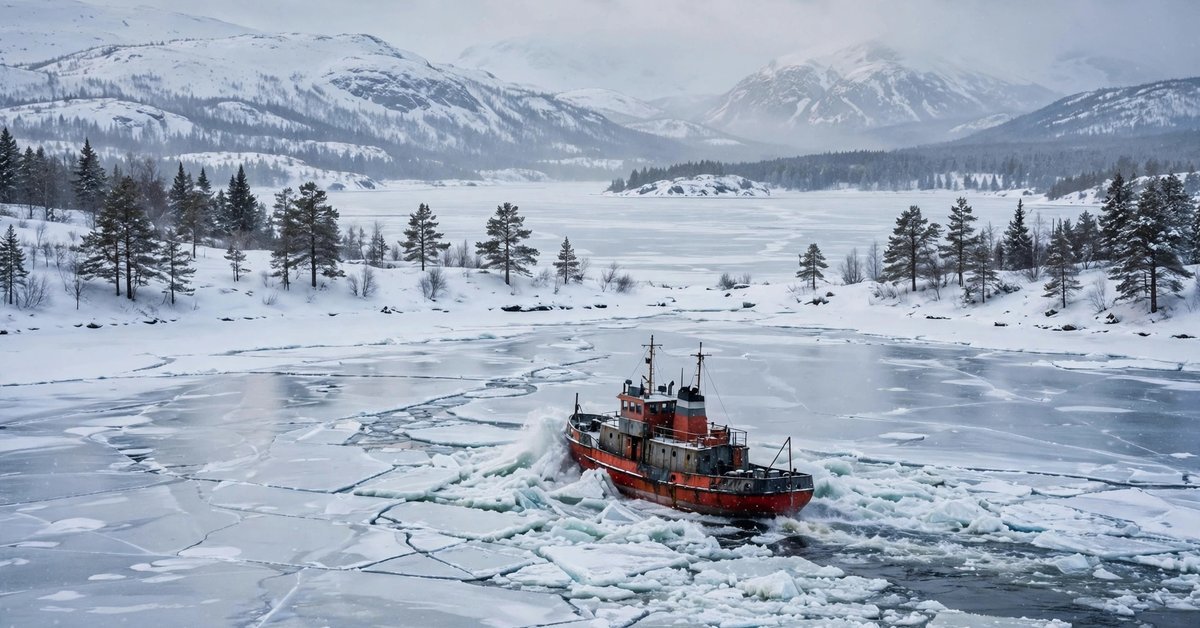
The origin of “break the ice” goes back to real ice and real ships. Long before it described conversations, it described clearing a path through frozen water.
In cold regions, harbours and rivers froze in winter. Ships could not move. Smaller vessels sailed first and smashed through the ice, opening a channel for the larger ships behind them. Those early vessels were the original icebreakers. They made the journey possible for everyone else.
That physical picture became a metaphor: a person clears a path through awkwardness just as a ship clears a path through ice.
The phrase has a long written history. In 1579, Sir Thomas North used it in his translation of Plutarch’s Lives, writing of being the first to “break the ice” of an enterprise — to start something difficult.
Merriam-Webster lists the first known use of the phrase as circa 1577.
By the late 1600s, writers were using it for easing into conversation, including Samuel Butler in his 1664 poem Hudibras.
In the 1800s, purpose-built icebreaker ships appeared for polar exploration, and people began calling a social opener an “icebreaker.” Mark Twain used the phrase that way in Life on the Mississippi in 1883. Today, “icebreaker” means any question, game, or comment designed to get people talking.
How to Use “Break the Ice”
Most native speakers use one of two core patterns.
Pattern 1: Break the ice with someone
Use this when you name the person or group you are warming up to.
- “I tried to break the ice with my new coworkers.”
- “She broke the ice with the neighbours by bringing cookies.”
- “He broke the ice with his classmates on the first day.”
Pattern 2: Do something to break the ice
Use this when you name the action that helped.
- “We played a quick game to break the ice.”
- “Tell a story to break the ice before the meeting starts.”
- “A smile can break the ice faster than a speech.”
The past tense is “broke the ice.” “We broke the ice over coffee.” The phrase fits casual and professional settings alike. It is not slang, so you can use it with a manager, a teacher, or a stranger.
One grammar note: always say “break the ice,” not “break ice.” Keeping the word “the” in place is part of what makes it an idiom.

Examples by Situation
Here is how “break the ice” works in the situations where you will actually use it.
First Day at Work
- “On my first day, I broke the ice by asking my desk neighbour where the coffee machine was.”
Small, ordinary questions work best here. A simple question about lunch, the office, or the weekend is enough.
First Day at School
- “The teacher used a name game to break the ice.”
- “I broke the ice with the girl next to me by asking which book she liked.”
If you are a student, remember that everyone else feels the same way. The first person to speak kindly usually becomes the person everyone talks to.
Meetings
- “Let’s break the ice with a quick round of introductions.”
- “She broke the ice by asking everyone to share one good thing from the week.”
Parties and Social Gatherings
- “He broke the ice by asking how everyone knew the host.”
- “Music and food helped break the ice at the party.”
Dates
- “We broke the ice by talking about our favourite movies.”
- “A shared laugh broke the ice within the first five minutes.”
Interviews
- “The interviewer broke the ice by asking about my journey to the office.”
- “A friendly greeting can break the ice before the real questions begin.”
Group Chats and Online Conversations
Breaking the ice also happens online. In a new group chat, the first message sets the tone.
- “I broke the ice in the group chat by sharing a funny photo from the trip.”
- “A quick poll helped break the ice before the study group started.”
Online, short and friendly wins. If the chat uses slang, keep it simple — just like learning a texting shortcut such as WTV meaning or LMS meaning, the goal is a message everyone can answer easily.

Icebreaker Ideas That Actually Work
Here are simple, safe icebreakers for almost any situation.
Easy questions anyone can answer:
- “What is the best trip you have ever taken?”
- “What did you do this weekend?”
- “How do you know the host?”
Quick activities for groups:
- Two truths and a lie — each person shares two true facts and one false one, and the group guesses the lie.
- A one-word check-in — each person describes their mood in one word.
- A simple poll — “Coffee or tea?” or “Beach or mountains?” Everyone can answer, and answers start conversations.
Lines that work in person:
- “Hi, I’m Alex. I don’t think we have met yet.”
- “This is my first time here. How about you?”
The best icebreakers share three traits. They are short, they are easy to answer, and they invite the other person to talk. Avoid questions that touch on money, politics, or personal problems. And listen to the answer — an icebreaker is an invitation, not a performance.
What “Break the Ice” Does NOT Mean
Here is what “break the ice” does not mean.
It does not mean literal ice. Nobody is talking about frozen water, unless the conversation is about ships or winter. If someone says “Let’s break the ice,” they do not want a hammer.
It does not mean starting a fight. “Breaking” sounds forceful, but the idiom is gentle. It means easing tension, not creating it. A rude comment does the opposite of breaking the ice.
It does not mean fixing a big problem. Breaking the ice is a small first step. It starts a conversation. It does not solve a conflict or close a deal. It simply makes talking possible.
It does not mean being loud or funny. You do not need a joke to break the ice. A smile, a greeting, or a simple question works just as well.
A useful test: if your action makes people more relaxed and willing to talk, it broke the ice.
This is the same rule that applies to modern slang. A short message only works when the tone is right — just as readers check context to understand ONB meaning or IYKYK meaning, listeners judge an icebreaker by how it makes them feel, not by the exact words.
Common Mistakes
Here are the mistakes learners make most often, with fixes.
Mistake 1: Dropping “the.” Saying “break ice” sounds wrong to native speakers. The fixed phrase is “break the ice.” Keep all three words.
Mistake 2: Using it for deep problems. “We broke the ice about the budget” sounds odd if the budget fight is serious. Use the idiom for first meetings and awkward starts, not for solving long conflicts.
Mistake 3: Making the icebreaker too long. A five-minute story is not an icebreaker. It is a speech. Keep openers under a minute.
Mistake 4: Asking something too personal. “Why are you single?” will freeze the room, not warm it. Stick to safe, shared topics at the start.
Mistake 5: Trying to be too clever. A complicated joke that needs explaining usually falls flat. Simple and sincere beats clever and confusing.
Mistake 6: Using it in the wrong tense. “He break the ice” is wrong. The past form is “broke the ice.” The present form is “breaks the ice” or “break the ice,” depending on the subject.
One last habit to watch: some learners use the idiom in every sentence once they learn it. One use per conversation is plenty.

Conclusion
The Break the Ice Meaning is simple: take the first friendly step so conversation can start. The “ice” is the awkwardness at the beginning. Breaking it means making people comfortable.
Its history runs from real icebreaker ships to a 1579 translation of Plutarch, and from there to the modern meeting, classroom, and party. Every new group needs someone to go first.
You do not need a perfect line. A smile, a question, or a short story is enough. Go first, keep it light, and listen to the answer.
FAQs
What does “break the ice” mean in simple words?
It means to ease awkwardness and start a conversation, so people feel comfortable enough to talk.
Is “break the ice” formal or informal?
It works in both. It is a standard idiom, not slang. You can use it in a casual chat with friends and in a professional meeting. It sounds natural in both settings.
Can you break the ice over text?
Yes. A friendly first message can break the ice in a group chat or a DM. Keep it short and easy to answer. A quick check of a texting shortcut like WYO meaning can also help you read the tone of a new chat.
What is an icebreaker?
An icebreaker is any question, game, or comment designed to get people talking. Examples include a name game, a short poll, or a simple question like “What did you do this weekend?”
Is “break the ice” the same as “warm up”?
They are close, but not identical. “Warm up” can mean getting ready for anything, like exercise. “Break the ice” is specifically about easing social awkwardness and starting conversation.
Can “break the ice” be used in a negative situation?
It is almost always positive. If a comment makes people more tense, it did not break the ice — it did the opposite.
5 thoughts on “Break the Ice Meaning: What It Means & How to Use It”