

You send a teasing message to a friend, and the second it goes through, a little wave of doubt hits you. Did that sound harsher than you meant? Are they going to think you’re actually upset with them? So you follow up with three letters: JSP.
In texting, JSP almost always means “Just Playing” — a fast way of telling someone your last message was a joke, not a real complaint. This guide covers everything around that: where the term came from, how it actually gets used across different apps, how it compares to similar acronyms like JK, when it’s appropriate (and when it isn’t), and what it means in the rare cases where it has nothing to do with texting at all.
Quick Definition
In the vast majority of texting contexts, JSP = “Just Playing.” It’s the digital equivalent of a wink — a signal that whatever you just said shouldn’t be taken at face value.
That said, JSP isn’t locked to one meaning everywhere:
| Meaning | Where You’ll See It |
| Just Playing | Texting, DMs, comment sections (by far the most common) |
| Just Saying Please | Occasionally in informal requests — rare |
| Je ne sais pas (“I don’t know”) | French-language internet slang |
| JavaServer Pages | Software development, completely unrelated to texting |
If a friend texts “you’re so annoying, JSP,” they’re teasing you. If a developer mentions their site “runs on JSP,” that’s an entirely different topic — web architecture, not banter.
Is JSP an Acronym, Abbreviation, or Slang?
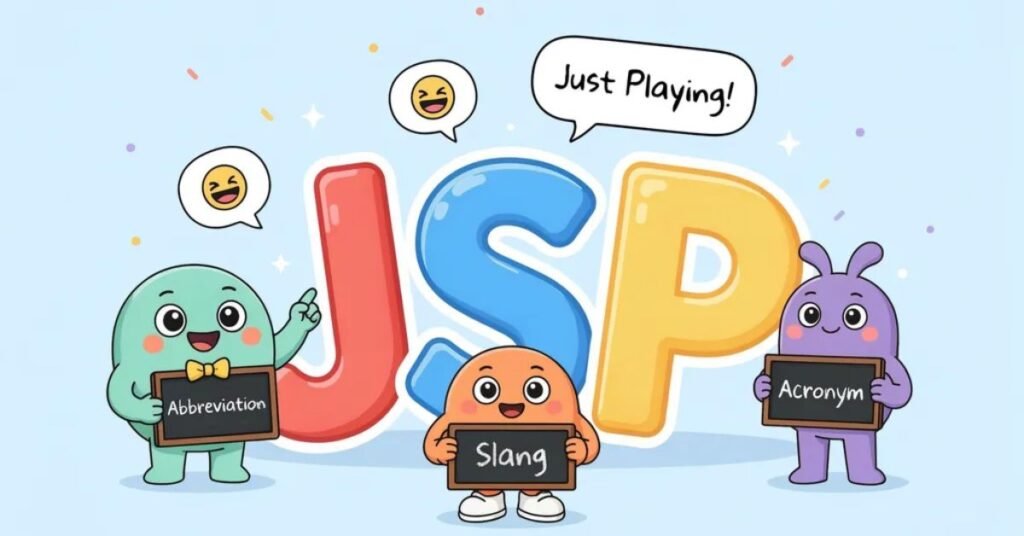
Honestly, it’s all three at once. It shortens a phrase (abbreviation), it’s built from that phrase’s first letters (acronym), and it lives almost exclusively in informal digital conversation (slang). You won’t find it in a traditional dictionary, and that’s kind of the point — it exists purely because typing “just playing” every single time got tedious.
Where JSP Came From
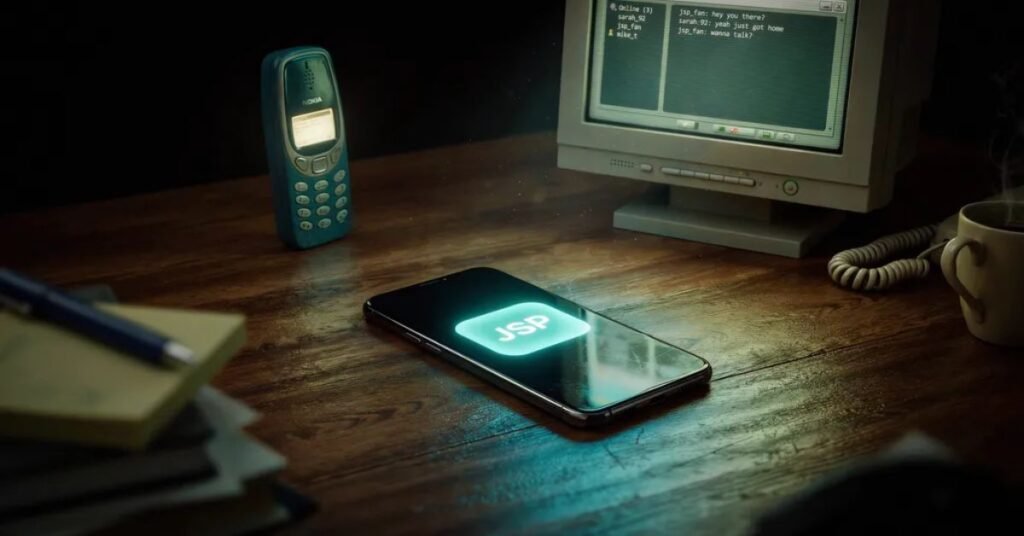
JSP didn’t appear in a vacuum — it grew out of the same texting shorthand that gave us JK and LOL.
The early SMS era. When phones had physical keypads and every character counted, people needed quick ways to defuse a joke before it got misread. “Just kidding” became JK. Somewhere along that same evolution, “just playing” picked up its own shorthand, likely passing through JP before settling into the now-familiar JSP.
Chatrooms accelerated the spread. Early platforms like AIM made slang travel fast — one person would use a term in a group chat, and within days everyone in that circle had adopted it. As social platforms evolved through Instagram, Snapchat, and TikTok, JSP rode that same wave into comment sections, captions, and DMs.
Why it never went away. Text strips out tone of voice, facial expression, and body language — the exact things that normally tell someone “I’m joking.” JSP fills that gap in three characters. It’s quick, it’s low-effort, and it works, which explains why it’s outlasted plenty of slang that came and went faster.
JSP Across Different Apps
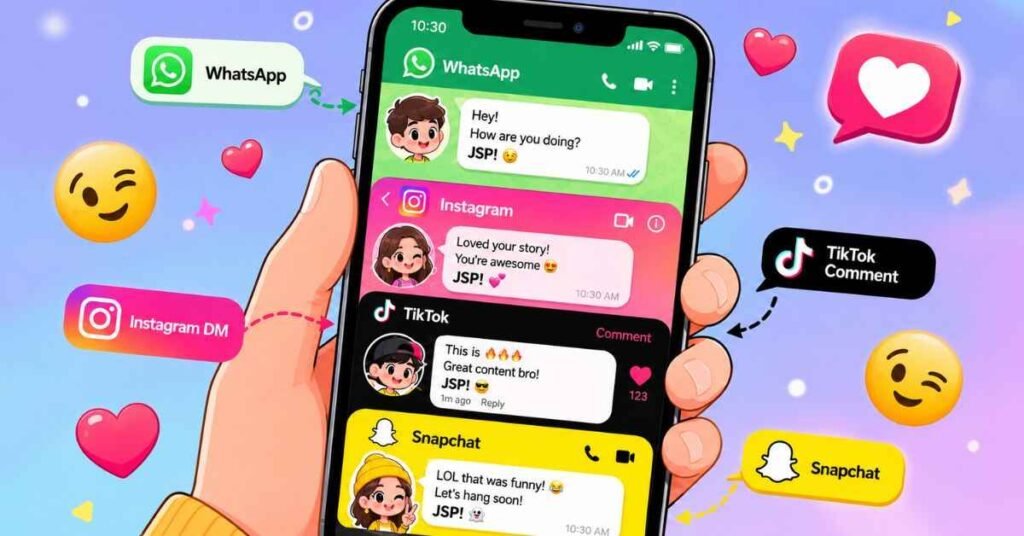
Seeing it in context makes the meaning click faster than any definition:
Texting:
“I’m never letting you borrow my charger again. JSP, you know I got you.”
WhatsApp:
Friend A: “You didn’t even wish me happy birthday 😒” Friend B: “JSP I texted you at midnight, check your phone”
Instagram DMs:
“Ngl that fit was kinda rough JSP, you actually ate with that outfit”
TikTok comments:
“This trend is so overdone JSP it’s still kinda funny though”
Snapchat:
“I’m blocking you 😤 JSP relax, come here”
One pattern that stands out across comment sections: JSP tends to show up right after a line that could easily be read as an insult. At this point it functions almost like a reflex — an automatic disclaimer people attach without even thinking about it.
Why People Actually Use It
JSP isn’t filler — it does a specific job in a conversation:
- Flags playful intent before the reader has a chance to misread the tone
- Fills the gap text leaves behind, standing in for the tone of voice a spoken joke would naturally carry
- Softens bold or exaggerated statements without the sender sounding harsh
- Saves time — nobody wants to type out “I was only kidding, please don’t be upset” every time a joke could land wrong
People who use JSP often aren’t necessarily trying to be funny — they’re being considerate, whether or not that’s how they’d describe it themselves.
Where JSP Fits (and Where It Doesn’t)
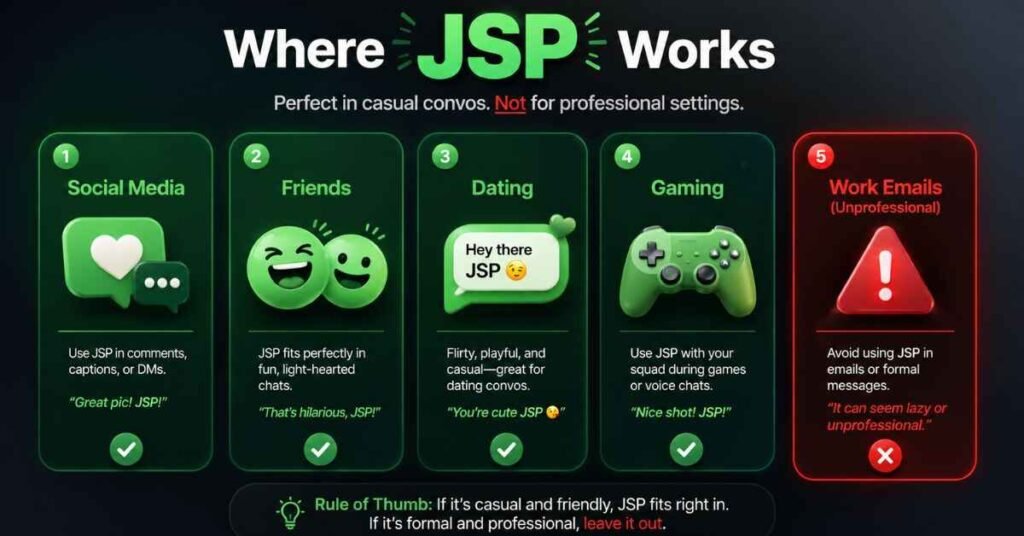
Social media — This is JSP’s natural habitat. Comments and DMs are built for quick, casual exchanges, so it fits right in.
Friend groups — Among close friends, JSP is second nature. Constant teasing needs a way to stay light, and this is it.
Romantic texting — Between partners, JSP often carries a flirty undertone. “You’re so annoying JSP” usually means the opposite of what it says on the surface.
Gaming and Discord communities — During friendly trash talk between teammates, JSP keeps competitive banter from tipping into an actual argument.
Work and professional messaging — This is where JSP doesn’t belong. In a work email or a message to a colleague, it reads as unprofessional, and not everyone in that setting will even recognize it. If you want to soften a comment at work, plain phrases like “just kidding” or “no offense meant” land better.
JSP vs. Similar Acronyms
| Term | Meaning | Tone |
| JSP | Just Playing | Playful, teasing |
| JK | Just Kidding | Direct, universally understood |
| LOL | Laughing Out Loud | Amused reaction |
| LMAO | Laughing My Ass Off | Strong amusement |
| ROFL | Rolling On the Floor Laughing | Exaggerated amusement |
| NGL | Not Gonna Lie | Honest admission |
| TBH | To Be Honest | Honest opinion |
| FR | For Real | Emphasis, sincerity |
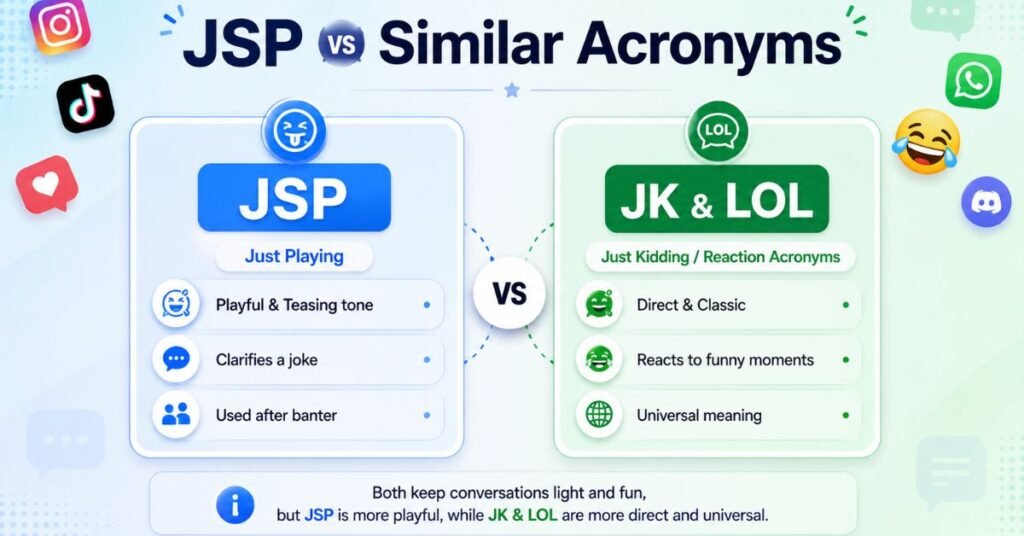
JSP vs. JK — These are close cousins. JK reads as slightly more direct and is more universally recognized; JSP leans a bit more playful and teasing. Most people swap between them without a second thought.
JSP vs. LOL/LMAO/ROFL — Different jobs entirely. LOL and its relatives react to something funny that already happened. JSP clarifies that something you just said wasn’t meant seriously. They’re not competing terms — one reacts, the other explains.
You can also Read about What Does WYO Mean
Common Variations
JSP rarely stands completely alone — it usually gets a little extra attached to fine-tune the tone:
- JSP bro / JSP bestie / JSP fr — adds warmth or affection depending on who’s on the other end
- JSP haha / JSP lol — removes any remaining doubt about the playful intent
- JSP sorry / JSP relax / JSP calm down — used when a joke landed harder than intended and the sender wants to smooth things over
When JSP Means Something Else Entirely
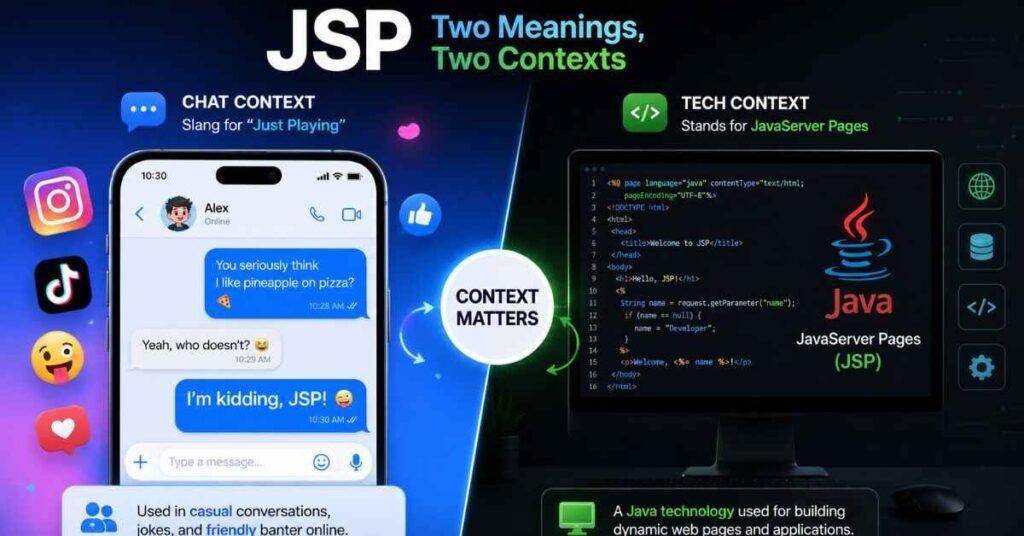
JavaServer Pages (tech context). In web development, JSP refers to JavaServer Pages, a technology used to build dynamic web content. “Our backend runs on JSP” is a statement about code, not a joke.
Other unrelated uses. Depending on the industry, JSP can also stand for various organization or program names entirely disconnected from texting slang.
How to tell which one applies: context does nearly all the work. A casual, teasing message means “Just Playing.” A conversation about servers or code means JavaServer Pages. It’s rarely ambiguous once you notice the setting.
Mistakes People Make With JSP
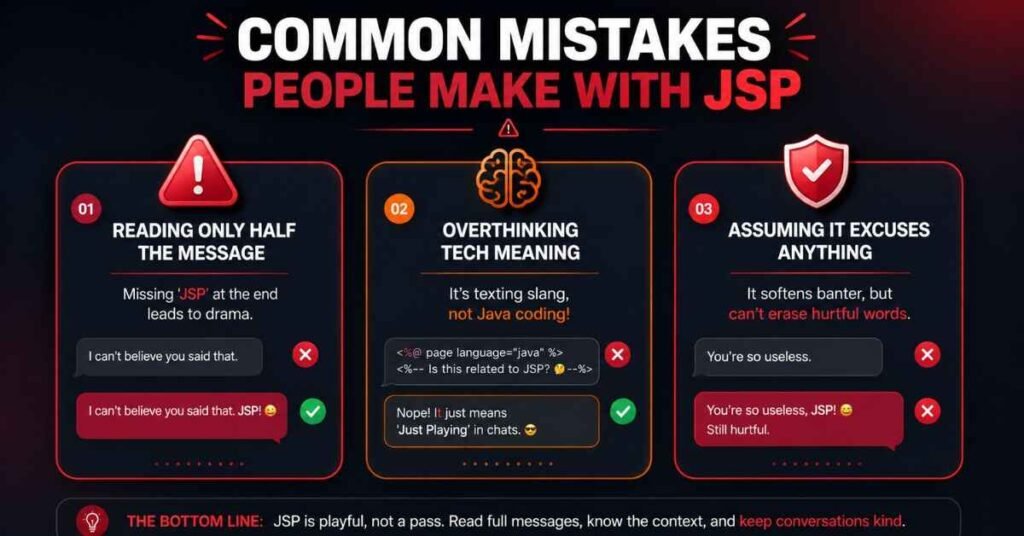
- Reading only half the message. Stopping at “I hate you” before reaching the JSP at the end can trigger a reaction that wasn’t warranted.
- Overthinking the tech meaning. Outside of programming discussions, JSP essentially never refers to JavaServer Pages — don’t second-guess it in a normal chat.
- Assuming it excuses anything. JSP is meant to soften a comment, not erase it. Attaching it to something genuinely hurtful, or overusing it constantly, can start to feel insincere rather than playful.
You can also Read about SPWM Meaning in Text
Is It Ever Rude to Use?
In the overwhelming majority of everyday conversations, no — JSP is harmless.
Around kids or in school settings: generally fine. It’s low-stakes, and the more important lesson isn’t about the acronym itself, it’s about reading the room before joking around.
At work: best avoided. Professional settings call for plain, unambiguous language.
When to skip it entirely:
- The other person is genuinely upset or going through something difficult
- The conversation has already turned tense
- The original joke was mean-spirited — JSP can’t undo that after the fact
Timing matters as much as the word itself. Tacking JSP onto a badly timed joke doesn’t automatically make it okay.
Good Ways to Respond to a JSP
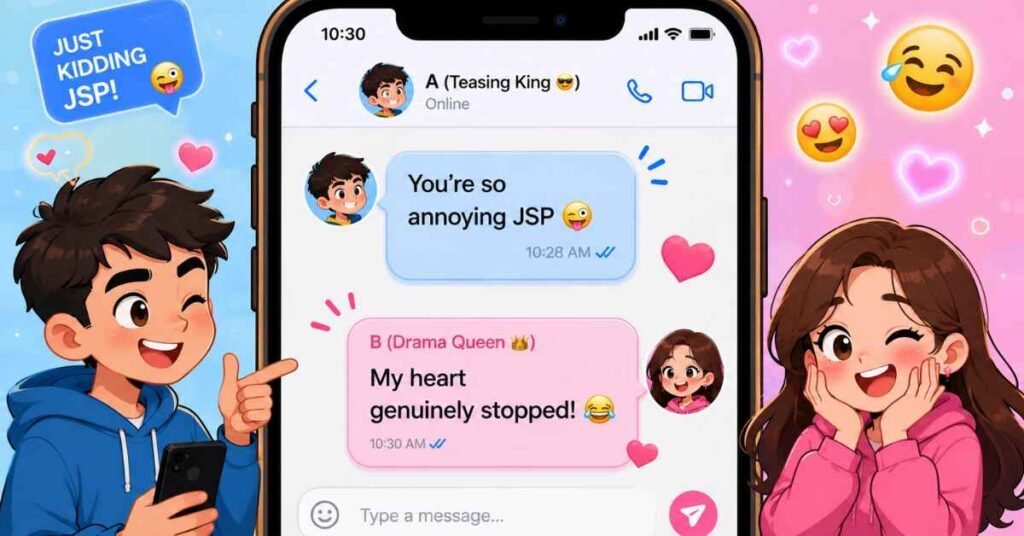
- Casual: “Haha okay fair enough” / “you scared me for a second”
- Playful: “Too late, I’m already offended” / “my heart genuinely stopped”
- Straightforward: “You got me” / “no worries, appreciate the heads up”
- Flirty (for relationships): “You love messing with me” keeps the tease going
Who Actually Uses This Term?
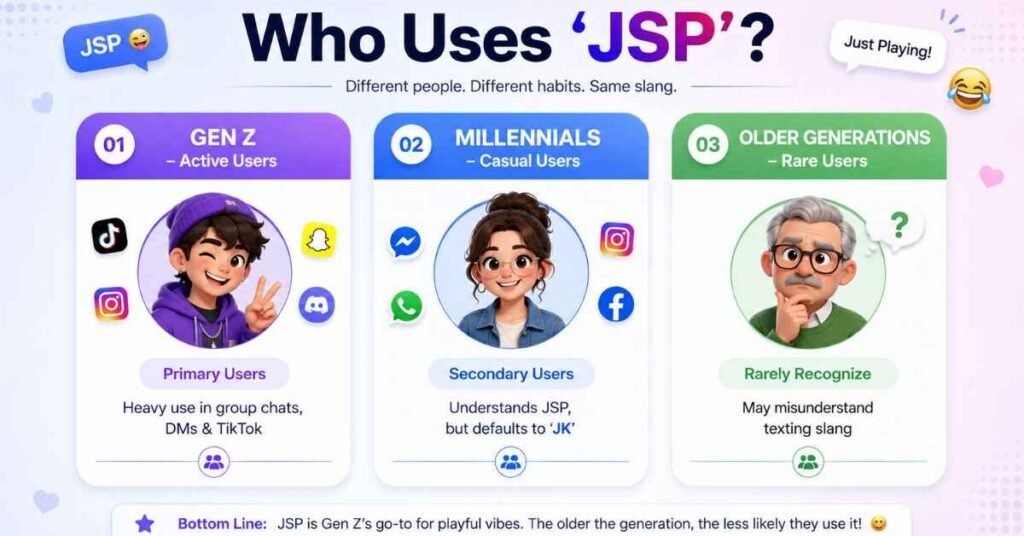
Gen Z and younger users use JSP the most, largely because they live in group chats and comment sections throughout the day.
Millennials generally understand it but tend to default to JK out of habit.
Older generations may not immediately recognize it — worth keeping in mind before texting a parent or grandparent something like “you’re being so extra JSP.”
It’s not quite as universally recognized as something like LOL or IDK, but it shows up often enough across social platforms that most people online have encountered it at least once.
Frequently Asked Questions
What does JSP mean on Snapchat? The same as everywhere else — “Just Playing,” typically used after a teasing snap or chat message.
What does JSP mean when someone’s being funny? It signals that whatever was just said was a joke or exaggeration, not a genuine complaint.
Does JSP mean something different coming from a girl or a guy? No — the meaning stays the same regardless of who sends it, though it can carry a flirtier tone in a romantic context.
What does JSP mean on TikTok or Instagram? Same core meaning — it shows up in comments and DMs, usually softening a joke or turning light criticism into a compliment.
What is JSP in French internet slang? In French, JSP stands for “je ne sais pas” (“I don’t know”) — functionally similar to IDK in English, and completely separate from the texting meaning.
The Bottom Line
JSP is a small acronym doing a genuinely useful job. In casual texting, it almost always means “Just Playing” — a quick way to keep a joke from being misread as something serious. Outside that context, everything comes down to the setting: a French speaker meaning “I don’t know,” or a developer talking about JavaServer Pages. Once you know to check the context first, JSP stops being confusing and just becomes another normal part of how people text.