

You’re mid-conversation with a friend, everything’s normal, and then their reply lands looking like a random keyboard smash — no punctuation, no explanation, just four letters staring back at you. So now you’re sitting there wondering if you missed some memo everyone else already got.
That mystery text was probably STSU.
Depending on who sent it, STSU can mean a reaction to something shocking or funny, a request to resend information, or even a bit of encouragement to stick with something. By the end of this guide, you won’t have to quietly Google it mid-conversation ever again — we’ll cover where it came from, how it actually gets used across different apps, and how to reply without missing a beat.
What Does STSU Actually Mean?

Here’s the honest answer: STSU doesn’t have one locked-in definition. What it means shifts depending on who’s texting you and which platform you’re on.
One commonly cited meaning is “Send That Same Update“ — used when someone wants you to resend a link, a status, or information you already shared. This version shows up most in group chats or casual work-adjacent conversations.
In everyday texting between friends, though, STSU is more often used loosely as a stand-in for “Shut The (Stuff) Up” — and despite how that sounds, it’s almost never actually about being quiet. It functions more like “no way” or “stop it,” a reaction to something surprising, funny, or mildly annoying.
The short version: there’s no single universally agreed-upon meaning. STSU is an informal, context-dependent abbreviation — it could be a request to resend something, a reaction to unexpected news, or occasionally just a typo. Tone and sender usually make it obvious which one applies.
A few less common meanings also float around:
- Stay True, Stay Unique — seen in motivational captions or social posts
- See That Snap Update — common in Snapchat conversations about a story
- Send To Someone Urgently — used in work chats when something needs quick forwarding
- Stick To Something — a casual, motivational nudge to stay consistent with a goal
- Occasionally, it’s genuinely just an autocorrect slip or shorthand that only makes sense inside one specific friend group
The first time this shows up meaning “stick to something” in, say, a gym group chat, it can genuinely throw you off enough to scroll back and re-read the whole thread. That’s the tricky part — the same four letters can carry entirely different intent depending on who typed them.
Where the Term Came From
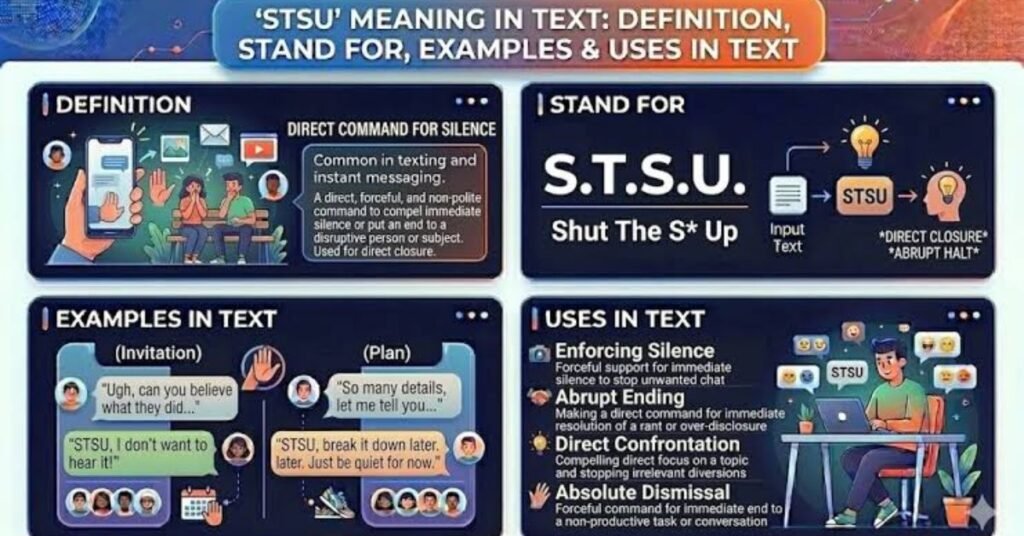
Like most internet shorthand, STSU didn’t launch with an official definition. It grew out of the same fast-typing culture that gave us terms like BRB and LOL.
Early instant messaging roots. Back in the 1990s and early 2000s, platforms like AOL Instant Messenger and MSN Messenger were breeding grounds for texting shorthand. Slow dial-up connections and a constant need to type faster pushed users toward abbreviations, and STSU likely emerged from that same environment.
Spreading through social media. As texting culture moved from AIM and MSN into Twitter, Instagram, Snapchat, and TikTok, slang started spreading at a much faster pace — a term that once lived in a small chat room could now show up in a comment section and circulate across an entire platform within days. STSU followed that same trajectory, evolving from private texting shorthand into a broader, trend-driven term rather than something with one fixed definition.
Where You’ll See STSU Most

STSU lives almost entirely in casual, social-first spaces rather than anywhere formal — messaging apps, group chats, gaming chats, comment threads, and motivational or self-improvement communities.
Instagram — shows up in comments, DMs, and occasionally caption replies, often reacting to a post or hyping up a friend. Paired with a laughing emoji, it reads completely differently than the same word typed with no emoji at all.
TikTok — mostly appears in comment sections, especially under motivational content, fitting naturally into the platform’s fast, reactive commenting style.
Snapchat — leans more toward the “See That Snap Update” meaning, used to confirm or react to a story someone sent.
WhatsApp — tends to be the most literal use case. In group chats, STSU is more likely a genuine request, like asking someone to resend an agenda or clarify something the group already discussed — this is where “Send That Same Update” shows up most.
Using STSU in Conversation

Tone, punctuation, and the relationship between the people texting all shape how STSU actually lands. The exact same word can read as playful with a close friend and completely different with someone you barely know.
Expressing shock or disbelief
Friend: “I just got front row tickets to the show” You: “STSU!! Seriously??”
Reacting to good news
Friend: “I got the internship!!” You: “STSU, congratulations!! That’s huge”
Friendly teasing or hype
Friend: “bro I’m actually going to win this game” You: “stsu 😂 we’ll see”
Showing mild annoyance (especially without a softening emoji)
Person: (repeating the same complaint for the tenth time) Reply: “stsu already, we get it”
How to Reply to an STSU

Your best response really just depends on the tone behind it.
If they’re joking: keep it light — “lmaooo I know right” or “okay okay I hear you 😂”
If they’re excited: match the energy — “I know right?? I’m still shocked” or “believe it!! it actually happened”
If they sound annoyed: a calm reply beats a defensive one — “my bad, I’ll stop” or “got it, sorry”
When It Works (and When It Doesn’t)
STSU fits comfortably into casual settings, but it has no place in anything professional or unfamiliar.
Works well:
- Friend-to-friend texting
- Casual group chats
- Gaming chats
- Encouraging someone through a self-improvement conversation
- Replying to a casual social post
Best avoided:
- Work emails or professional messages
- Serious or emotional conversations
- Talking to someone unfamiliar with slang
- Formal, academic, legal, or business communication
| Context | Example | Tone |
| Friend chat | “stsu, no way 😭” | Casual, playful |
| Group chat | “stsu, we got this” | Motivational |
| Work chat | “Could you resend that?” | Polite, professional |
| “Please continue as planned” | Formal, clear |
Mistakes People Make With STSU

Taking it literally. Read at face value, STSU can sound like an instruction to stop talking. In practice, it’s rarely meant that seriously — misreading it as a literal command instead of an expressive reaction is one of the most common mix-ups.
Misjudging the tone. Without emojis or softer punctuation, the same word can come across as cold or harsh even when nothing negative was intended. A stray period at the end — “stsu.” — can genuinely feel more serious than the sender meant it to.
Confusing it with STFU. These two get mixed up constantly because they look nearly identical. STFU is a genuinely aggressive, rude phrase. STSU, even in its harsher form, tends to be softer — more about disbelief or teasing than actual hostility.
You can also Read about What Does WYO Mean
STSU vs. Similar Acronyms
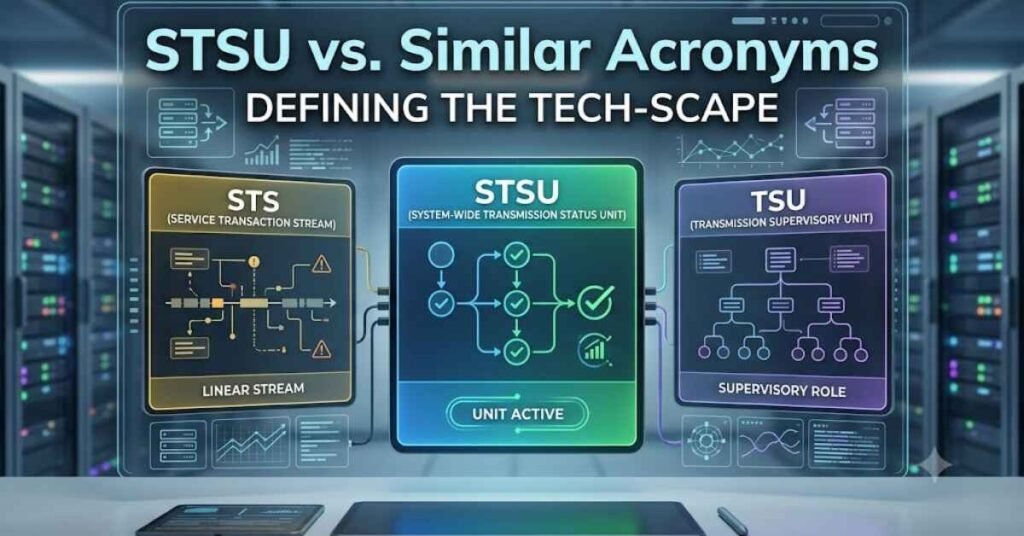
| Abbreviation | Meaning | Typical Use |
| STSU | Context-dependent (shock, disbelief, or “resend that”) | Reaction or casual request |
| OMG | Oh My God | Shock or excitement |
| WTF | What The… | Confusion or shock |
| SMH | Shaking My Head | Disappointment |
| BRUH | General disbelief | Casual reaction |
| BRB | Be Right Back | Temporary absence |
Prefer to skip the ambiguity? A few plain alternatives work just as well: “No way!”, “Seriously?”, “Can you resend that?”, or “I can’t believe it.”
Related expressions: OMG, WTF, SMH, and BRUH cover similar reaction-based disbelief. On the motivational side, phrases like “trust the process,” “stay locked in,” or “keep at it” cover the “stick to something” meaning of STSU.
You can also Read about SPWM Meaning in Text
Why Acronyms Like This Catch On
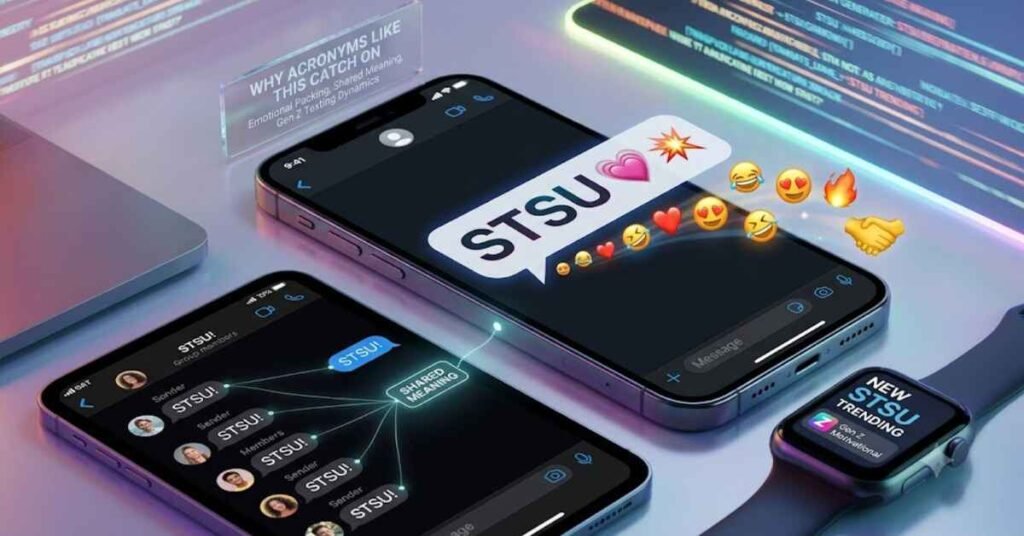
Shorthand like STSU isn’t just about saving keystrokes — it taps into a few real communication habits. It lets people pack strong emotion into just a few characters, which fits naturally into fast-paced texting. It also builds a small sense of shared understanding: when a friend group uses a term the same way consistently, it functions almost like a private shorthand that adds personality to the conversation without much effort.
STSU isn’t as universally recognized as terms like LOL or OMG, but it still shows up regularly in casual corners of the internet — particularly in Gen Z conversations, comment sections, and motivational content. Slang like this tends to rise and fall based on how often people keep reaching for it; it may stick around in niche circles, shift meaning slightly over time, or eventually get replaced by whatever shorthand trends next.
Frequently Asked Questions
What does STSU mean on Instagram? It usually shows up in comments or DMs as a reaction to something surprising, funny, or exciting — often paired with an emoji to set the tone.
Does STSU mean something different from a guy vs. a girl? No — the meaning doesn’t change based on who sends it. Context and tone decide whether it’s playful, excited, or a little annoyed, regardless of the sender.
What does STSU mean on Snapchat? It can lean toward “See That Snap Update,” used when reacting to or confirming a story someone sent.
What does STSU mean in gaming chats like Roblox? Inside gaming chats, it’s typically used the same casual way — a quick reaction to something surprising or funny during gameplay — rather than carrying a gaming-specific meaning.
What’s the difference between STSU and STFU? STFU is more aggressive and rude. STSU is generally softer, more often used for disbelief or teasing than genuine hostility.
Is STSU rude? Not necessarily. It can read as blunt without an emoji attached, but among friends it’s usually meant playfully rather than as an actual insult.
Can STSU be used in professional settings? No — it’s informal slang and doesn’t belong in workplace communication, even on teams that lean casual elsewhere.
Is STSU the same as LOL? Not quite. LOL signals laughter specifically, while STSU is more about reacting to shock, disbelief, or occasional annoyance.
The Bottom Line
STSU is one of those texting terms that shifts shape depending on who’s using it and how. Sometimes it’s a request to resend something, sometimes it’s shock, and sometimes it’s just friendly teasing. Once you get a feel for the tone surrounding it, figuring out what someone actually means becomes second nature — no more sitting there confused over four letters.