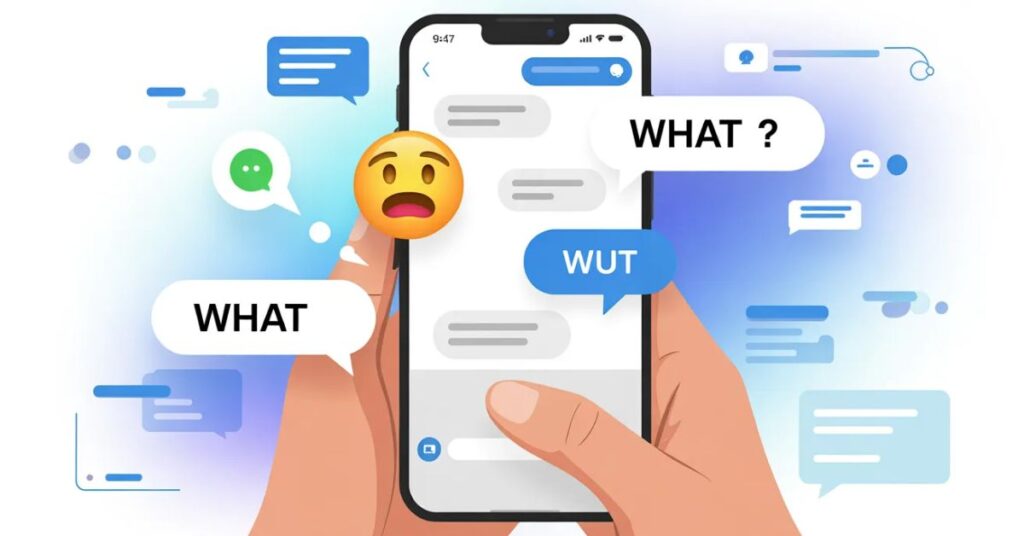
In modern texting, language moves fast. On social media and in online chats, people prefer speed over perfection. That is where Wut appears. It is an informal spelling of what, used to express confusion or surprise, to repeat a question, or to react to something unexpected or funny. Unlike the standard form, it carries a more casual and playful tone in a message.
It is not grammatically formal, yet it is widely understood in digital communities. For example, if someone says something shocking, you might type “wut?” without actually overthinking it. In daily talking, this shorthand helps in typing faster on mobile devices while still conveying emotion and emphasis. In simple words, when someone asks, “What does this text or chat mean and how does it work?” The answer often adds up to tone and speed.
What Does Wut Actually Mean?
The Full Form of wut is simply What, but calling it a “full form” can feel misleading. It does not technically stand for anything. There is nothing beyond a stylized spelling. The Short Meaning is direct: people use it to express confusion, disbelief, or surprise in an online text. It is not a hidden code or secret phrase. It is just a relaxed way of typing.
You can think of it as the text version of raising an eyebrow in real life. It feels informal, friendly, and light-hearted. The word wut keeps the same core meaning as “what,” but the vibe changes. It sounds softer, less serious, and more natural for fast digital talk.
Origin, History & First Known Use of Wut
The Origin and History of this word go back to the early days of the internet. The First Known Use of the term was likely when it originated in early internet forums, gaming chats, and text messaging culture. During the 1990s and early 2000s, users were simplifying words to save time while typing on slow keyboards and small mobile devices.
It later gained popularity through platforms like IRC, which stands for Internet Relay Chat, and other online gaming spaces. It became common in meme culture on sites such as 4chan and Reddit. Over time, it turned into a staple of casual texting, social media, and internet slang. Its use continues because it is quick, expressive, versatile, and easy to type, which keeps wut alive even today.
How People Use Wut in Daily Conversations
In real daily conversations, people use it primarily in casual texting and social media comments. There are many common scenarios. Someone might be reacting because something does not make sense, or expressing excitement because a friend won the lottery.
It also appears while joking with friends. If someone is doing something silly, you might say “wut, stop trolling.” It is rarely seen in professional or formal contexts. The focus is on keeping the conversation playful and relaxed, not polished or serious.
Wut Meaning Across WhatsApp, Instagram, TikTok & Snapchat
On WhatsApp, you will see it in group chats and private messages for quick reactions. On Instagram, it shows up in comments or replies under memes and surprising posts. On TikTok, it may appear in a video, inside captions, or even in duets to express confusion or humor.
On Snapchat, people use it in snaps or direct chat to show a casual surprise. Across all these platforms, the same humorous tone follows wut. The meaning stays stable even though the environment changes.
Different Meanings of Wut in Other Fields
When we explore different meanings in other fields, things get interesting. In normal texting, it carries a small and playful meaning. But outside that space, it has little direct meaning. Occasionally, you may see it connected to meme culture, gaming communities, or even used inside creative usernames.
However, in formal or academic areas, WUT can refer to institutions like Warsaw University of Technology or Wuhan University of Technology. In that case, the primary usage is completely different and unrelated to slang. Still, in everyday internet life, its main role remains inside casual online communication, where wut simply replaces “what” in a relaxed way.
Common Confusions, Mistakes & Wrong Interpretations
There are many Common Confusions, Mistakes, and Wrong Interpretations around this word. Some users confuse it with WTF, which is far more intense and often profane. Others mix it with Wat, which is another informal spelling of what. In reality, both spellings usually carry the same purpose.
Another big mistake is assuming it is an acronym. It is not. It is just a playful version with nothing hidden behind it, nothing secret, and more relaxed emotion in wut. The meaning does not change. Only the style does.
Similar Terms, Alternatives & Related Slang
There are several Similar Terms, Alternatives, and Related Slang forms. Wat is one common informal spelling. Wha works as a shortened version. Huh often expresses a similar reaction when something feels unclear.
Then there is WTF, a stronger and more intense expression. The difference usually depends on tone and context. While all may signal confusion, wut often carries a slightly more playful and funny vibe compared to the flatter feel of “wat.”
Examples of Wut in Real Chat Situations
Let’s look at real Examples from Real Chat Situations. Imagine your friend says they ate pizza for breakfast. You might reply, “wut, seriously?” That reaction fits perfectly.
On TikTok, someone might leave a comment asking what is happening in a video. On Snapchat, you could see, “Why are you wearing that hat? That is wild.” The word works because it is short, playful, and instantly understandable.
How to Reply When Someone Says Wut
When someone types it, your Reply or responses can vary depending on the context. If they show confusion, you can offer clarifying details. For example, “I meant the meeting is at 3 PM.”
You might also give a playful explain style answer if they show a surprised reaction. Sometimes you say, “I couldn’t believe it either.” The key is to keep the tone friendly and casual, matching the energy of wut.
Is Wut Still Popular? Trends & Online Usage
Is it Still Popular? Yes. Current Trends show that its Online Usage remains steady. In informal chats, under memes, and across social media comments, short abbreviations like this one persists.
The reason is simple: simplicity, humor, and flexibility. Even when language changes, wut survives because it is easy and effective.
Conclusion
True Understanding of this word makes online communication smoother and more fun. It is a playful, quick way to express confusion, surprise, or disbelief in chats, across social media, and inside memes. Whether you are texting friends on WhatsApp, commenting on Instagram, or reacting to TikTok videos, knowing how it works keeps you relatable in conversations.
When used in a casual, friendly, and context-appropriate way, you will not misinterpret this little but powerful text slang again. The word wut stays simple, but its effect in digital talk is strong.
FAQs
1. What does wut mean in texting?
It is an informal spelling used to show confusion, surprise, or disbelief in a quick and light way.
2. Is wut rude or offensive?
It is generally playful and casual, not meant to insult anyone. The feeling depends on the tone of the conversation.
3. How is wut different from standard English?
It is different from standard English because it is relaxed and not grammatically correct. It is mostly used in fun chats, not serious writing.
4. Can I use wut in professional messages?
In professional messages, it is not recommended. You should stick to proper wording in formal contexts to stay clear and respectful.
5. What are alternatives to wut?
There are alternatives like wat, wha, huh, and WTF. Each one changes the tone, so choose based on how strong or soft you want your reaction to sound.